
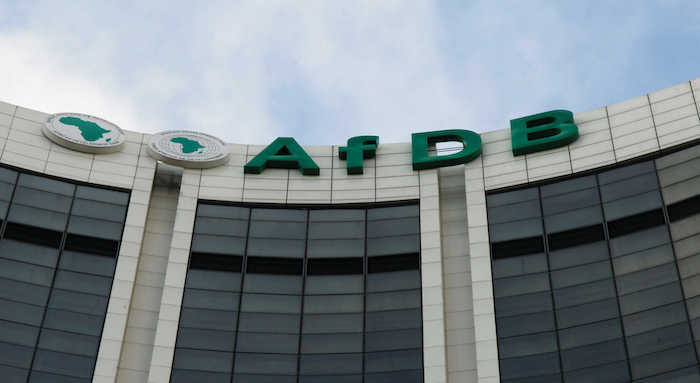
The African Development Bank (AfDB) is adopting innovative solutions to assist Nigeria in mobilising the estimated $2.3 trillion required to meet international benchmarks for infrastructure development, specifically targeting a 7.0 per cent infrastructure-to-GDP ratio.
This initiative was highlighted on Tuesday in Lagos by Mrs. Omotere Omoluabi- Davies, the Regional Integration Coordinator for the AfDB Nigeria Country Department, during the West Africa Infrastructure Expo, organised by DMG Events.
Omoluabi-Davies also announced that the bank is introducing Naira-denominated facilities to mitigate foreign exchange risks stemming from the local currency's value fluctuations.
"We approach matters a bit differently, particularly in how we mobilise and scale investments, how we enhance project bankability, and how we expedite delivery, which presents valuable lessons," she stated.
"We recognise the significant capital requirements of these projects, thus we actively seek innovative solutions and effective risk management strategies for infrastructure delivery."
"Our objective is not to displace private capital but to foster compatibility, add value, and attract private investment through de-risking and ensuring long-term sustainability."
She elaborated that the AfDB's country strategy in Nigeria focuses on two key priorities: climate-resilient infrastructure and job creation.
The AfDB is establishing credit enhancement facilities, such as Infracredit, in collaboration with partners like the African Finance Corporation, the Development Bank of Nigeria, and the Nigeria Sovereign Investment Authority.
Infracredit functions by providing guarantees for local currency bonds issued to finance infrastructure projects within Nigeria.
"As of September 2025, Infracredit has supported 22 infrastructure projects, mobilising approximately N308 billion in long-term funding from 21 pension funds and other institutional investors in Nigeria.
"It also supports new bond issuers, particularly in green infrastructure, and has facilitated the longest non-sovereign corporate bond issuance, extending up to 20 years, which is a notable market development," she added.
Omoluabi-Davies mentioned that 60 per cent of the AfDB's portfolio in Nigeria is dedicated to infrastructure, with a significant portion concentrated on energy, industrialisation, and the digital sector.
"Addressing currency volatility has been a major challenge, especially given the fluctuations and currency risks observed in Nigeria and across the continent in recent years.
"Consequently, a substantial part of our financing is indeed in foreign currency.
"However, we are actively developing instruments to offer more Naira- denominated loans.
"Our current portfolio in Nigeria amounts to about $5.2 billion, with approximately 60 per cent allocated to the public sector and 40 per cent to the private sector, spread across various industries," she explained.
In her opening remarks, Ms. Josine Heijmans, Senior Vice President at DMG Events, observed that Nigeria, as Africa's largest economy, is at a pivotal moment in its development, striving to advance its infrastructure goals, including reliable transportation, robust power systems, digital connectivity, water infrastructure, and sustainable urban development, all critical for economic growth and national progress.
"Today's summit convenes policymakers, project sponsors, investors, and delivery partners to concentrate on translating these priorities into concrete achievements.
"The summit will feature strategic discussions focused on execution, investment, and innovation.
"Through the exchange of insights and viewpoints, the dialogues will explore how policy alignment, effective partnerships, and investment-ready frameworks can accelerate infrastructure development across Nigeria," she stated.
Delivering the opening speech at the expo, themed "From Dialogue to Delivery: Bridging Nigeria’s Infrastructure Gap," Mr. Ali A. Rabiu, President of the Nigerian Society of Engineers (NSE), remarked that closing Nigeria's infrastructure deficit, valued at over $2.3 trillion, could usher in a new era of productivity, job creation, and prosperity for its population exceeding 220 million.
Rabiu pointed out that the nation faces a paradox of having numerous projects but lacking quality, citing instances of roads deteriorating before completion.
"We have ports that handle 70 per cent of ECOWAS trade but remain congested and inefficient.
"Our power sector's available generation hovers around 5,400 megawatts—grossly insufficient for our population.
"Furthermore, our debt servicing costs have consistently exceeded capital expenditure, limiting our capacity to develop new assets or even maintain existing ones.
"The consequence is that it's often more economical to ship a container from China to Lagos than to transport it from Lagos to Kano.
"This situation represents not just inefficiency but a fundamental failure in vision and execution."
He however noted that addressing these gaps "can stimulate inclusive growth, attract domestic and foreign investment, generate millions of employment opportunities, and position Nigeria as the preeminent regional centre for trade, energy, and digital connectivity."
Rabiu consequently urged that "the government must ensure policy stability and credible guarantees, while the private sector must contribute capital, efficiency, and innovation, and professionals must uphold ethics and quality standards."
Dike Onwuamaeze
Comments (0)
You must be logged in to comment.
Be the first to comment on this article!