
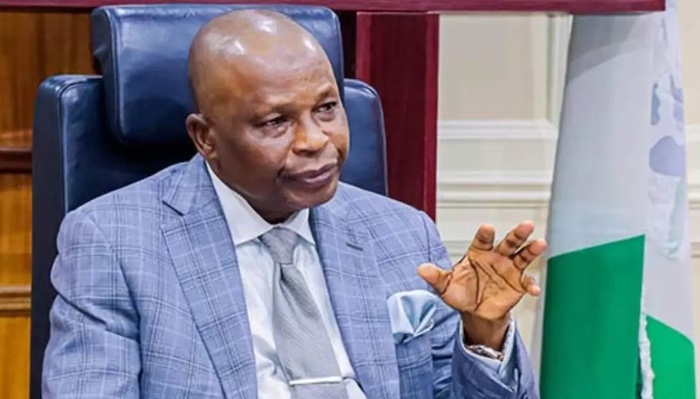
The Attorney General of the Federation (AGF) and Minister of Justice, Lateef Fagbemi (SAN), expressed his disagreement with Civil Society Organisations (CSOs) regarding the proposed Human Rights Defenders Protection Bill on Wednesday.
Fagbemi presented the ministry's stance during a public hearing held by the House of Representatives Committee on Human Rights in Abuja.
The hearing was dedicated to discussing the Human Rights Defenders Protection Bill alongside a bill aimed at repealing the National Human Rights Commission Act and the National Human Rights Commission (Amendment) Act of 2010, in order to establish the National Human Rights Commission Bill, 2025.
The suggested amendment is intended to enhance the commission's regular powers, bolster its investigative capabilities, and maintain its funding contributions to the Human Rights Fund for activities related to rights protection across the country, in line with the Paris Principles and relevant considerations.
CSOs contend that the Human Rights Defenders Protection Bill is crucial for promoting accountability, transparency, social justice, and adherence to the rule of law.
Additionally, the bill seeks to protect civil society activists, journalists, lawyers, community leaders, whistle-blowers, religious groups, and citizens engaged in peaceful advocacy for the safeguarding and preservation of both constitutionally and internationally recognized rights.
Through Chief of State Counsel, Mr. Reuben Imarha, Fagbemi asserted that Nigeria already possesses adequate laws that address human rights protection.
He cautioned that the introduction of another statute could lead to institutional overlaps, legislative confusion, and duplication of responsibilities among government entities.
While recognizing existing deficiencies within the nation’s framework for human rights protection, the minister urged lawmakers to fortify and empower existing institutions to enhance their capacity for effective implementation.
He stated unequivocally that the ministry opposes the Human Rights Defenders Protection Bill, urging the House to reject the proposed legislation.
Regarding the separate proposal to repeal the National Human Rights Commission Act and enact the National Human Rights Commission Bill, 2025, Fagbemi indicated support but raised specific concerns.
He highlighted Clause 5(2b), which mandates business owners to secure an annual human rights compliance certificate.
Fagbemi acknowledged that while instances of human rights violations by businesses do occur, this provision risks undermining efforts to facilitate business operations in Nigeria and should be reconsidered.
He also flagged Clause 15, which would empower the commission to borrow funds for pursuing human rights cases, insisting that such borrowing should require prior approval from the ministry or the National Assembly to prevent potential misuse.
Moreover, he pointed out Clause 16(2b), which proposes a quasi-tax, obligating multinationals and public and private enterprises in the financial and oil sectors to contribute 0.3% of their annual earnings to the commission aimed at funding human rights litigation.
The minister recommended that this provision be aligned with the federal government's ongoing tax reform initiative to avoid duplications.
Earlier, the Programme Director of the NGO Development Dynamics, Mr. Jude Ohanele, emphasized that the passing of the Human Rights Defenders Protection Bill would reinforce Nigeria's democratic institutions.
Ohanele argued that the legislation would improve Nigeria's international human rights image, enhance transparency and good governance, and foster investor confidence through stronger assurances of the rule of law.
He stated that the legislation would help mitigate conflicts by creating lawful channels for expressing grievances, noting that protecting human rights defenders does not oppose state interests.
He asserted, "This bill underscores Nigeria’s commitment to democracy and constitutional governance. We strongly advocate for the bill's passage for national benefit. By adopting this legislation, Nigeria would affirm its stance on justice, accountability, civic participation, and the protection of those defending rights and freedoms secured under our constitution."
In his comments, Chief Tony Ojukwu, the Executive Secretary of the National Human Rights Commission, indicated that businesses must incorporate human rights principles within their operational frameworks.
Ojukwu noted that the Human Rights Fund established in 2010 has yet to receive any funding, detailing that the proposed bill aims to generate funds through tax reforms to aid human rights litigation.
Additionally, he pointed out that the bill seeks to ensure prompt execution of the commission’s decisions via the Federal High Court and to further buttress the commission’s independence among other objectives.
Mr. Clement Nwankwo, the Executive Director of the Policy and Legal Advocacy Centre (PLAC), commended the National Human Rights Commission for its past efforts. However, he emphasized the need for more work and highlighted the importance of the proposed amendment.
Nwankwo called on the National Assembly to act on all the commission's requests and to ensure the bill is passed into law before August.
Comments (0)
You must be logged in to comment.
Be the first to comment on this article!