
The contributions of women to Nigeria's history remain largely unrecorded, a situation attributed to societal norms that often diminish their roles. This oversight distorts the understanding of both past and present dynamics.
In March, coinciding with global discussions on equality, ASIRI Magazine has launched an initiative named HerStory of Nigeria, aimed at documenting and promoting the narratives of women who shone in the realms of political, economic, and social development between 1910 and 1950.
Commenced to align with International Women’s Month 2026, this project marries historical research with community engagement, extending these narratives into educational settings and digital platforms. Highlighting figures from market leaders to educators, HerStory of Nigeria emphasizes the necessity of inclusivity in national memory.
In this dialogue, we connect with Oludamola Oladele Adebowale, the project lead, who discusses the critical nature of documentation, the implications of historical silence, and the importance of positioning women at the forefront of Nigeria’s narrative.
The conversation starts with a greeting.
Dr. Oludamola, how are you today?
I am doing well, thank you.
HerStory of Nigeria is focused on shining a light on the significant contributions women made to Nigerian history. What made you feel this project was essential?
Over the past ten years, my archival research has highlighted unsettling disparities; although women played pivotal roles during key historical periods, their contributions remain underreported. Recognizing that this lack of documentation was not merely oversight, but a product of structural issues made the project imperative.
One cannot truly understand a nation through a fragmented story. Nigerian women have been influential in political resistance, economic settings, educational reform, and community organizing, yet their stories are frequently absent from mainstream historical accounts. This project is crucial as documentation equates to power. Neglecting to document women's contributions skews national memory.
Thus, HerStory of Nigeria operates as both a celebration and a reclamation of history. It serves to protect the integrity of our collective record.
What, in your view, has led to the long-standing silence surrounding the stories of women, particularly during the colonial period, and what does that silence signify?
The silence can largely be traced back to who maintained control over documentation in colonial times. Official records prioritized male-dominated political structures and colonial figures, while women frequently engaged in economic networks and informal political systems that were not seen as legitimate spaces for authority.
This silence reflects a historical bias and illustrates narrow definitions of leadership and influence. Women were involved in organizing against taxation, shaping trade networks, and impacting public opinion, yet these activities were often overlooked in historical records. Recovering these narratives is an essential step in redefining forms of power.
How did you determine which women to include, and why did you select the years from 1910 to 1950?
The selection process was informed by research and depended on the availability of archival materials at the time we initiated our investigation last year. I focused on women whose contributions resulted in substantial social, economic, political, or cultural impacts; they included organizers, educators, activists, and traditional leaders. There are many other remarkable women yet to be acknowledged, and this project is designed to be ongoing rather than a single event; it aims to leave a lasting legacy.
The years 1910 to 1950 were chosen for their significance in Lagos and Nigeria’s broader history. They encapsulate key developments such as the establishment of colonial authority, increasing taxation, organized resistance efforts, and the emergence of national consciousness with women playing central roles. Analysing this 50-year period allows us to explore the evolution of female resistance throughout generations. This pivotal timeline also serves as an interesting starting point for the project, hence its selection.
Beyond mere acknowledgment, what other roles do you think documenting women's contributions plays in shaping our understanding of Nigerian identity?
Documenting women's contributions broadens the understanding of who helped to build Nigeria. It conveys that the country’s foundation is the result of collective effort, which includes women's leadership and intellectual contributions.
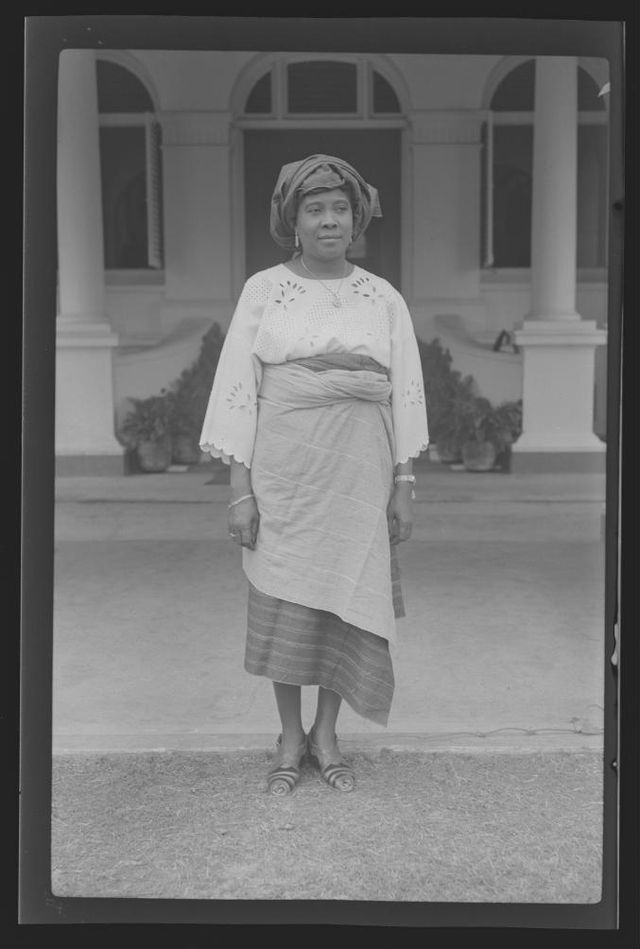
For young girls, seeing historical representations is transformational, especially during formative years. Learning that women in early 20th century Lagos led economic initiatives and community efforts redefines leadership from an anomaly to a tradition. Such revelations foster confidence rooted in historical precedent. The project not only recounts women’s stories but also delivers insightful lessons and aids in nation-building through lessons learned from our past. Documentation is fundamental to learning and projecting into the future.
Why is it especially significant that the project is launched in March, during International Women’s Day, rather than at another time?
March holds global importance because of International Women’s Day. It’s a time that amplifies conversations about equity, visibility, and social justice worldwide. Launching the project during this month positions the historical contributions of Nigerian women within the global discourse while remaining locally relevant.
The timing is both symbolic and strategic. It symbolically honors the international movement for women's recognition while strategically increasing visibility and engagement. This alignment also enables the project to resonate beyond Nigeria’s borders. Notably, HerStory of Nigeria is among many global programs listed on the International Women’s Organization website, having received endorsement. More than just a March initiative, this is a legacy project aimed at establishing a platform to record and archive the history of women in Nigeria. The contributions of women like Oyinkansola Morenike Ajasa (Lady Oyinkan Abayomi), Charlotte Olajumoke Obasa, Madam Alimotu Pelewura, Madam Rabiatu Iyalode (Alaso), Modinatu Alaga, Barikisu Iyalode, Bintu Balogun, and others must not be forgotten.
The establishment of Queen’s College Lagos, which will celebrate its centenary next year, along with the creation of other girls’ schools across the nation, are also vital narratives for preservation and recognition.
There will be a 10-day school outreach as part of this initiative. How does introducing these narratives in schools help close the gap between distant history and personal experience?
The HerStory of Nigeria project plans to engage in a 10-day tour at ten public secondary schools in Lagos State, covering areas within the I.B.I.L.E Divisions (Ikeja, Badagry, Ikorodu, Lagos Island, and Epe). The tour will kick off with a launch at Queens College, Lagos, on March 11, alongside a 15-day campaign on social media to promote the exploits of these influential women, broadening the conversation beyond school walls.

By integrating these stories into schools, history becomes more immediate and relatable. Students begin to recognize that their communities are shaped by real individuals, particularly women whose leadership has impacted the present. This engagement transforms history from a theoretical concept into a relatable experience that promotes critical thinking and self-confidence in their abilities.
What impact do you anticipate this initiative will have on the students engaging with it for the first time?
I hope to instill awareness, confidence, and a sense of responsibility in them. Awareness that Nigerian history is more profound and inclusive than previously understood, confidence that leadership and resilience are integral to their heritage, and a responsibility to contribute actively to Nigeria's evolving narrative.
Ultimately, I want them to understand that history is not fixed. It is a living narrative, and they play an essential role in continuing to write its next chapters. That is the essence of the HerStory of Nigeria project.
Comments (0)
You must be logged in to comment.
Be the first to comment on this article!