
Niger State's Governor, Umaru Mohammed Bago, has reported that more than 300,000 individuals have been forced from their homes across ten local government areas in the state due to rising insecurity.
Bago shared this information while speaking to the press after accepting humanitarian assistance from the Federal Government, delivered by the Federal Ministry of Humanitarian Affairs and Poverty Reduction, at the Justice Idris Legbo Kutigi International Conference Centre in Minna, the capital of Niger State.
He added that efforts to ascertain the precise number of displaced individuals were ongoing, as attacks in the affected local government areas continue unabated.
"Currently, we can only provide an estimation. On average, we have over 300,000 individuals displaced across Niger State in more than 10 local government areas suffering from insecurity," Bago stated.
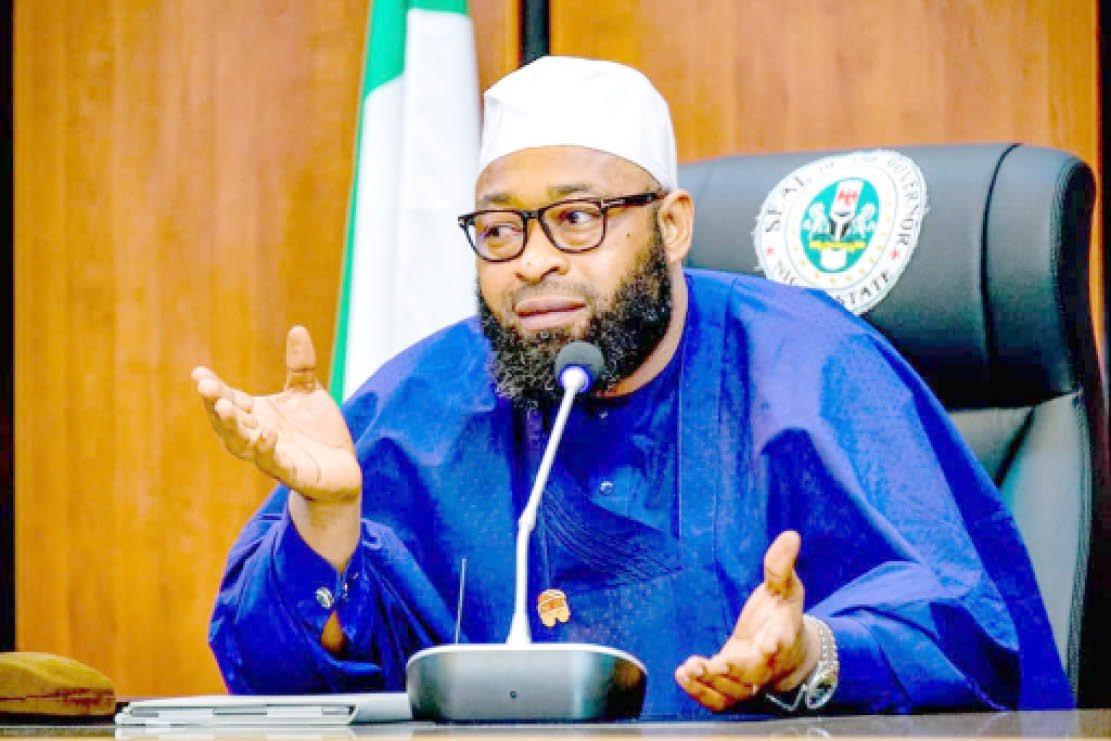
The governor reassured citizens that the state government is working in conjunction with the Federal Government and security forces to restore order and facilitate the return of victims to their communities.
Regarding electricity availability, Bago advised residents who are unhappy with the national grid's power supply to consider solar energy as an alternative.
He revealed that the Government House, the State Secretariat, and public healthcare facilities have already transitioned to solar power systems, disconnecting from the national electricity grid.
However, he attributed the poor revenue collection from electricity bills to customers not fulfilling their obligations to the distribution company.
Bago mentioned that around 180 communities in the state have adopted solar energy to secure a more reliable power supply.
In justifying the varied electricity rates for consumers on the 33kva line, he explained that tariffs fluctuate among different categories, with Band A customers incurring significantly higher costs compared to those in Bands B and C.
"We must be honest. We cannot mix politics with what is true. Customers in Band A are charged considerably more than others. If better service is your goal, you need to be prepared to invest in it," he noted, comparing electricity costs to mobile phone recharges.
On the issue of water shortages, Bago acknowledged that the administration took over a deteriorated water infrastructure, which it is currently in the process of rehabilitating.
He revealed that the state spends approximately N100 million every month on electricity to pump water into the main pipeline for distribution.
Additionally, Bago mentioned that boreholes are being drilled in various communities as part of the Ward Development Projects Initiative to alleviate the water scarcity problem, which is further exacerbated by ongoing road construction in the state capital.
Comments (0)
You must be logged in to comment.
Be the first to comment on this article!