
The Chairman of the House Committee on Electoral Matters, Honourable Adebayo Balogun, has strongly supported the decision to incorporate a fallback to physical forms in the newly enacted Electoral Act 2026. He argues that this measure is crucial for maintaining credibility and transparency during the 2027 general elections.
In a recent interview with ARISE News, Balogun highlighted the necessity of establishing public trust in the electoral system, pointing out that the option for using physical forms should not be seen as a step backward but as a vital precaution.
"It requires some public education. The electoral process hinges on trust and integrity. Currently, there is a perception that the elections may have been compromised even before 2027. We urge Nigerians not to give up; the struggle for democracy is ongoing and requires perseverance," Balogun stated.
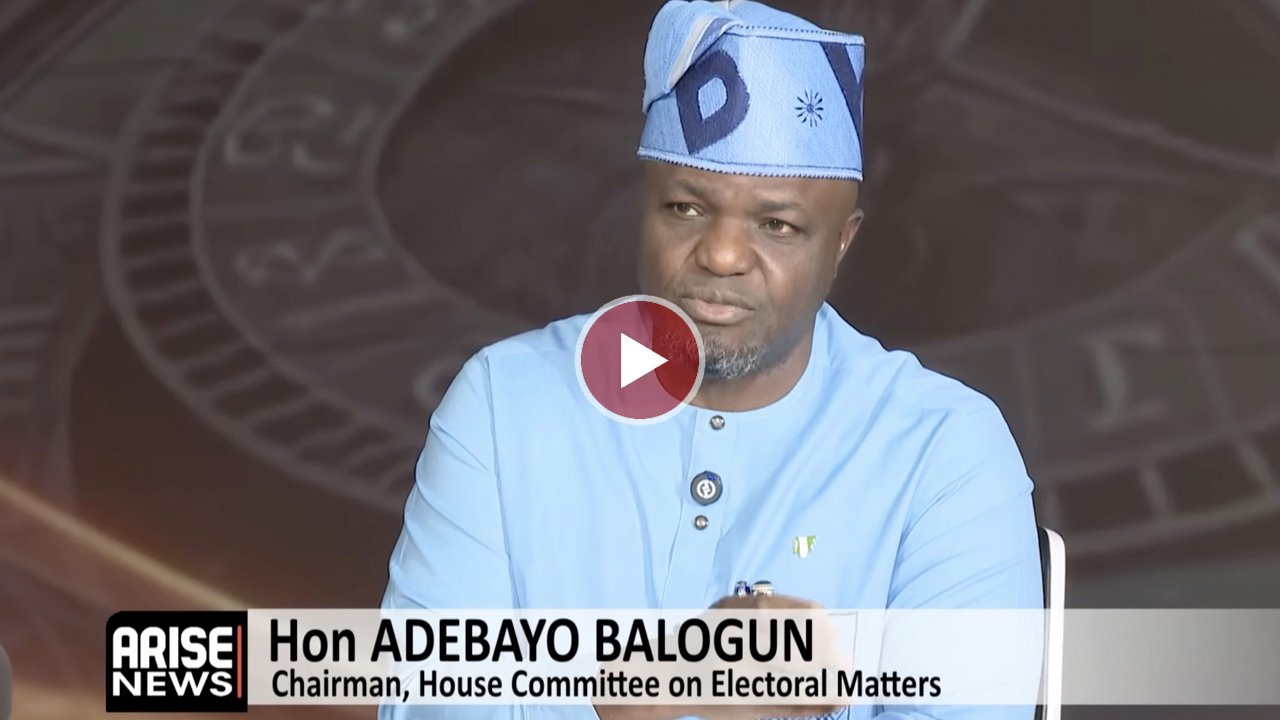
He elaborated on how the new system will function, noting that while electronic results would continue to be tallied, physical forms would act as a backup against any technical glitches. "Voters will photograph their EC8A forms at the polling stations. All agents will have signed copies. When results reach the collating center, it’s necessary to verify only if discrepancies arise. If everyone is present and has trustworthy agents, success is assured in your party," he explained.
Balogun emphasized that the inclusion of the fallback does not promote any form of electoral manipulation, stressing that existing regulations demand accountability. "If a presiding officer deliberately violates any aspects of this clause, they would be committing a crime and could face penalties. While the transmission of results is vital, this system guarantee ensures a credible electoral process," he added.
Further, he addressed the legislative amendments leading to the current law, justifying the changes made during the reconciliation process between the House of Representatives and the Senate. "Both chambers endorsed the same bill. Legislative language is subject to change. Adjustments are made in response to evolving circumstances. The individuals protesting are frequently motivated by personal interests rather than the betterment of Nigeria," Balogun noted.
Responding to concerns about the adequacy of network infrastructure for electronic transmission, Balogun refuted claims of technical inadequacies. "Prior to the last elections, both the Nigerian Communications Commission and INEC (Independent National Electoral Commission) conducted a study which indicated that coverage ranged from 93% to 97%. Why, four years later, do we still debate transmission?"
He further clarified the distinction between electronic voting and online voting by explaining that electronic voting does not necessarily require an online connection and includes printed records for verification: "Electronic voting functions offline. Voters receive a physical copy, which is placed in a secure box. Accreditation occurs concurrent with voting, ensuring that the number of accredited voters matches the total votes cast."
Balogun also defended the committee’s discretion to amend typo errors and minor changes within the law prior to final approval. "The joint committee sought to rectify oversights and revert previous amendments, which is why some documents were temporarily unavailable. Nonetheless, we effectively managed the entire process."
In closing, Balogun encouraged Nigerians to stay involved and confident in the electoral system. "Citizens should leverage their votes to address grievances. After casting their ballots, they must act within the legal framework and report any irregularities. The viability of elections relies on the establishment of trust and integrity among the populace."
Comments (0)
You must be logged in to comment.
Be the first to comment on this article!