
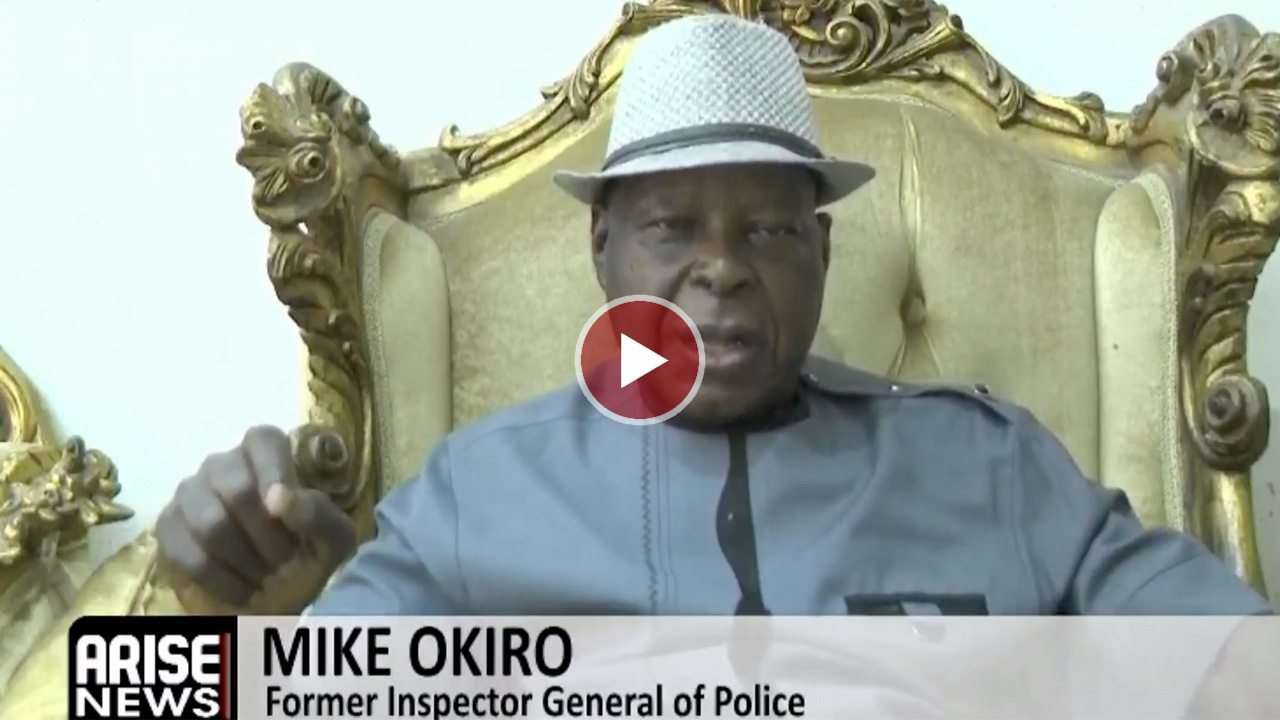
Former Inspector-General of Police, Mike Okiro, has backed the idea of creating state police units across Nigeria, stating that distributing police responsibilities would significantly improve security outcomes. However, he believes the suggested five-year period for putting this into action is unnecessarily long.
During an interview with ARISE NEWS on Monday, Okiro suggested that assigning up to 60 percent of police personnel to state-level operations is both practical and essential, considering the vastness of Nigeria in terms of geography, culture, and language.
He commented, “That is proper because Nigeria is so wide—geographically, ethnically, and linguistically. This is what should have been the case all along.”
Okiro pointed to insufficient federal funding and the overextension of the police force as reasons for long-standing operational weaknesses. He argued that a decentralized approach would empower state governments to better equip and manage their police officers.
He stated, “The federal government has not been able to equip the police properly, maybe because of budget constraints and competing priorities. If decentralisation comes in and states take responsibility for part of the police, it will be better.”
He further suggested that policing under state control would foster constructive competition among governors, leading to improved operational effectiveness.
“There will be competition among the states—each trying to do better in terms of policing. Governors are already doing well in other areas, and this will reflect in policing too,” he remarked.
Emphasizing the value of local understanding, Okiro contended that officers operating within their familiar cultural and linguistic settings would perform more effectively.
“Because of culture, religion, and language, it is easier for officers to operate within their states. A policeman from Rivers State will perform better there than someone unfamiliar with the terrain, language, or environment,” he elaborated.
While supporting the concept of state police, Okiro stressed the importance of robust coordination between federal and state law enforcement agencies, acknowledging that certain criminal activities would still necessitate federal intervention.
“We have one Nigeria, so there must be synergy between the Inspector-General, the federal government, and the states. Some crimes cannot be handled by states alone; they require federal involvement,” he stated.
Regarding financial matters, Okiro supported proposals for dedicating a portion of federal revenue directly to policing. He argued that states require financial autonomy to effectively address their specific security challenges.
“The division of budgetary allocations is proper. States should manage their policing needs independently because they understand their local challenges better. He who wears the shoes knows where it pinches,” he observed.
He drew parallels with international models, citing Canada as an example where provincial police forces operate with shared responsibilities between federal and subnational government levels.
“In Canada, provinces have their police forces, with personnel and equipment tailored to their needs, while the federal government provides funding. Nigeria can adopt a similar approach,” he suggested.
Concerning the proposed five-year period for implementation, Okiro expressed significant doubts, advocating for a more accelerated and decisive timeframe.
“Five years is too long. While security reforms cannot happen overnight, the timeframe should be shorter and more realistic,” he asserted.
He added that if state police provisions are incorporated into the constitution, their implementation would not be contingent on any single administration.
“If it becomes constitutional, it will outlive any government. Implementation can continue regardless of who is in power,” he said.
Okiro also proposed that state governors should have a role in appointing Commissioners of Police within their states, similar to their involvement in recommending candidates for federal positions.
“Governors should have input in appointing Commissioners of Police in their states, just as they recommend candidates for federal positions,” he advised.
On the subject of institutional restructuring, he questioned the need for a new National Police Standards Committee, pointing out that the Police Service Commission already possesses defined oversight functions.
“The Police Service Commission already has clear functions, including appointments, promotions, and discipline. We must ensure roles are not duplicated but properly aligned,” he concluded.
Okiro finished by stating that decentralized policing, supported by adequate funding, legal clarity, and effective coordination, represents a practical solution to Nigeria's ongoing security challenges.
“State police will improve efficiency, accountability, and response to local security issues—if properly implemented,” he affirmed.
By Boluwatife Enome
Comments (0)
You must be logged in to comment.
Be the first to comment on this article!