
Father Attah Barkindo, who leads the National Peace Committee Secretariat, stated that violating the Peace Accord is tantamount to breaking the law, as it is interconnected with the nation's Constitution and the 2026 Electoral Act.
In an exclusive interview with ARISE NEWS on Monday, Barkindo delved into the details of the Electoral Act of 2026 and raised concerns that could impact the impending general elections.
"First of all, it is incorrect to suggest that the Peace Accord lacks legitimacy. We have annotated every provision of the Peace Accord to ensure it aligns with the provisions of the 1999 Constitution and the Electoral Act of 2026," he said.
He went on to elaborate that any politician, political party, or candidate who infringes upon the Accord is essentially breaching the Nigerian Constitution and the Electoral Act.
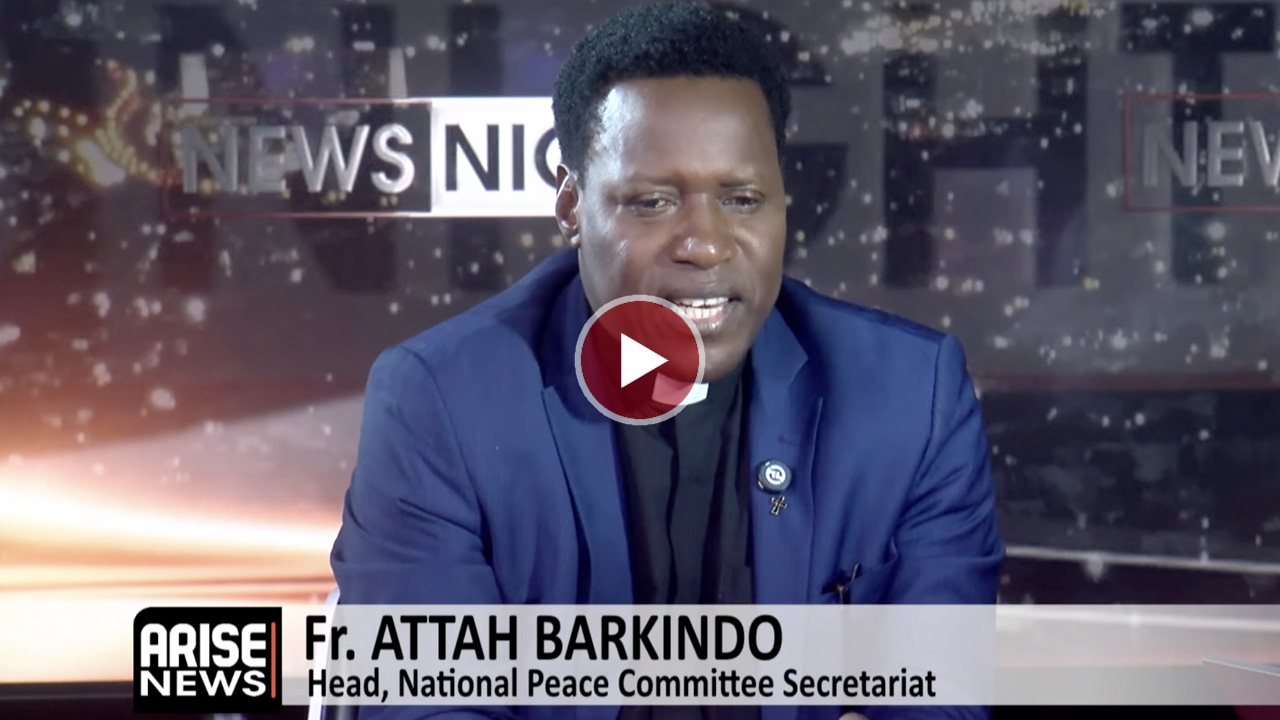
Addressing key issues on behalf of the National Peace Committee, Barkindo expressed concerns regarding the 2026 Electoral Act. He pointed out one significant issue: the funding of the Independent National Electoral Commission (INEC).
"In the previous Act, funding for INEC was required to be allocated at least a year ahead of elections. However, the new Electoral Act now mandates that this must occur just six months before elections," he highlighted.
Barkindo explained further, saying, "We often complain about INEC's logistical and procurement challenges, especially concerning the acquisition of sensitive and non-sensitive materials, yet funding is only made available six months before the elections. Additionally, INEC's budget is still presumably under debate with just a few months left until the election, presenting a real challenge."
Moreover, he raised concerns over the ban on indirect primaries by political parties, which he believes could pose significant issues. "Currently, political parties can only choose between direct primaries or consensus arrangements. While consensus can be a solution, political parties continue to be the vital pathway to power, meaning the candidates they nominate will inevitably be voted into office."
He argued that politicians who defect should forfeit their party membership and their legislative positions.
"We anticipated that the law would also stipulate that anyone who switches parties loses their seat, prompting a declaration that the seat is vacant and facilitating an immediate election to fill it. These challenges warrant urgent attention from politicians," he insisted.
Father Barkindo further elaborated on the erosion of trust in Nigeria's electoral system, which stems from broader systemic failures, rather than just the electoral process itself.
"Trust is crucial, and I believe it exists on two fronts. Firstly, trust is undermined in an environment characterized by widespread impunity and lack of accountability, which makes it hard for people to have faith in the system. Secondly, societal focus has been overly fixated on elections, neglecting the need for effective governance. Once an election concludes, attention quickly shifts to the next one, leaving governance unattended. If these social needs are unmet, people will struggle to trust the entire electoral process," he elaborated.
Barkindo observed that there exists a trust deficit within Nigeria's elections, citing low turnout rates, such as only 7% participation in the Abuja Area Council elections.
"Two factors contribute to this. The first relates to the culture of impunity; it is imperative that those overseeing the electoral process adhere to the law. If the public perceives that election managers lack the intention to comply with legal requirements, trust in the process diminishes."
"The second concern pertains to the politicians we elect. With each election cycle, the situation seems to deteriorate, dissuading citizens from participating. This disillusionment was evident during the recent Abuja Area Council elections, where voter turnout barely reached 7%," he cautioned.
Comments (0)
You must be logged in to comment.
Be the first to comment on this article!