
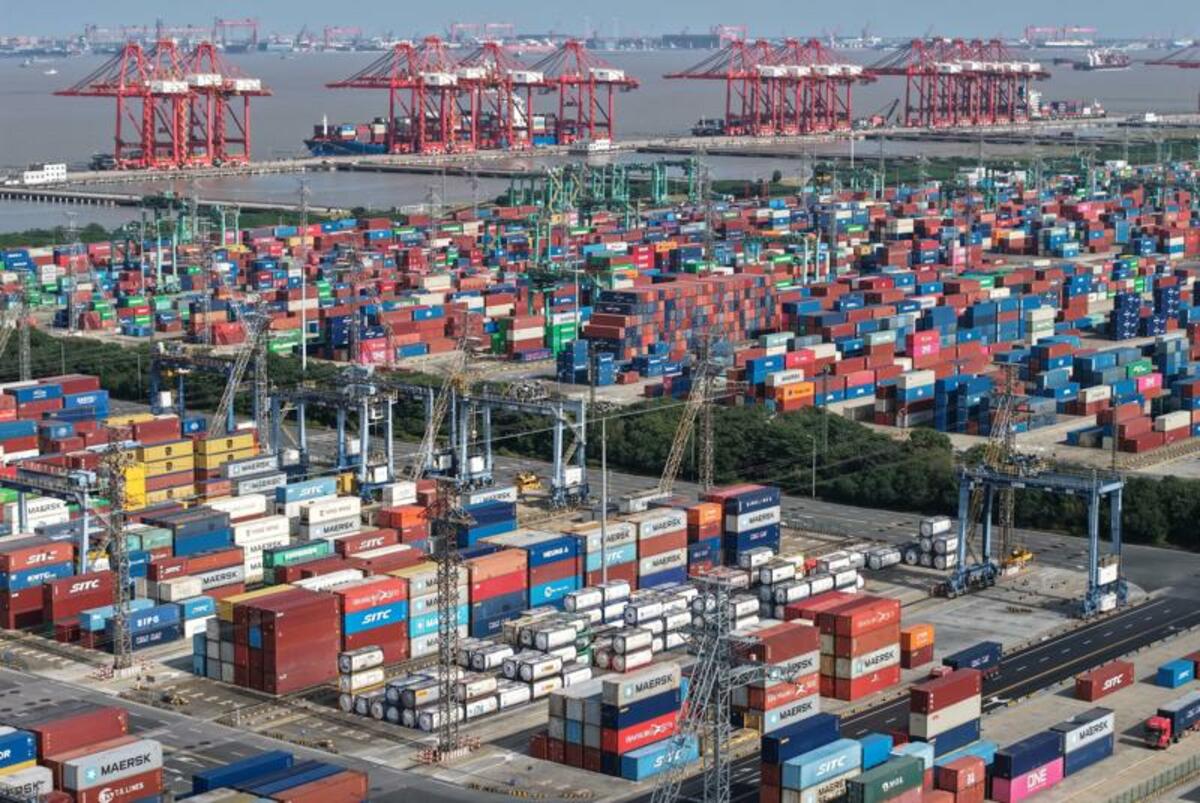
China's exports have experienced a remarkable growth in the initial two months of 2026, surpassing previous expectations even amidst trade tensions with the United States and tariffs imposed by former President Donald Trump.
Data published by Chinese authorities indicates that exports rose over 20% in January and February, significantly outpacing economists' forecasts. This robust growth positions China to potentially exceed the record annual trade surplus it achieved in 2025.
This announcement comes right before an anticipated meeting between President Trump and Chinese President Xi Jinping, planned for early April in China.
The rise in exports underscores the critical role of international trade in China's economy as the nation grapples with several domestic economic challenges.
As the second-largest economy globally, China heavily relies on exports while contending with weak domestic consumer spending, a declining population, and ongoing difficulties within the property sector.
Chinese officials generally consolidate trade figures for January and February to mitigate distortions related to the Lunar New Year holiday, which varies each year and can disrupt normal trading activities.
According to the data, the surge in exports is primarily attributed to strong global demand for electronics. Additionally, shipments of agricultural products and manufactured goods also saw notable increases.
Trade with European countries reflected significant growth, with exports rising by 27.8% to the region.
Similarly, exports to the members of the Association of Southeast Asian Nations (ASEAN) increased sharply by nearly 30%, benefiting from major economies like Thailand, Singapore, and the Philippines.
In contrast, exports to the United States saw a decline of over 10% as Washington implemented tariffs and additional measures aimed at rectifying trade imbalances.
These tariffs were part of broader economic strategies initiated by the Trump administration to decrease the U.S. trade deficit and reduce dependence on Chinese imports.
Despite the drop in U.S. exports, China's overall export performance remains resilient due to rising demands from other global markets.
Recently, China set an economic growth target of between 4.5% and 5% for 2026, which is slightly below the 5% target set for 2025, largely achieved through strong export performance.
Exports continue to be a pivotal force behind China's economic growth, especially at a time when domestic consumption is low and the property sector is struggling.
The upcoming meeting between Trump and Xi is expected to coincide with China and various other Asian nations facing the broader economic repercussions of the ongoing US-Israeli conflict with Iran.
This conflict has disrupted global energy markets and introduced further uncertainty for economies already battling inflation, supply chain disruptions, and geopolitical strains.
Economic analysts believe that the outcome of the forthcoming discussions between the U.S. and Chinese leaders could significantly shape trade relations and global markets in the near future.
Comments (0)
You must be logged in to comment.
Be the first to comment on this article!