
According to various sources and analyzed satellite imagery cited by Reuters, Ethiopia has established a hidden camp aimed at training thousands of combatants for Sudan's Rapid Support Forces (RSF). This represents the first concrete indication of Ethiopia's direct involvement in the ongoing civil war in Sudan.
This revelation signifies a troubling escalation in a conflict that has already attracted international involvement from nations in Africa and the Middle East. By equipping the RSF with an influx of trained personnel, the facility could substantially shift the power dynamics as combat escalates in southern Sudan.
Eight sources, including a high-ranking Ethiopian government official, disclosed that the United Arab Emirates (UAE) financed the camp's development and offered military trainers and logistical support. These assertions align with information contained in a confidential memo from Ethiopian security services and a diplomatic cable assessed by Reuters. However, the news agency has been unable to independently confirm the UAE's role in the operations.
In response, the UAE's foreign ministry asserted that Abu Dhabi is not involved in the conflict and has no association with the ongoing hostilities.
The warfare in Sudan ignited in 2023 following a power struggle between the Sudanese Armed Forces and the RSF, which derailed plans for a transition to civilian governance. The resulting conflict has precipitated famine, large- scale displacement, and racially motivated atrocities. Millions of refugees have fled to neighboring countries such as Egypt, Chad, Libya, and South Sudan.
Reuters consulted 15 sources knowledgeable about the camp's establishment and functioning, including Ethiopian officials, intelligence personnel, and diplomats. Analysis of satellite imagery corroborated important details presented in the internal security memo and diplomatic correspondence.
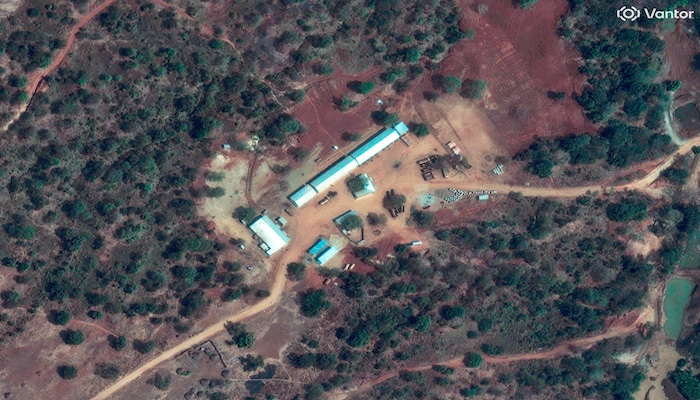
New satellite images display extensive construction at the location, which now includes a drone control station situated at a nearby airport. According to these images, the level of activity at the camp surged notably in October. The facility is situated in the remote Benishangul-Gumuz region of Ethiopia, close to the Sudanese border.
The Ethiopian government spokesperson, military, and the RSF have not responded to detailed inquiries regarding this matter. On January 6, Ethiopia and the UAE jointly called for a ceasefire in Sudan and praised their mutually beneficial security relationship.
As of early January, roughly 4,300 RSF fighters were reported to be receiving military training at the camp, with support and supplies coming from the UAE, according to the aforementioned Ethiopian security memo. Sudan’s army has frequently accused the UAE of supplying weapons to the RSF, allegations that have gained credibility among UN experts and U.S. lawmakers.
The UAE has been a crucial backer of Ethiopian Prime Minister Abiy Ahmed since he assumed office in 2018, committing billions in aid and investments. Consequently, the two nations have formed closely-knit military collaborations.
Sources indicate that the majority of recruits at the camp are Ethiopian nationals, though fighters from Sudan and South Sudan are also present. Some recruits are believed to have ties to the SPLM-N, a Sudanese rebel organization in the Blue Nile state, although a senior SPLM-N official denied their group’s involvement in Ethiopia.
Many officials predict that these recruits will enlist in RSF factions engaged against the Sudanese army in Blue Nile, which has emerged as a focal point in the conflict. Reports suggest that hundreds of fighters have already crossed into Sudan in recent weeks.
The internal security memo identifies General Getachew Gudina, the head of the Ethiopian National Defense Force’s Defense Intelligence Department, as the person overseeing the camp’s establishment. This role has been confirmed by various diplomatic and security sources. General Getachew has not responded to inquiries for comments.
Satellite images confirm that the camp was established in forested areas in the Menge district, located about 32 kilometers from the Sudanese border and strategically positioned near the junction of Ethiopia, Sudan, and South Sudan. Clearing of the area began in April, followed by the erection of buildings with metal roofs, and larger-scale development, including tent structures for training personnel, commenced in late October.
A diplomatic cable dated November details the camp’s capacity to accommodate up to 10,000 fighters, noting the arrival of multiple vehicles including Land Cruisers and heavy trucks, as well as RSF units and trainers from the UAE. To safeguard the identity of the source, Reuters has chosen not to reveal the originating country of the cable.
Two officials reported seeing trucks marked with the logo of the Emirati logistics company Gorica Group traveling towards the camp in October. However, Gorica has not responded to requests for comments.
Satellite imagery from late November indicates the presence of over 640 tents at the site. The defense intelligence firm Janes places the camp's capacity at a minimum of 2,500 individuals, but it also stated it could not verify the military purpose of the site based solely on imagery.
Senior military officials observed convoys of trucks transporting hundreds of recruits to the camp in mid-November. Further construction activities have been noted into January, which included new earthworks and rows of shipping containers.
Significant construction activities have also been reported at Asosa airport, roughly 53 kilometers from the camp, featuring new hangars, paved areas, and what experts identified as a ground control station for unmanned aerial vehicles, as well as satellite antennas.
Ethiopian authorities have asserted that the military intends to convert the airport into a hub for drone operations, part of broader strategic adjustments of air assets toward the country’s western regions. A diplomatic source stated that this action is designated to counter threats along the border with Sudan and safeguard vital infrastructures, including the Grand Ethiopian Renaissance Dam.
Concerns have been raised by regional officials regarding the camp's vicinity to the dam—Africa's largest hydroelectric facility—citing the risk of potential vulnerabilities should the conflict escalate.
Analysts and officials have suggested that the airport has been crucial for supplying the RSF across the border. Some reports indicate that the UAE also financed upgrades to the airport, although these claims remain unverified.
Comments (0)
You must be logged in to comment.
Be the first to comment on this article!