
_What does it signify to capture a person's likeness, whether utilizing sacred materials or code? Oriiz Onuwaje investigates how the act of portraying individuals has always involved political implications, spanning from the ritual workshops of ancient Ife to the AI systems that shape our identities today._
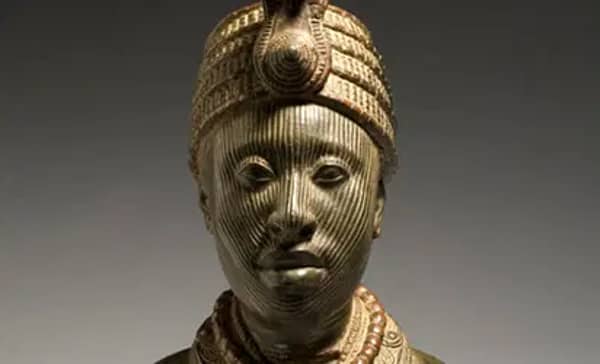
Artistic form is not neutral. A millennium ago in Ifẹ, Nigeria, artists demonstrated extraordinary talent in crafting lifelike bronze and terracotta portraits, leading early European onlookers to question whether Africans could have created such works. These creations surpassed mere representation; they asserted the essence of existence. Identity was captured with authenticity, dignity, and genuine humanity, as artists rendered not just physical characteristics but also the very soul of the individual.
Imagine a terracotta head, fitting comfortably in one’s palm. Sculpted with lifelike precision, it encapsulates a moment in time rather than being just a visual representation. The detailed depiction of the hair, the pronounced lips, and the serene authority reflected in the eyes exhibit such meticulous craftsmanship that the terracotta appears almost alive. These sculptures possess an enchanting quality as they carry the essence of a person through history.
Transitioning from Sacred Clay to Digital Representations
Today, artificial intelligence pursues a similar goal of interpreting, categorizing, and replicating human faces. However, the process of creating a likeness—be it from sacred materials or advanced programming—remains complex. It invariably bears cultural, political, and ethical ramifications. From ancient Ifẹ shrines to the datasets of Silicon Valley, the endeavor to create a likeness embodies an ongoing struggle encompassing meaning, visibility, and authority.
Presence Through Portraiture
The intention behind the realism in Ifẹ portraiture was significant. Crafted during the 12th to 15th centuries, these works exhibit an enriched focus on life: detailed hairstyles, ornate crowns, and graceful cheekbones. This naturalism transcended aesthetic appeal. In a context where sacred kingship intertwined humanity and divinity, a portrait became a vessel of spiritual essence, making rulers or ancestors apparent, creating a link between the living and their lineage.
Portraying individuals with such nuance meant they were not just seen but recognized, remembered, and granted authority within the kingdom’s worldview. The portrayal served not only to reflect identity but actively contributed to its formation and affirmation.
Fast forward a thousand years, and artificial intelligence employs algorithms and machine learning to analyze human faces. These technologies identify emotional expressions, confirm identities, and generate artificial images claiming to encapsulate 'likeness.' Yet, the implications of this contemporary endeavor are far more profound.
Ife artists approached their craft with ritualistic respect, while AI often intersects with elements of surveillance, commerce, and societal oversight. An error in the portrayal by ancient artists could have reshaped narratives, but a miscalculation in an AI system today may jeopardize a person's freedom, opportunities, or well-being.
The Political Landscape of Visibility
Political contexts invariably influence how we perceive others. In Ifẹ, bronze representations reinforced notions of belonging, ancestry, and authority, providing every individual with a recognized role in the community. Conversely, ‘eyes’ of AI are directed at datasets that frequently overlook or inaccurately represent African faces, resulting in a contemporary form of erasure. Studies indicate that facial recognition technologies are significantly more likely to misidentify individuals of African descent compared to those of European heritage. Such misidentification extends beyond a mere technical glitch; it echoes centuries of marginalization. If coded systems fail to recognize you, those systems inherently overlook your complete humanity.
Advancing Ethical Representation
Despite these issues, both realms pursue a shared aspiration. Ifẹ artists endeavored to pay homage to their subjects through sincere and respectful portrayals. Presently, numerous tech developers are focused on creating equitable and inclusive systems. A critical takeaway from Ifẹ is that authentic likeness involves not just technical precision; it encompasses relational, contextual, and moral responsibilities. It prompts inquiries concerning how identity is perceived, situated, and valued. The ethical dilemma at hand is whether AI can cultivate an understanding that honors cultural sovereignty and community agency while engaging in its work with the same meticulousness exhibited by Ifẹ sculptors.
From Sacred Materials to Algorithmic Frameworks: Narratives and Memory
The materials used in these artistic expressions convey their own stories. Ifẹ artists molded earth, metal, and fire, skillfully crafting each portrait to create lasting vessels of memory, treating their resources as sacred. In contrast, engineers develop AI using code, silicon, and electricity—materials that, while invisible, wield as much influence as tangible ones. The assembly of a dataset never presents a neutral view of reality; rather, it represents power dynamics, amplifying some narratives while obscuring others.
An algorithm invariably mirrors the biases and limitations of its creators. The foundations of AI are not formed from bronze but are frequently rooted in hidden prejudices. Absent careful scrutiny, AI can yield likenesses that perpetuate inequities.
Reclaiming History with Modern Technology
Nevertheless, this new form of media possesses transformative potential. Just as Ifẹ portraits preserved identity across generations, AI can aid in reclaiming historical narratives. Today, artists from Africa and its diaspora are leveraging AI to reinterpret traditional forms, visualize ancestral portraits, and scrutinize colonial histories. In their hands, AI serves as a medium for forging new futures inspired by African heritage.
For example, Afrofuturist artists employ generative techniques to produce portraits that merge Ifẹ’s naturalism with vibrant, creative styles: skin reminiscent of liquid metal, headdresses embellished with geometric designs, and faces that seem to encapsulate entire universes. These creations challenge the perception that African ingenuity is solely historical, showcasing that technological creativity is a living, evolving practice.
Oriiz is a Griot, Curator, Designer, Culture Architect, and Strategist dedicated to making African history accessible: to those familiar with it, those who question it, and those who never thought to inquire. He bridges 8,000 years of wisdom to contemporary contexts.
Possibilities and Hazards
Nevertheless, this promise is accompanied by risks. Algorithmic likeness is currently utilized in surveillance, border control, and the dissemination of political misinformation via deepfakes. Artificial representations can eclipse real individuals, and inaccuracies can reinforce harmful stereotypes. Like any formidable technology, AI must operate under robust ethical frameworks. Ifẹ artists were guided by traditions that emphasized dignity above all. The central question regarding AI is not whether it can perfectly replicate form but whether it can adhere to the same strong ethical principles.
The Ongoing Inquiry into Likeness
When an ancient terracotta head encounters a contemporary algorithm, an enduring truth emerges. Likeness transcends imagery; it embodies a battleground where individuals negotiate and define power and identity.
Ifẹ sculptors wielded ritual, lineage, and artistic skill to represent others, while current AI developers utilize coding, data, and logic to dictate how individuals manifest in the digital realm. Both factions significantly influence societal representations and the determination of who gains acknowledgment and a sense of belonging.
Who Owns Likeness?
The question of ownership regarding likeness brings forth an essential inquiry: Who possesses the rights to likeness? In Ifẹ, that authority belonged to the community, informed by collective cultural significance. Currently, that power often rests with corporations and governmental entities. The fight for equitable likeness ultimately translates to a broader struggle for self- determination, acknowledgment, and the fundamental right to visibility and existence.
The unBROKEN Thread links the serene, striking faces of Ifẹ with the digital representations conceived through neural networks. It serves as a reminder that the aspiration to preserve and comprehend identity through technology is innately human. It compels us to approach every likeness, whether formed in clay or encoded in silicon, with purpose, integrity, and the commitment to ensure that representation fosters dignity and does not lead to erasure.
Oriiz is a Griot, Curator, Designer, Culture Architect, and Strategist making African history accessible to a diverse audience: those who know, those who challenge, and those who may never have considered asking. He connects 8,000 years of knowledge with today's context.
Comments (0)
You must be logged in to comment.
Be the first to comment on this article!