
Human rights advocate Femi Falana has asserted that the recent sanctions initiated by former US President Donald Trump against Cuba are illegal and unconstitutional. He grounded his argument on a significant ruling by the United States Supreme Court that restricts the president's power to impose tariffs.
In a forceful statement, Falana contended that Trump's executive order, which targets Cuba's energy supply chain, contravenes established constitutional norms and infringes upon international legal standards. This order, signed on January 29, 2026, imposes duties on nations that provide oil to Cuba, aiming to disrupt the island's fuel supply.
Falana explained that the policy, enacted under the International Emergency Economic Powers Act and the National Emergencies Act, lacks a legitimate legal basis, particularly following the Supreme Court's February 20 decision in the case of Learning Resources Inc. v. Trump. The court's judgment affirmed that the president cannot levy tariffs without the explicit approval of Congress.
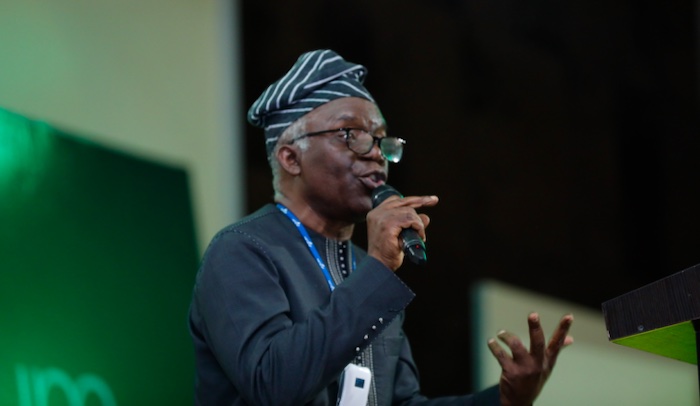
According to the senior advocate, the judiciary explicitly stated that the power to impose tariffs is a form of taxation exclusively granted to Congress. He further noted that the emergency powers law invoked by the Trump administration does not grant broad authority for sweeping trade restrictions.
"Consequently, the imposition of tariffs on countries supplying oil to Cuba is illegal and unconstitutional," Falana declared, emphasizing that the Supreme Court's ruling invalidates the administration's actions.
He also criticized President Trump's reaction to the court's decision, pointing out that the president publicly attacked the justices who ruled against his administration, despite the binding nature of such decisions under the rule of law.
Falana drew a connection between the sanctions and the deteriorating humanitarian situation in Cuba, noting the severe impact on the country's economy due to restrictions on oil imports. He referenced a recent widespread power outage in Cuba, which resulted from the collapse of its electricity grid, a situation he attributed to sustained fuel shortages stemming from the sanctions.
Although power has since been restored following the grid's reconnection and the reactivation of a major oil-powered facility, Falana cautioned that this crisis illustrates the broader implications of the US foreign policy.
He accused the United States of pursuing economic strangulation and condemned what he described as threats of military intervention against Cuba, asserting that such actions would violate international conventions and the sovereign rights of the Cuban people.
Falana reiterated that any attempt by Trump to authorize military action without congressional consent would also be unconstitutional. He urged US governmental bodies to uphold judicial checks on the executive branch's authority.
Comments (0)
You must be logged in to comment.
Be the first to comment on this article!