
The Federal Government has introduced a new national framework designed to streamline humanitarian efforts and enhance poverty alleviation across Nigeria.
This announcement was made by the Minister of Humanitarian Affairs and Poverty Reduction, Bernard M. Doro, at the conclusion of a four-day National Technical Workshop focused on the One Humanitarian–One Poverty Response System (OHOPRS), which took place in Abuja.
The minister characterized this initiative as a significant policy change, indicating that the new framework aims to rectify inefficiencies resultant from fragmented assistance efforts.
"Today represents a pivotal moment in our mission to reform humanitarian work and eradicate poverty on a larger scale," he stated.
Doro pointed out that despite numerous interventions over the years, the absence of proper coordination has resulted in limited effectiveness.
"For far too long, our frameworks have operated in a disjointed manner, with various interventions duplicating efforts and lacking connection across data and funding mechanisms," he remarked.
He emphasized that the newly established OHOPRS framework will function as a cohesive national platform for managing humanitarian initiatives, social protection policies, and poverty alleviation strategies.
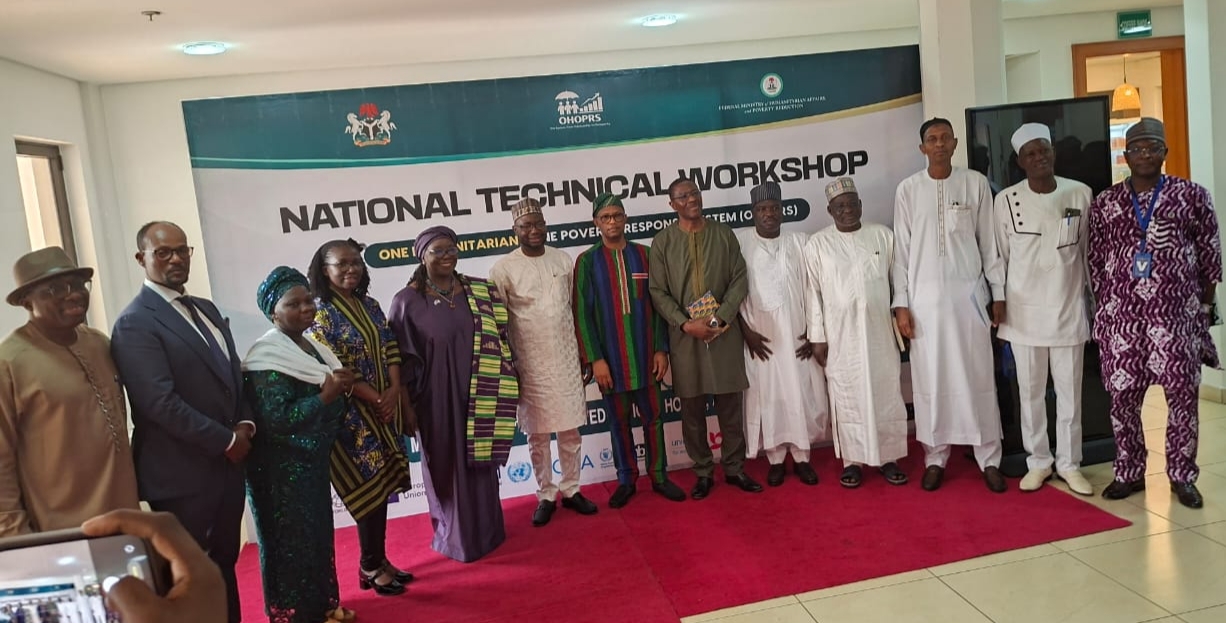
“OHOPRS is not merely another program. It is meant to serve as a national operational system,” he clarified.
Doro highlighted that this reform intends to transition the country’s approach from providing temporary aid to achieving sustainable outcomes, asserting: "We are shifting from merely assisting Nigerians to survive to empowering them to thrive."
He cautioned that without proactive measures, the prevailing inefficiencies would continue, as current methods frequently involve repetitive interventions without yielding sustainable advancements.
“It isn’t that assistance isn’t reaching the intended recipients. Instead, our systems fail to facilitate movement from mere survival to self-reliance,” he declared.
Moreover, Olubunmi Olusanya, the Permanent Secretary of the ministry, commented that this reform was essential after noticing that existing social protection programs were functioning independently.
"Previously, several social protection initiatives were in place across the country, but we found that many operated in isolation, making their benefits difficult to ascertain for NGOs and stakeholders," she explained.
“To counter this, we created a program called ‘One Ministry, One Poverty- Reduction Response System.’ This effort aims to synchronize all social safety- net programs to ensure that interventions are coordinated and transparent," she added.
Olusanya also shared that an initiative is underway to bolster the National Social Register to enhance transparency and accountability in identifying beneficiaries.
"The social register is structured to capture all vulnerable demographics transparently and accountably. Previously, numerous beneficiaries were recorded without their National Identification Number (NIN). We are now in the process of revalidating and updating the register to ensure that every recipient possesses a verified NIN," she stated.
As she noted, this registration is being conducted at the local government level in partnership with relevant agencies and community representatives.
"We are collaborating closely with NIMC to register the NINs of internally displaced persons (IDPs), despite their constant mobility due to insecurity. Our personnel are deployed across all local government areas to register vulnerable individuals, and we work alongside local community leaders who have a better understanding of their circumstances," she added.
She pointed out that internal quality control mechanisms have been instituted to prevent misuse of the system and to ensure that only the most vulnerable populations are captured.
A communique issued at the end of the workshop revealed that attendees endorsed OHOPRS as an integrated, data-driven platform designed to connect humanitarian responses with social protection and development interventions.
The document highlighted that this initiative would eliminate redundant efforts, bolster efficiency, and establish a structured pathway for individuals and families to sustainably escape poverty.
It mentioned that pivotal aspects of the system include a centralized national beneficiary register, a lifecycle-based intervention monitoring system, and coordinated governance structures across various institutions.
Workshop participants underscored the necessity for sustainable financing, improved data management, and enhanced collaboration among federal, state, and local governments, development partners, and stakeholders.
The event, held at UN House in Abuja from March 24 to 27, gathered representatives from government entities, development partners, civil society organizations, and technical specialists to discuss the framework and its execution.
In conclusion, the communique stated that the OHOPRS framework signifies a "shift from fragmented interventions to a coordinated national system capable of delivering measurable and sustainable outcomes."
Comments (0)
You must be logged in to comment.
Be the first to comment on this article!