
The federal government has established a technical committee tasked with examining a proposed $200 billion integrated high-speed rail, power, and gas project. This initiative, put forward by the De Sadel (Nig.) Limited consortium in collaboration with China Liancai Petroleum Investment Holdings Limited (Liancai Group), will undergo a thorough review.
The committee comprises representatives from various agencies, including the Political and Economic Affairs Office (OSGF) as the chair, alongside the Federal Ministries of Transportation, Petroleum Resources, Finance, Justice, and Environment. Other participating bodies include the Central Bank of Nigeria (CBN), Nigeria Financial Intelligence Unit (NFIU), Economic and Financial Crimes Commission (EFCC), National Intelligence Agency (NIA), Office of the National Security Adviser (ONSA), and the Debt Management Office (DMO).
Secretary to the Government of the Federation (SGF), Senator George Akume, inaugurated the committee in Abuja on Thursday. The project is aligned with the administration's Renewed Hope Agenda, intended to enhance national transport connectivity, improve energy supply, and develop the gas sector.
It is designed to address power shortages by directly connecting Nigeria's substantial gas reserves, estimated at over 200 trillion cubic feet, to power generation and rail electrification. The project envisions trains operating at speeds between 200–250 km/h, aiming to position Nigeria as a regional hub for logistics and manufacturing. Industrial estates are planned along the rail- gas-power corridors, with additional benefits including the reduction of road traffic and the shift of long-distance freight and passenger transport to high-speed rail.
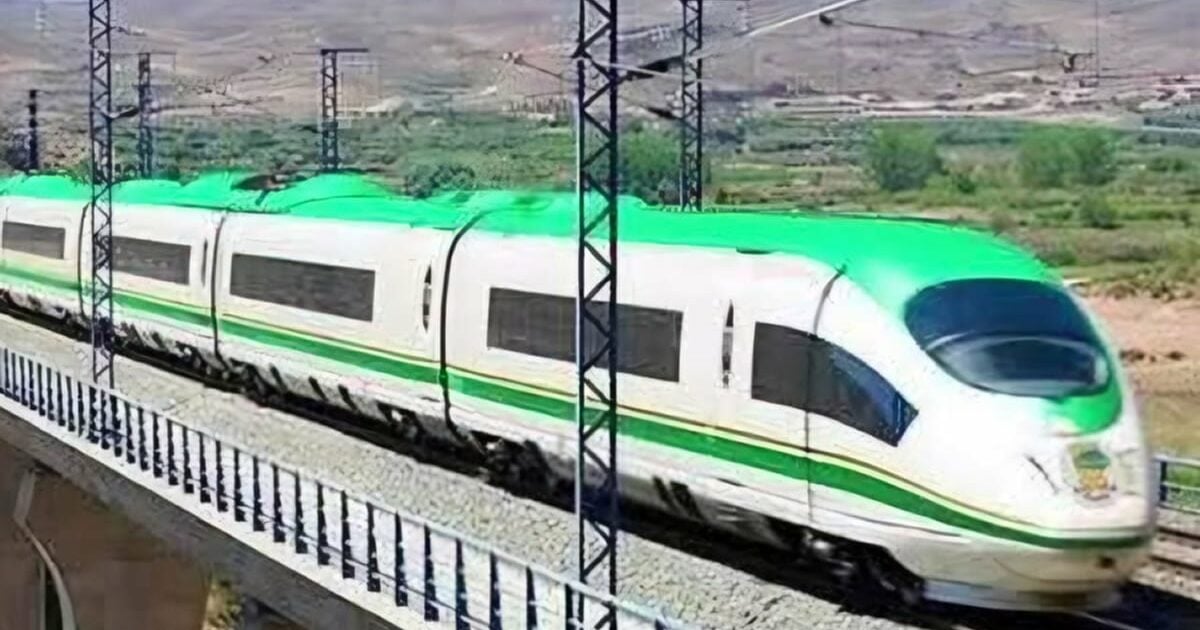
Senator Akume emphasized the project's considerable scale and significance, stating that it requires careful consideration rather than a hasty approach. He noted that the plan includes the construction of a 4,000-kilometer high- speed rail network connecting major economic centres such as Lagos, Abuja, Kaduna, Kano, and Port Harcourt.
"Projects of this nature hold the potential to revolutionize Nigeria's transportation infrastructure, bolster energy security, foster industrial growth, and deepen national integration," Akume remarked. He stressed the importance of ensuring these projects align with national priorities, are technically sound, financially viable, and fully compliant with Nigeria's legal and regulatory frameworks.
Akume highlighted the necessity of a coordinated technical review, mentioning that the OSGF has received input from security, financial intelligence, and regulatory agencies, particularly concerning the consortium's financial plans and the profiles of its partners, including the China Railway Group Limited/China Railway Engineering Corporation.
The SGF urged the committee to carry out their duties with the utmost professionalism and patriotism, recognizing that their combined expertise will be crucial in providing informed recommendations for high-level decision- making.
The committee's mandate includes verifying proof of funds and evaluating financial, sovereign, and contingent liability risks. They will also scrutinize the integrated oil & gas–rail financing model and any proposed divestments of oil and gas assets.
Furthermore, the committee is expected to conduct due diligence on China Liancai Petroleum Investment Holdings Limited and its proposed partners regarding technical and engineering, procurement, and construction (EPC) aspects. This evaluation must also ensure adherence to Public Private Partnership (PPP) guidelines, covering risk allocation, environmental and social safeguards, and resettlement considerations.
Akume instructed the committee to thoroughly review all pertinent documents, validate the proponents' claims, assess the proposal's technical, financial, legal, and environmental dimensions, and present objective, evidence-based recommendations.
Samuel Ukoh, the Managing Director/CEO of De Sadel Nigeria Limited, described the project as a foundational element for Nigeria's infrastructure development. He stated that the initial phase of the 4,000-kilometer network will cover a 1,700-kilometer corridor linking Lagos, Abuja, Kano, and Port Harcourt, encompassing over 20 states. According to Ukoh, trains on this route will travel at 350 kilometers per hour, reducing travel time from Lagos to Abuja to two hours and 30 minutes, and from Kaduna to Abuja in under 30 minutes. Travel times from Enugu to Abuja are projected to be around 35–40 minutes, and from Benue to Abuja less than 30 minutes.
Comments (0)
You must be logged in to comment.
Be the first to comment on this article!