
Victims of forced evictions in Makoko and neighboring waterfront areas have labeled the demolitions as traumatic, unlawful, and deadly, claiming that legal protocols were disregarded in spite of existing court protections.
In an interview on ARISE News, Jude Ojo, who advocates for the displaced inhabitants of the Ilaje Otumara community, stated that the demolitions followed prior discussions with the Lagos State government on regeneration and development, which unexpectedly escalated into the destruction of homes and livelihoods.
"The experience was far from pleasant. It was extremely traumatic and horrifying," Ojo expressed.
He noted that residents were initially engaged by government bodies about renewal plans and were led to believe that development would occur with community involvement.
"When there were discussions about regeneration, upgrading, and development with community members, it surprisingly turned into demolition, an unanticipated demolition," Ojo remarked.
The demolitions reportedly spread beyond Ilaje Otumara to Oworonshoki and Makoko, leaving residents in shock and resulting in several fatalities.
"It’s a distressing experience. Seeing people die is devastating, and many are traumatized," he elaborated.
He revealed that some residents lost their lives during the demolitions, while others died as a consequence.
"Some succumbed immediately; others perished as a result of the brutal and unlawful demolitions and forced evictions from their homes," Ojo stated.
He referenced tragic events in Makoko and Obodo Duni, citing deaths attributed to the deployment of tear gas during the forced evictions.
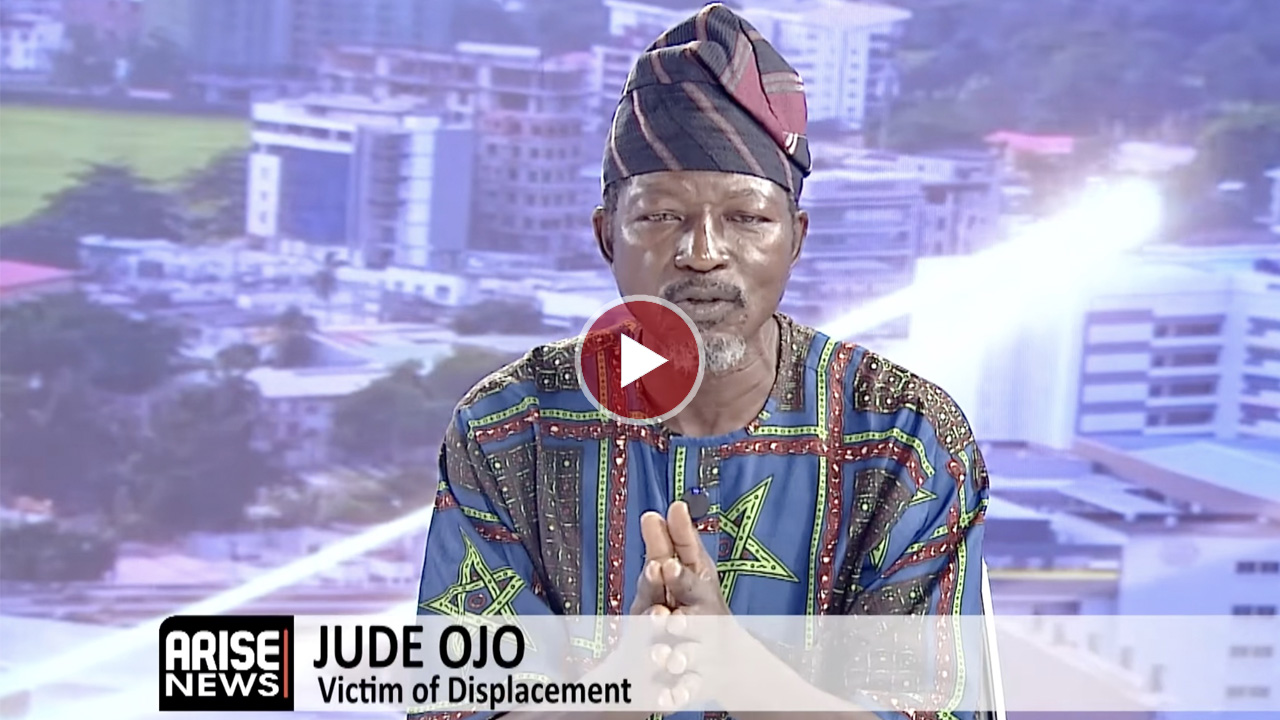
"In Makoko, a woman, about three months pregnant, died due to the suffocating effects of tear gas," he recounted.
"Additionally, in Owode Onirin, six individuals remain deceased in the mortuary, victims of an illegal and forceful eviction from Owode Onirin," Ojo continued.
He accused the state authorities of neglecting due legal procedures prior to the demolitions, emphasizing that residents should receive statutory notifications and court orders.
"Before undertaking demolitions, there should be specific legal notices provided. While I’m not a lawyer, my discussions with legal professionals have indicated this," he noted.
"A contribution notice must be issued, followed by a quick notice, and ultimately a demolition order from the court," Ojo explained.
He also mentioned that the impacted communities were not given the opportunity to present their case before any demolition orders were reportedly issued.
"In this instance, proper procedure was not followed," he pointed out.
Ojo claimed that numerous waterfront communities held court rulings that protected them from eviction.
"Many of these communities possess court rulings from the appropriate judicial authority in Lagos protecting them from such acts," he confirmed.
Discussing governmental interaction, Ojo stated that initial discussions occurred with the Lagos State Urban Renewal Agency, following public declarations by the Commissioner for Physical Planning about renewal plans.
"We were invited via LASURA," he stated.
"We held discussions with them covering the regeneration of our community, the types of buildings to be constructed, and the benefits to be provided to the residents of the community," Ojo mentioned.
However, he stated that on February 11, the situation shifted when officials from the Lagos State Building Control Agency, accompanied by police, entered the community.
"This was never part of the discussions. They arrived in large numbers, including staff in masks, armed with weapons and carrying tear gas, which was shocking," he observed.
Ojo stated that residents protested this action and sent letters to various authorities, including the governor and federal bodies, calling for intervention and protection.
"The letters highlighted the discrepancies from our previous conversations with the government and emphasized our rights under the Nigerian constitution for support and provision," he recounted.
He criticized the compensation supposedly provided to those displaced, questioning if it sufficiently addressed their losses.
"If you are offering compensation of 2,500,000 Naira, how does that compensate for the lives lost? What about the trauma and the loss of property?" Ojo asked.
He remarked that significant community structures, such as educational institutions and places of worship, were destroyed in the demolitions.
"They demolished my church; as a parish pastor, I lost my family's residence, my wife's school, and the community market," he stated.
Addressing remarks from the governor defending the demolitions, Ojo suggested that urban development requires more democratic approaches.
"If demolitions are necessary, it must be done within the democratic framework implied by our governance. We are not under military rule," he said.
He pointed out that vulnerable residents, particularly the elderly, have suffered greatly.
"Baba Agbede in Otumara is 91 years old. He served in Nepal for 35 years and has now lost his home, devastating his years of hard work," Ojo added.
Furthermore, Ojo discussed the arrest of activist Kamorudeen Sanusi, highlighting the distressing impact on affected residents.
"Since his arrest, conditions have worsened as he was my representative, and he remains in police custody," he shared.
Ojo expressed gratitude for the legal assistance provided during the plight.
"I wish to acknowledge a senior advocate, Femi Falano, for his invaluable help during this crisis," he stated.
The Lagos State government has defended the demolitions, asserting that they were executed in the public's best interest, citing safety, urban planning, and environmental considerations.
Comments (0)
You must be logged in to comment.
Be the first to comment on this article!