
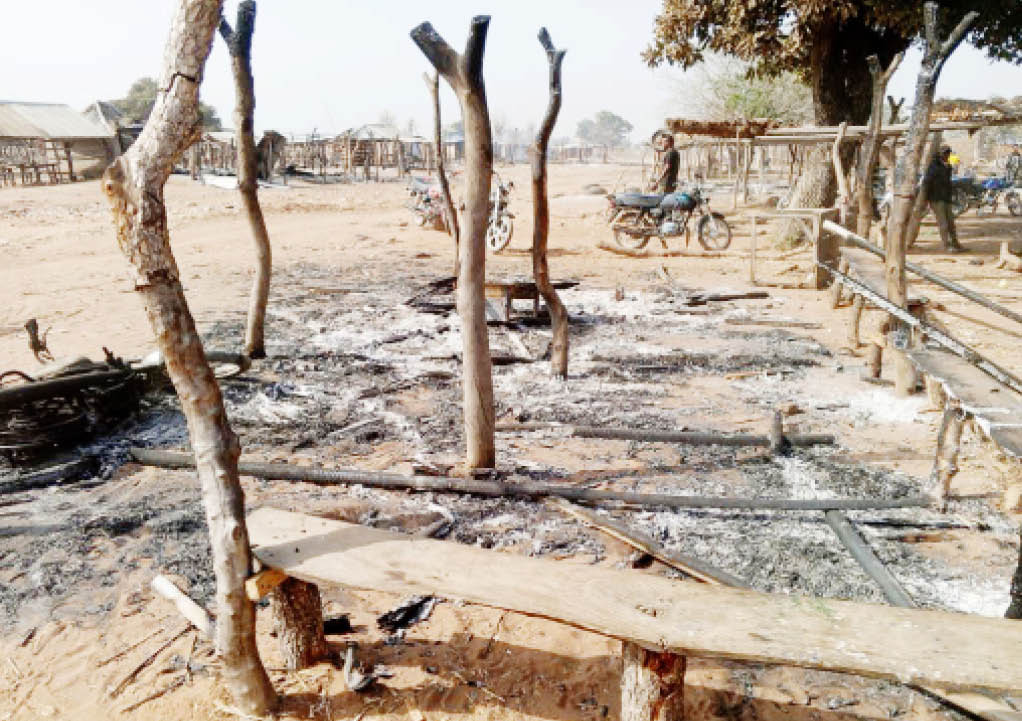
The shocking attack that took place in the first week of January 2026 at the Kasuwan Daji market in Demo village, situated in the Borgu Local Government Area of Niger State, where at least 30 innocent Nigerians were brutally killed, serves as a grave reminder of the urgent need to restore Nigeria’s forests from the clutches of violent criminals.
This recent incident, believed to have been carried out by bandits operating from the expansive Kainji National Park and adjacent woodlands, emphasizes a reality that can no longer be overlooked – our forests have transformed into the largest unregulated areas facilitating mass murders, abductions, and the dismantling of rural livelihoods.
It is imperative for Nigeria to provide the newly revitalized Forest Guards with the necessary assistance, resources, and clear strategic direction essential to eradicate criminality from these regions. Failing to do so will perpetuate a cycle of violence.
For years, bandits, terrorists, cattle rustlers, kidnappers, and other violent actors have exploited Nigeria’s forests, covering an estimated 96,000 square kilometers, which include over 1,129 reserves, to establish parallel criminal economies. These areas serve as hiding spots, operational bases, escape routes, and safe havens where criminals can stockpile arms and hold abducted individuals for ransom. The connection between unregulated forests and rampant violence is unmistakable. As long as these dense territories elude effective state control, rural populations will continue to face terror and abandonment.
This rationale led to the re-establishment of the Forest Guards initiative, spearheaded by President Bola Ahmed Tinubu, in partnership with the Office of the National Security Adviser, the Ministry of Environment, and other security agencies.
While the idea of Forest Guards is not new in Nigeria—having been present during colonial rule and somewhat revived in states like Ondo in 2019—the current scale of insecurity necessitates a far more vigorous and contemporary approach driven by intelligence.
For effectiveness, the Forest Guards must operate with a clear set of core objectives that include denying criminals shelter, asserting dominance in the forests, reinstating state authority in unregulated zones, ensuring community safety, and supporting broader national security initiatives. Their mission is not to substitute the police, military, or civil defense but to address a significant void that has allowed forests to devolve into battlegrounds.
Achieving these aims requires more than mere symbolic launches or ceremonial uniforms. It calls for substantial investment in capacity, welfare, technology, discipline, and coordination. The guards must be better trained, equipped, and motivated than the criminal organizations they confront. An armed bandit with an AK-47, a GPS device, and satellite communication cannot be effectively countered by a forest guard armed with just a stick or an outdated rifle.
To combat these criminals effectively, the guards require advanced weaponry, night vision gear, surveillance drones, sophisticated communication devices, and up-to-date mapping technology.
Presently, criminal groups have a significant advantage in their understanding of the terrain; the state must bridge this technology gap through specialized training.
Additionally, discipline and integrity must be a top priority.
The Forest Guards must not become a refuge for political allies, thugs, or unverified recruits. This elite security unit should admit only individuals of proven integrity, physical stamina, emotional resilience, and a profound sense of duty. The recruitment process must be rigorous, transparent, and free from political meddling. Any deviation from this standard will jeopardize the entire initiative.
Furthermore, the tasks of the Forest Guards must remain non-political. They should not be employed as instruments for settling local disputes or tools of intimidation in partisan conflicts. Their mandate is focused solely on national security and should be deployed strictly for that purpose.
Crucially, the Forest Guards cannot function independently. They need the full cooperation of the military, police, State Security Service, and civil defense to facilitate intelligence sharing, prompt responses, and coordinated operations. When they detect suspicious movements, identify hideouts, or intercept logistics related to terrorism, they must be prepared to initiate immediate joint responses. For instance, the military can provide overwhelming force when necessary while the guards sustain a consistent presence and control of the area.
When adequately empowered, the Forest Guards can enable other security agencies to focus on their primary roles. The Nigeria Police Force can prioritize civil enforcement, crime management, investigations, and community wellbeing without being drawn into every operation in the forests. The Nigeria Security and Civil Defence Corps can dedicate its efforts to safeguarding oil pipelines, railways, power infrastructure, and other essential national assets. Meanwhile, the military, which should ideally focus on external threats, can concentrate on maintaining national sovereignty rather than engaging in day-to-day internal security operations throughout the country.
The potential benefits are vast. Reclaiming the forests will restore farmlands that have been neglected for years due to fear of bandit assaults. It will enable displaced farmers to return to their places of origin, rejuvenate food production, create wealth, and help revive rural economies. Nigeria cannot combat food inflation or revitalize agriculture without securing the forests that surround farms, grazing routes, and marketplaces.
In addition to security and agriculture, forests and national parks hold tremendous value for tourism, conservation, and scientific inquiry. Sites such as Kainji National Park, Gashaka-Gumti, Old Oyo Park, Sambisa, Alagarno, and various reserves across the nation have the ability to draw tourists, generate employment, and produce revenue. However, none of this is feasible while these areas remain under the control of criminal factions.
To ensure sustainability, it is essential to provide adequate compensation for the Forest Guards, including competitive salaries, life insurance, health care, and other incentives. These individuals will confront armed groups in some of the most challenging terrains in the country; they must have appropriate support for themselves and their families while facing these dangers.
Lastly, close collaboration between state and federal authorities is vital. Criminals do not recognize state boundaries, and they can migrate easily across borders. Joint planning, real-time intelligence dissemination, harmonized operations, and unified command structures are crucial for efficiency.
The massacre in Borgu serves as a stark reminder that Nigeria is running out of time. If properly organized, equipped, and insulated from political influences, the Forest Guards can become one of the country’s most effective assets in restoring security, reviving rural economies, and reclaiming territories overrun by criminals.
Comments (0)
You must be logged in to comment.
Be the first to comment on this article!