
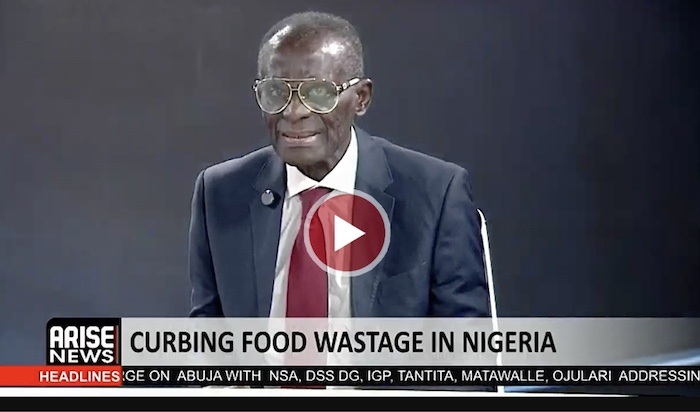
ARISE News analyst Dayo Sobowale has challenged the notion that food wastage is a significant contributor to Nigeria’s food crisis. He asserts that the fundamental drivers of food insecurity in the nation are systemic issues, including inadequate infrastructure, ongoing insecurity, and widespread poverty.
During a discussion on ARISE News on Tuesday, Sobowale critiqued assertions from international bodies like the European Union and the UN Industrial Development Organization, deeming them exaggerated and out of touch with the daily experiences of Nigerians.
“People are hungry… when they see food, you think they will not jump at it?” he questioned, emphasizing the desperation caused by scarcity.
He argued that the prevalence of hunger makes intentional food wastage improbable, asserting that such narratives fail to acknowledge the severe economic hardships faced by many households.
“You don’t just throw food down… and see what will happen,” he added, illustrating the practical unlikelihood of such actions.
While admitting that food waste can have environmental implications, including contributions to climate change, Sobowale firmly stated that the extent of wastage suggested does not correlate with Nigeria’s current socio-economic conditions.
“It can never be deliberate or willful,” he stressed, reinforcing his point about necessity overriding waste.
Instead, Sobowale directed attention to critical bottlenecks within Nigeria’s agricultural value chain, particularly the immense challenges in transporting food from farming communities to urban markets.
“The cost of transporting food… is getting very high,” he observed, pointing to logistics as a major hurdle.
He highlighted dilapidated road networks and security concerns in agricultural zones as key factors impeding food distribution, leading to shortages and inflated prices, rather than surplus leading to waste.
“Where we have our farms, they are being destroyed… and our roads are bad,” he stated, detailing the dual impact of insecurity and poor infrastructure.
Furthermore, he emphasized the impact of poverty on consumption habits, explaining that many Nigerians live on the edge, consuming food immediately due to a lack of adequate storage facilities and financial stability.
“People eat up whatever they have and prepare for the next day,” he explained, describing a cycle of immediate consumption.
Sobowale acknowledged that advancements in storage solutions, such as cold chain systems, could mitigate post-harvest losses. However, he maintained that addressing the fundamental issue of food availability must take precedence before such storage solutions become relevant.
“You need to have food before you can store something,” he argued logically.
He also voiced criticism regarding the perceived selective use of data by some international organizations, suggesting that their interventions might sometimes be influenced by broader geopolitical or economic agendas.
“They are not using statistics… in a realistic way,” he commented, questioning the methodology.
Regarding governmental responses, Sobowale indicated that while official awareness of these issues exists, the scale of the problem means current efforts are insufficient.
“Enough is not being done,” he remarked critically.
He advocated for a comprehensive, collaborative strategy involving all levels of government—federal, state, and local—along with active participation from community members to effectively combat food insecurity and its associated problems.
“All tiers of government should be involved… even village communities,” he urged, emphasizing the need for broad engagement.
Sobowale’s analysis seeks to shift the focus of the discussion on Nigeria’s food crisis, asserting that without confronting core structural challenges like infrastructure, security, and poverty, discussions about food wastage risk diverting attention from the root causes of hunger.
Comments (0)
You must be logged in to comment.
Be the first to comment on this article!