
France is poised to expand its nuclear arsenal and broaden its deterrence capabilities to include other European nations. This initiative comes in response to escalating global instability and signifies the most substantial amendment to French nuclear defense policy since 1960.
During an address at the Ile Longue naval base near Brest, President Emmanuel Macron detailed these developments, highlighting that they are a necessary adaptation to a "growingly unstable strategic environment." He remarked, "The next 50 years will be defined by nuclear weaponry," as he stood before a French nuclear submarine.
The updated strategy will see France increase its nuclear warheads, currently estimated at around 300, and it plans to introduce a new nuclear-powered submarine named The Invincible by 2036.
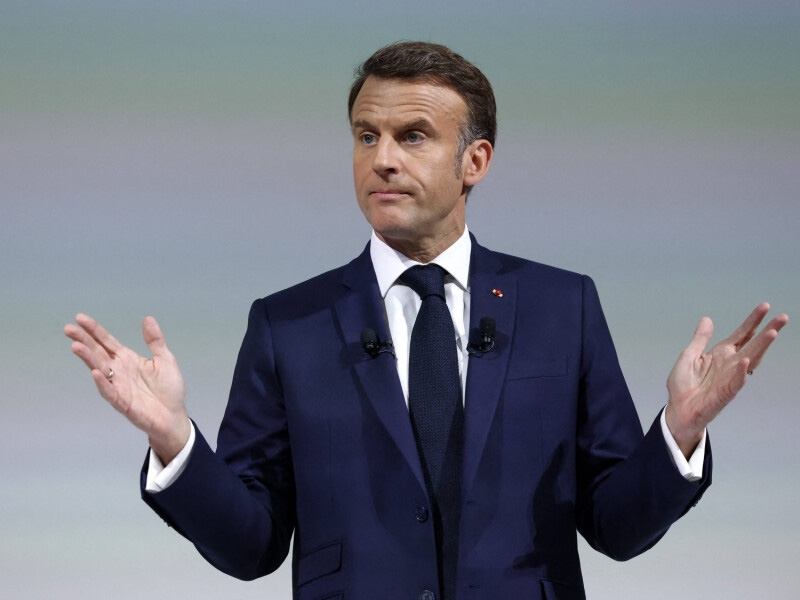
Additionally, Macron unveiled a new "advanced deterrence" strategy which includes eight European nations: the UK, Germany, Poland, the Netherlands, Belgium, Greece, Sweden, and Denmark. These nations are expected to engage in exercises utilizing France’s air-launched nuclear capabilities, provide air bases for French nuclear bombers, and assist in the advancement of supporting systems such as space-based early warning alerts, air defense against drones and missiles, and long-range missile technology.
Polish Prime Minister Donald Tusk praised the collaborative effort on the social media platform X, stating: "We are enhancing our military readiness in conjunction with our allies to deter any potential aggressors."
Under the revised framework, the French president will maintain exclusive control over nuclear weapon deployment, and no formal assurances will be extended to allied nations regarding joint operations. The foundation of this policy remains rooted in deterrence, emphasizing that any offensive action against France would incur an "unbearable cost."
This announcement also reflects a reorientation in France’s perspective on its "vital interests." Although previously unspecified, Macron’s doctrine indicates that nuclear deterrence may now encompass the protection of European partners, although finer details are yet to be clarified. Furthermore, France will cease to disclose the exact number of its nuclear warheads going forward.
Historically, France has collaborated with the UK, which is the only other nuclear power in Europe. Recently, UK officials have been involved in exercises with French Strategic Air Forces (FAS). In the wake of Macron’s address, France and Germany declared intentions for enhanced collaboration in nuclear deterrence, which include German involvement in French nuclear drills and the pursuit of conventional capabilities with European allies. Officials underscored that this partnership would serve to complement NATO’s broader nuclear deterrent, rather than replace it.
Comments (0)
You must be logged in to comment.
Be the first to comment on this article!