
The Guinean government has taken the drastic step of dissolving 40 political parties, which notably includes the three primary opposition groups. This decision was enacted through a late-night decree from the government, just under two months after Mamady Doumbouya was inaugurated as president.
The Ministry of Territorial Administration and Decentralisation announced the closure, citing the parties' "failure to fulfill their obligations" as the rationale behind this move. As a result of this decree, the affected political entities have lost their legal standing and control over their assets.
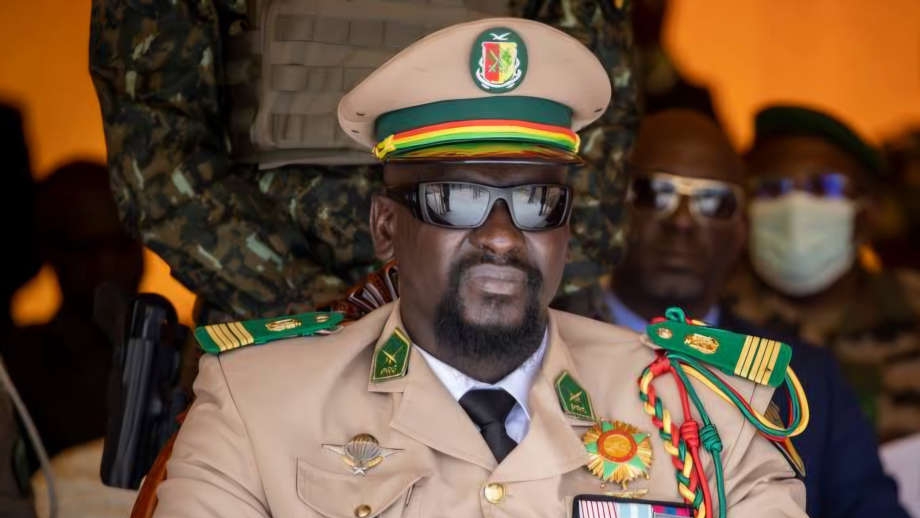
According to the order, which stated, "This dissolution entails the immediate loss of the legal personality and status of the parties concerned," the directive also prohibits these parties from engaging in any political activities or utilizing their names, logos, or other symbols.
Among the dissolved parties are the major opposition groups: the Union of Democratic Forces of Guinea, led by Cellou Dalein Diallo, the Rally of the People of Guinea, linked to the former president Alpha Conde, and the Union of Republican Forces.
The decree specified that the parties’ assets would be placed under sequestration, with the appointment of a curator to manage their transfer, although it did not clarify who would eventually assume control of these assets.
Doumbouya, who is 41 years old, initially came to power in 2021 after a coup that removed Alpha Condé, the first democratically elected president of Guinea. After consolidating his authority, Doumbouya was elected in December during a controversial election that excluded prominent opposition entities.
Since his ascent, Doumbouya’s administration has faced criticism for its curtailment of civil rights, including the prohibition of protests and a crackdown on political adversaries. Numerous opposition leaders have reportedly faced arrest, prosecution, or have been forced into exile, while human rights organizations have voiced concerns over cases of alleged enforced disappearances and kidnappings. Since gaining independence from France in 1958, Guinea has endured several instances of military and authoritarian governance.
Comments (0)
You must be logged in to comment.
Be the first to comment on this article!