
A significant number of workers, union representatives, and members of the opposition coalition gathered in Senegal's capital, Dakar, on Wednesday. Their demonstration was aimed at highlighting what they perceive as unfulfilled government commitments and a deteriorating economic situation, compounded by the nation's severe debt challenges.
The demonstration was spearheaded by the primary labor unions in the country and the Front for the Defense of Democracy and the Republic (FDR), an opposition group.
Mody Guiro, the general secretary of the National Confederation of Senegalese Workers, which is the largest labour union, stated that the government had reneged on an agreement from the previous year. This deal had involved a moratorium on strikes in exchange for assurances of improved wages and working conditions. Government officials, however, point to a substantial debt burden, inherited from the prior administration, as the reason for limited public funds.
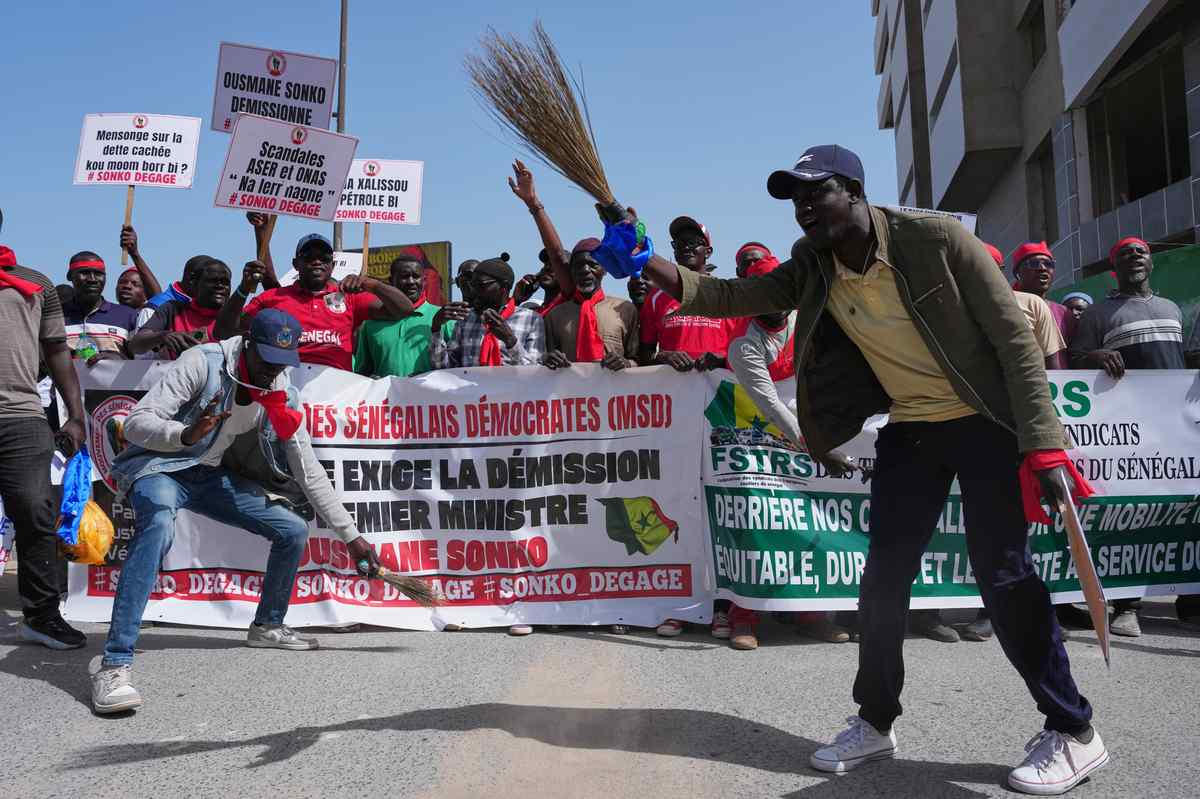
Participants in the march, identifiable by their red scarves and union caps, carried placards calling for the reinstatement of public sector employees who had been laid off and for a reduction in income taxes. Chants demanding the resignation of Prime Minister Ousmane Sonko were also heard.
The current administration, led by President Bassirou Diomaye Faye and Prime Minister Sonko, assumed office in April 2024. They had campaigned on a platform of significant reforms, including combating corruption, generating employment for the youth, and optimizing the nation's natural resource wealth.
However, the reform agenda of the ruling PASTEF party has encountered substantial impediments. A financial audit conducted in 2025 revealed that the national debt was higher than previously reported, amounting to $13 billion, a figure attributed to the outgoing administration. Negotiations with the International Monetary Fund for a new financial assistance package have stalled, mirroring a decline in the country's fiscal health.
Senegal's debt-to-GDP ratio has climbed to approximately 132%, placing it among the highest in Africa.
These economic difficulties have exacerbated the daily hardships faced by many Senegalese, with the country's youth being particularly affected.
In February of the previous year, a student protest at Senegal's main public university concerning delayed financial aid resulted in a forceful intervention by security forces, which tragically led to the death of a student.
Mohamed Fall, a youth activist present at Wednesday's protest, commented, "The country is stagnant. It is crucial for the government to implement solutions to revitalize Senegal's economy rather than engaging in conflicts on multiple fronts."
The director of the port, who was appointed shortly after President Faye took office, characterized the recent dismissals as a measure to address irregular contracts inherited from the previous government. Union representatives, however, contest this, asserting that many of the dismissed workers were associated with the former administration and that the terminations were illegitimate.
Comments (0)
You must be logged in to comment.
Be the first to comment on this article!