
Indonesia has begun rationing fuel and implementing work-from-home policies for civil servants as it addresses escalating global energy prices connected to rising tensions in the Middle East.
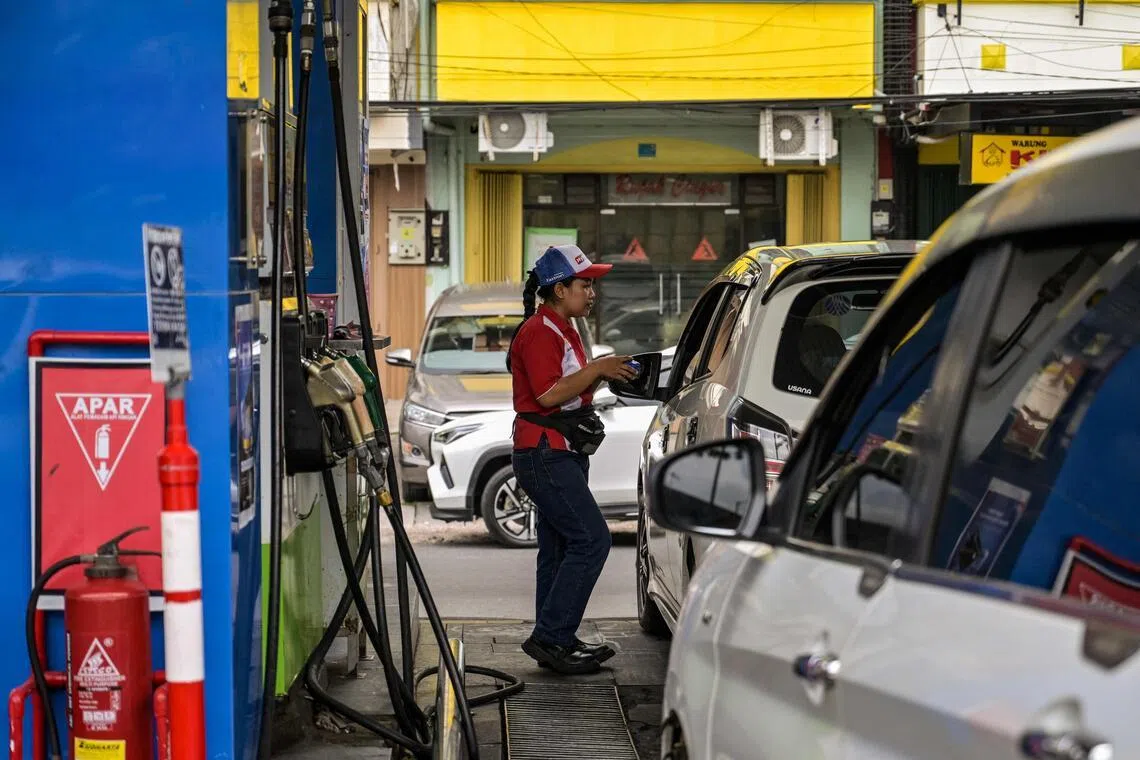
During the announcement, Airlangga Hartarto stated that private car owners will be restricted to purchasing a maximum of 50 litres of fuel each day.
"To ensure appropriate fuel distribution, the government will regulate purchases with a limit of 50 litres per vehicle," he shared. Additionally, civil servants will work remotely each Friday, the use of official vehicles will be halved, and government travel is set to decrease by as much as 70 percent.
These restrictions will not impact essential sectors, including healthcare, security, energy, and food supply. Indonesia anticipates that these measures could save between 121 and 130 trillion rupiah (approximately $7.1 to $7.6 billion), with the policies being effective immediately and subject to review every two months.
Despite a global surge in oil prices caused in part by disruptions around the Strait of Hormuz, the Indonesian government announced it will not raise fuel prices for the time being. "We require public support and cooperation. It is essential to purchase fuel sensibly and wisely," stated Bahlil Lahadalia, urging citizens to utilize public transport or electric vehicles.
As Southeast Asia’s largest economy, Indonesia remains a net importer of oil while also heavily subsidizing fuel, which accounts for around $12.3 billion, or roughly five percent of the national budget for 2026.
Officials assert that economic fundamentals remain stable even as global oil prices have surpassed $100 per barrel, significantly exceeding the $70 benchmark utilized in the nation’s budget planning.
Additionally, the government disclosed adjustments to public spending, such as reducing its free school meals program by one day per week, while still maintaining in-person schooling. Authorities indicated that further measures, including potential remote work policies for the private sector, could be introduced should global conditions deteriorate.
Comments (0)
You must be logged in to comment.
Be the first to comment on this article!