
According to the Nigerian Association of Liquefied Petroleum Gas Marketers (NALPGAM), a significant increase in the cost of Liquefied Petroleum Gas (LPG) is primarily due to supply limitations and external market forces.
Mr. Edu Inyang, the President of NALPGAM, explained in a recent interview with the News Agency of Nigeria (NAN) that higher prices at depots are a direct consequence of diminished local availability combined with upward trends in global energy prices.
Inyang pointed out that a reduction in product supply from the Dangote Refinery has exacerbated difficulties for marketers in accessing the product, noting that such access is no longer as consistent as it used to be.
"It has become considerably harder to obtain the product, and allocations are not as frequent as in the past," he stated.
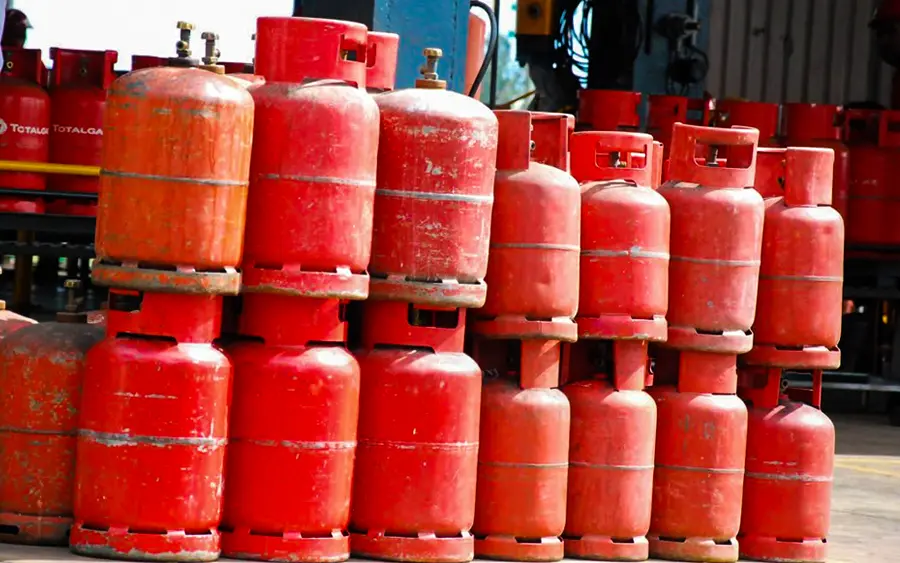
He further elaborated that certain buyers are struggling to secure supplies for extended durations, while those who manage to obtain product are adjusting their prices based on current market demand.
The NALPGAM president also mentioned that supplies originating from Nigeria LNG Ltd. are now incurring higher expenses, contributing to the overall rise in depot prices across the country.
He correlated this price escalation with shifts in the international energy sector, emphasizing that global price fluctuations invariably influence domestic pricing structures for LPG.
"Nigeria is not immune to global energy market volatility. Changes in international markets inevitably affect the prices of LPG locally," Inyang commented.
He also cited the nation's reliance on imported components and the prevailing foreign exchange rates as contributing factors to the escalating costs.
Inyang clarified that depot operators must account for their landing expenses and operational overheads, which are then reflected in the final retail prices passed on to consumers.
"Operators at private depots cannot afford to sell below their acquisition and operational expenditures, which ultimately dictates the final consumer price," he explained.
Despite these challenges, the NALPGAM president expressed confidence that greater investment in the country's gas infrastructure would lead to improved supply chains.
"We have navigated similar price cycles previously. With appropriate investments, supply levels will increase, and prices will eventually stabilise," he projected.
Inyang advocated for the establishment of more gas processing facilities and increased private sector engagement to enhance domestic production capacity.
He concluded that an increase in output from both existing and future gas projects would be instrumental in stabilising the market and moderating prices. (NAN)
Comments (0)
You must be logged in to comment.
Be the first to comment on this article!