
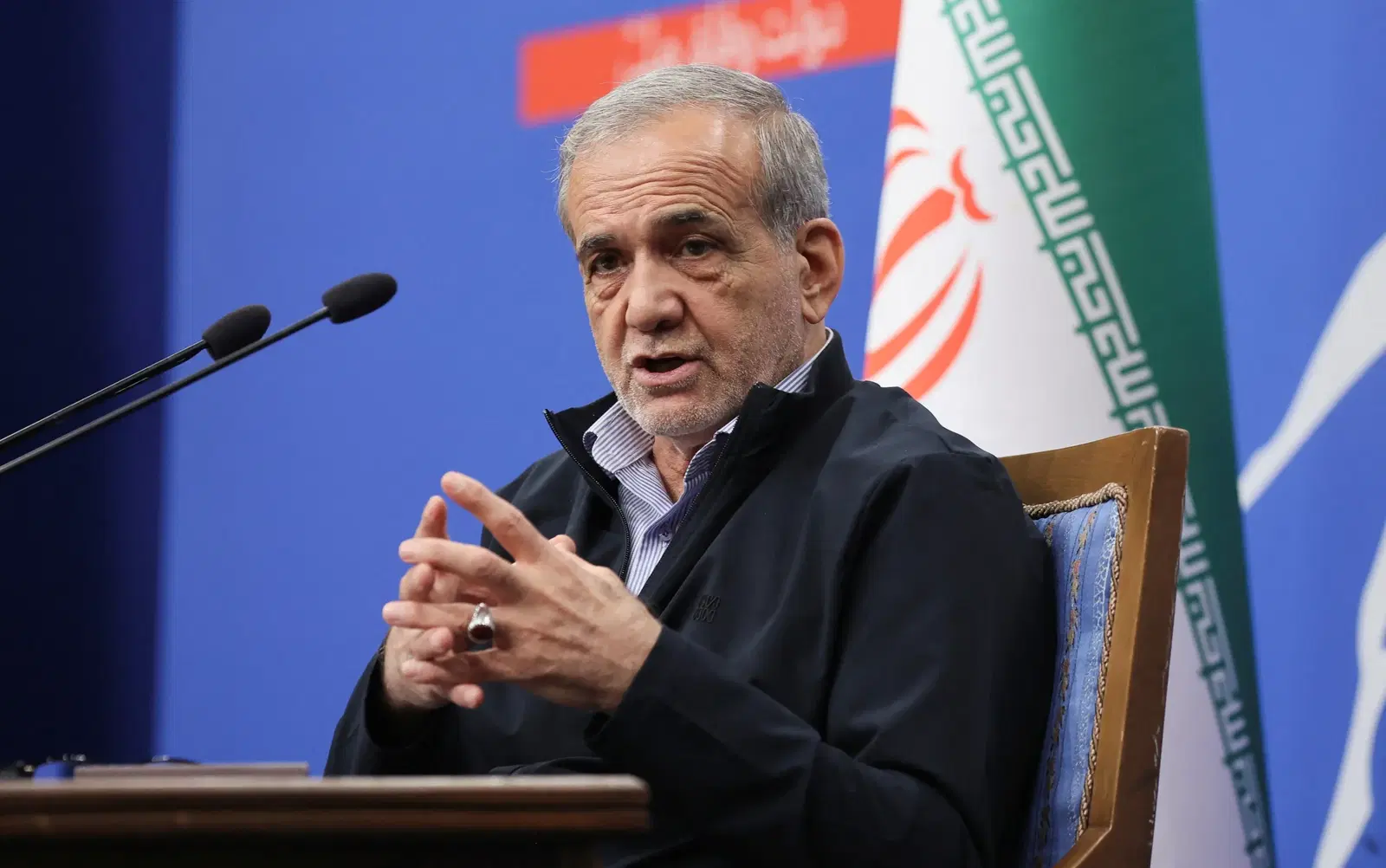
Masoud Pezeshkian, the President of Iran, has ordered the initiation of talks with the United States concerning nuclear issues, according to local reports. This announcement followed a warning from U.S. President Donald Trump, who indicated that severe repercussions could ensue if an agreement is not reached with the Iranian regime.
This development emerged in the wake of a harsh crackdown by Iranian authorities on anti-government protests that escalated in the previous month. The U.S. has reacted promptly by threatening military intervention and has positioned an aircraft carrier group within the Middle Eastern region.
Trump has expressed optimism that a resolution could be reached between Washington and Tehran; however, he reiterated recently that failure to negotiate would lead to significant negative outcomes.
In contrast, Iran has asserted its preference for dialogue while also signaling a readiness to respond firmly to any acts of aggression.
According to the Fars news agency, which cited an unnamed government source, Pezeshkian has mandated the commencement of negotiations regarding Iran's nuclear program. This information was also reported by Iran's government- affiliated newspaper and the reformist Shargh daily.
A meeting is anticipated to occur in Turkey on Friday, following diplomatic initiatives by Egypt, Qatar, Turkey, and Oman, as stated by an Arab official who requested anonymity due to the sensitive nature of the discussions.
A U.S. news platform, Axios, citing two unnamed sources, mentioned that Iranian Foreign Minister Abbas Araghchi is likely to engage with U.S. envoy Steve Witkoff in Istanbul to deliberate on a potential nuclear accord.
Trump has emphasized that “time is running out” for Iran to finalize an agreement regarding its nuclear ambitions, which Western nations assert is intended to create an atomic bomb—a claim that Tehran has consistently denied.
In a Sunday interview with CNN, Araghchi remarked that Iran aligns with Trump's stance against nuclear armaments, stating, “President Trump mentioned no nuclear weapons, and we fully agree. That could be a very advantageous deal,” and he added that Iran anticipates the lifting of sanctions in exchange for compliance.
Esmaeil Baqaei, spokesperson for the Iranian foreign ministry, confirmed that Tehran is devising a negotiation framework and method that will be prepared shortly, with communications between both parties channeled through regional intermediaries.
Diplomatic engagement has been spearheaded by Turkey, which welcomed Araghchi to Istanbul the previous week for discussions with regional partners, including Egypt, Saudi Arabia, and Jordan.
Jordan's foreign minister, Ayman Safadi, conveyed to Araghchi that the kingdom would not permit its territory to be utilized as a battlefield or launchpad for military actions against Iran.
Warnings from Iranian leaders, including Supreme Leader Ayatollah Ali Khamenei, indicate that any U.S. military strike could trigger a war across the region.
In Tehran, pensioner Ali Hamidi expressed that he does not fear war but criticized the United States' involvement in global matters. However, he also highlighted that Iranian officials share in the responsibility for the nation’s economic difficulties, calling for tangible actions rather than mere rhetoric.
The protests, which originated in late December due to economic strain, escalated sharply in early January, with the authorities deeming them as riots instigated by foreign adversaries, chiefly the U.S. and Israel. Khamenei compared the unrest to an attempted coup.
Iranian officials acknowledge a significant number of deaths during the protests and have recently released the identities of many deceased, asserting that a considerable portion were security forces or innocent bystanders, attributing the violence to what they describe as terrorist activities.
Human rights organizations contest these statistics, with one U.S.-based group suggesting a far higher casualty count involving primarily demonstrators allegedly killed by security personnel.
As a result of the turmoil, several Iranians have sought refuge abroad. One individual, Selina, age 25, who chose to remain anonymous, stated that she fled to Iraqi Kurdistan to escape a pervasive sense of fear and mentioned that locals avoid going out at night due to a heavy military presence.
The crackdown on protests has strained Iran’s relations with Europe, prompting the European Union to classify the Islamic Revolutionary Guard Corps as a terrorist entity, which led Iranian lawmakers to propose the same designation for European military forces. The EU and the UK also instituted new sanctions against Iranian officials for what they condemned as brutal suppression of dissent.
Baqaei noted that the foreign ministry has summoned European Union ambassadors in Tehran concerning this classification and cautioned that further repercussions could follow.
Reports by Iranian state television indicated the apprehension of four foreigners in Tehran, suspected of participating in the unrest, yet their nationalities were not disclosed. Rights groups estimate that since protests began, at least 40,000 individuals have been detained.
Comments (0)
You must be logged in to comment.
Be the first to comment on this article!