
Since its debut in 2025, Akinola Davies Jr.'s My Father’s Shadow has enjoyed a remarkable trajectory. It made history as the first Nigerian film to feature in the Cannes Film Festival Official Selection and earned a Special Mention for the Caméra d’Or at the festival. The film has since garnered several awards and nominations, including a recent BAFTA Award for Outstanding Debut, a British Independent Film Award, and two Gotham Independent Film Awards for Outstanding Lead Performance and Breakthrough Director. Additionally, it was chosen as the UK's entry for Best International Feature Film at the 98th Oscars, though it did not receive a nomination.
My Father’s Shadow portrays the journey of a father and his two young sons within a single day in Lagos amidst the politically charged aftermath of Nigeria’s 1993 presidential election. As the brothers navigate the city with their emotionally distant father, the film unveils the fragility of their bond and the political uncertainties affecting their lives. Through subtle interactions and careful dialogue, the narrative delves into themes of masculinity, memory, absence, and how national turbulence impacts personal relationships, crafting a vivid picture of a family against a pivotal moment in Nigeria's history.
Though shot in Lagos and narrating a significant Nigerian story, the classification of the film as either Nigerian or Nollywood has emerged as a topic of discussion.
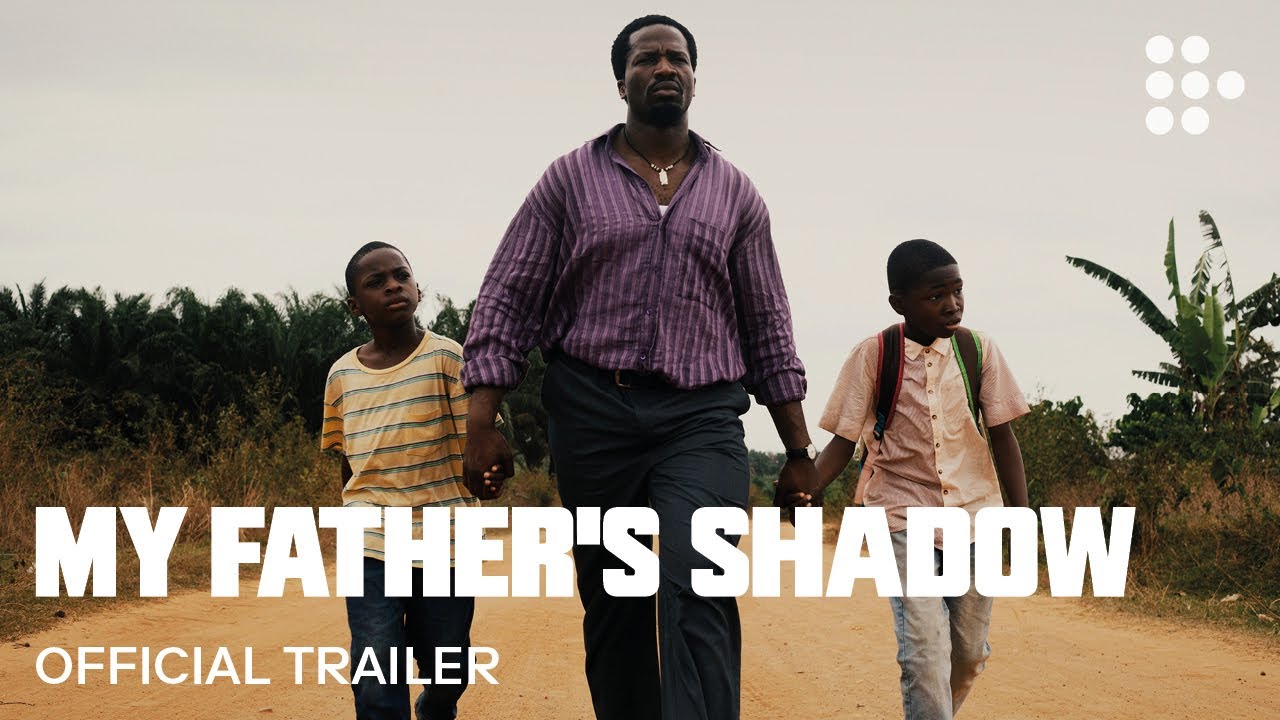
In a YouTube interview with Alice Eady, Akinola expressed a desire for Nigerians to view the film, stating it was created with them in mind. Despite the film's Nigerian setting, the production was financed abroad, limiting its initial availability to Nigerian audiences. However, this funding allowed it to achieve reach and recognition that might be challenging for a typical Nollywood film. International financing often catalyzes a Nigerian film's global success, as Nollywood lacks a robust domestic structure for international promotion. This contrasts with Afrobeats, where records produced in Nigeria can be marketed globally, demonstrating that while collaboration is crucial, the processes governing music remain within Nigerian hands.
Written by Wale Davies and directed by Akinola Davies Jr., My Father’s Shadow was produced by Element Pictures with financial backing from BBC Film and the British Film Institute. This partnership enabled it to become the first Nigerian narrative to receive nomination or acclaim at specific awards. Questions arise: had it been wholly produced in Nigeria, would it still have garnered similar attention? When it was nominated for the Oscars, it was recognized as the UK’s entry rather than Nigeria’s. If it had received an Oscar, how would it be classified—Nigerian or UK film?
This is not the inaugural instance of a Nigerian story being crafted abroad, yet few have reached the heights achieved by My Father’s Shadow. The film is a genuine portrayal of Nigeria, created by Nigerians, enriched with insights from those intimately familiar with the narrative. Despite this, its international success has not stemmed from the established pathways of Nollywood.
Nollywood stands as one of the globe's most prolific film industries, generating thousands of films yearly and providing livelihoods for millions. The industry has thrived despite empirical challenges, cultivating a domestic audience in the absence of substantial institutional support and fostering new talents. However, easing access to global distribution demands more than just volume; it necessitates robust structural frameworks.
What My Father’s Shadow illustrates is not a deficiency in Nollywood’s storytelling capability but rather the essential need for global infrastructure to achieve international acclaim. Financial backing from institutions like BBC Film and the British Film Institute provided essential networks facilitating access to events such as Cannes and positioning it for BAFTA nominations. Nigerian narratives possess the capacity to resonate worldwide, yet what has been historically absent is access—be it to funding that nurtures artistic freedom or distribution systems that connect these films with global viewers, as well as institutions to elevate diverse narratives to prominent platforms.
Comments (0)
You must be logged in to comment.
Be the first to comment on this article!