
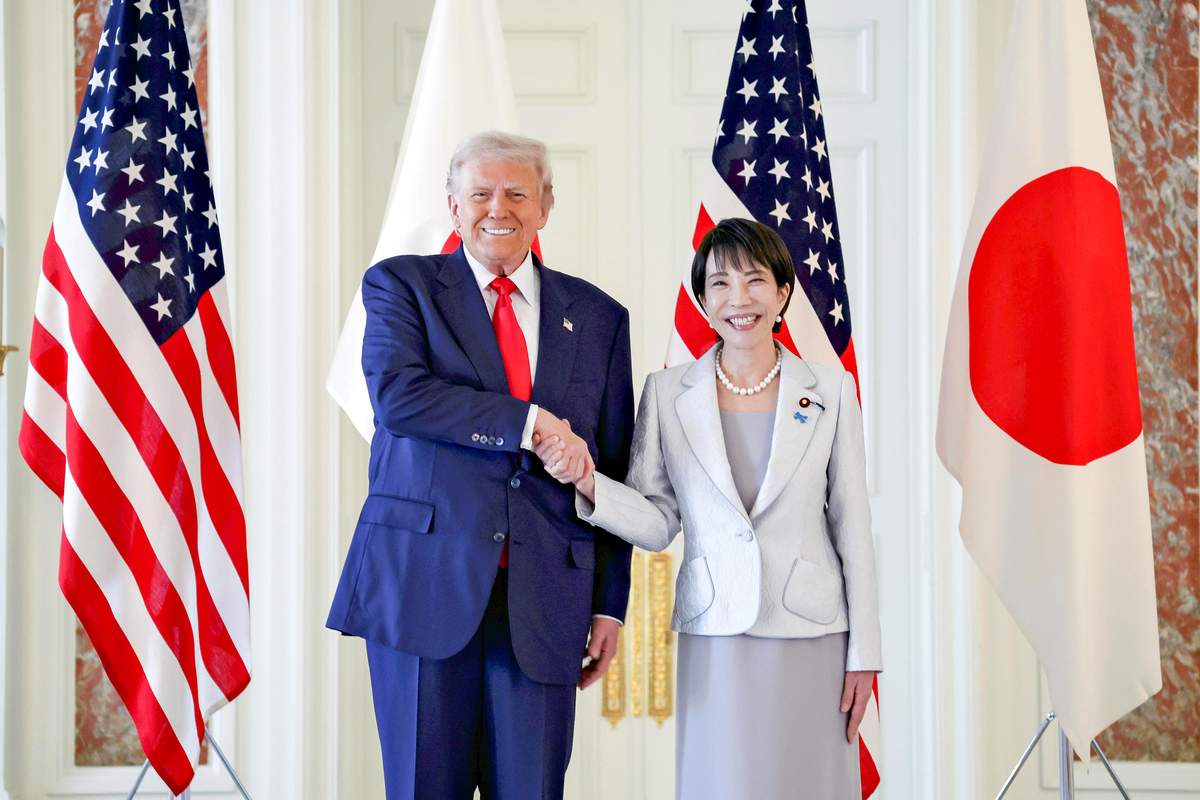
Japanese Prime Minister Sanae Takaichi is set to meet with US President Donald Trump at the White House on Thursday, navigating significant pressure concerning America's military stance against Iran and its request for allied assistance.
The meeting represents the first direct interaction between Trump and a leader from a major ally since he appealed for coalition partners, including Japan, to deploy naval vessels to escort merchant ships through the strategically vital Strait of Hormuz.
Observers suggest Takaichi is in a difficult position, needing to balance Japan's enduring alliance with the United States against its own constitutional restrictions and domestic political considerations.
"Takaichi finds herself in a challenging situation," commented David Boling, a consultant at the Asia Group in Tokyo and a former US trade negotiator. "The primary risk is President Trump demanding security commitments publicly that she may be unable to fulfil."
Initially, Japanese officials had intended for Takaichi's discussions to centre on China's increasing influence in the region. However, the agenda has reportedly shifted to prominently feature the Iran crisis and US expectations for maritime cooperation.
The Strait of Hormuz is a critical chokepoint for global energy supplies, with approximately 20 percent of worldwide energy passing through it. Japan is particularly reliant on this route, as roughly 90 percent of its oil imports traverse the waterway.
Despite the US emphasis, Japan has not yet received a formal request for military deployment. During parliamentary sessions earlier this week, Takaichi stated that Japan was evaluating potential actions that could be undertaken within the confines of its constitution.
Several key US allies in Europe, including Germany, Italy, and Spain, have already indicated they will not participate in any military mission in the Gulf, reflecting a broader hesitation among international partners.
Kaja Kallas, the EU's foreign policy chief, reiterated this sentiment, stating, "No one is prepared to put their personnel in harm's way."
Public opinion in Japan also appears to be against greater involvement in military operations. A survey conducted by the Asahi newspaper indicated that less than 10 percent of respondents favour US or Israeli strikes against Iran.
While Japan has previously offered logistical and intelligence support for US operations in the Middle East, dispatching naval assets into a zone of active conflict would signify a substantial and contentious escalation of its role.
Kazuhiro Maeshima, a political science professor at Sophia University in Tokyo, noted, "This has evolved into a debate that challenges the very foundations of the Japan-US security alliance."
Given Trump's fluctuating approach, sometimes criticising allies and other times downplaying their importance, the outcome of the upcoming discussions could significantly shape the future expectations and limitations of this crucial security partnership between the US and Japan.
Comments (0)
You must be logged in to comment.
Be the first to comment on this article!