
Joe Ajaero, the President of the Nigeria Labour Congress (NLC), has expressed concern over the economic vulnerabilities faced by Nigeria in light of global crises, asserting that the nation has no mechanisms in place to shield its citizens from sudden economic shocks.
He emphasized the necessity for active operation of both public and private refineries, arguing that local oil refining is essential to protect Nigerians from fluctuations in the global oil market.
In an interview with ARISE NEWS on Monday, Ajaero elaborated on the NLC's stance regarding economic shocks and the increasing fuel prices in Nigeria.
"The current crisis among three nations has unveiled our lack of preparedness as a country without any cushioning system. If a crisis occurs in the global oil market, Nigerians feel the consequences almost immediately. Previously, it was thought we could rely on reserves for at least two months before feeling the effects, but less than a week into the crisis, the impact was felt," he stated.
Ajaero also pointed out that the NLC has proposed that local youth in the Niger Delta should engage in oil refining, stressing that it is not a complex endeavor and should be deregulated. He lamented the current monopoly in the sector, insisting that without local refining of crude oil for domestic use, Nigeria would continue facing significant challenges and crises.
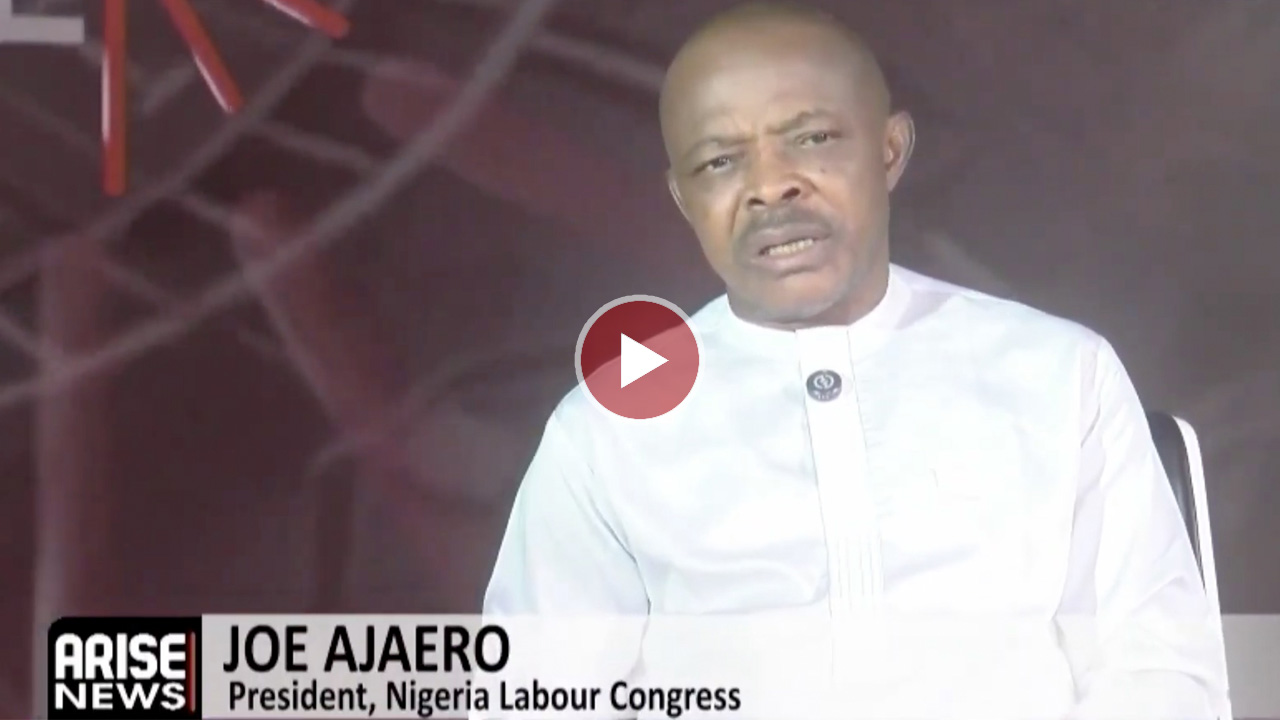
"We advocate for the establishment and operationalization of both public and private refineries," he declared.
He further advocated for the revival of Nigeria's refineries, citing the operational success of the Dangote Refinery as evidence of the feasibility of local refining.
"The Dangote Refinery is operational and functioning well. The government seems to jeopardize the potential of local refineries by hindering opportunities for young entrepreneurs in the Niger Delta. Even small-scale refineries can succeed here," he remarked.
Ajaero criticized government tax policies, arguing that frequent deductions on cashless transactions disproportionately affect low-income individuals and hinder efforts to provide adequate tax relief.
"It's concerning that even without a direct tax, every transfer of 10,000 Naira incurs a fee. The transition to cashless transactions has led to this, but lower-income workers bear the brunt of these costs. Who is responsible for this policy? Isn’t it the Central Bank of Nigeria? The narrative that individuals aren't being taxed doesn’t hold when indirect taxes are applied at every level," he queried.
He emphasized the need for transparency in cash transfers, advocating for community oversight to ensure aid reaches the genuinely needy.
"There should be a system where community leaders monitor the distribution of funds, ensuring that aid reaches 50 individuals from our village who are genuinely impoverished. This method should remain confidential within the community, allowing accountability for those receiving support," he suggested.
Regarding wage awards, Ajaero noted that they are intended as temporary measures to assist workers in coping with rising living expenses, highlighting that many government employees still have not received the complete 35,000 Naira wage award initiated two years ago.
"Following the earlier increase in PMS prices, overall living costs surged unexpectedly. Consequently, the federal government introduced a 35,000 Naira wage award to mitigate this impact temporarily. However, two years later, many ministries still have not fully disbursed it," he explained.
On queries about the NLC's engagement with the government concerning rising costs and wage issues, Ajaero indicated that the union prioritizes dialogue, citing a protest last December after six months of unanswered letters to the President.
"In labor movements, there’s a perception that strikes are the sole solution, but our initial step is to seek an audience with the government. Had we proceeded with a strike immediately, it would have exacerbated the situation. Our first approach is usually a formal letter. We organized a protest last December following six months of correspondence to the President without any response. Eventually, when we met him, he was unaware of our letters," he concluded.
Comments (0)
You must be logged in to comment.
Be the first to comment on this article!