
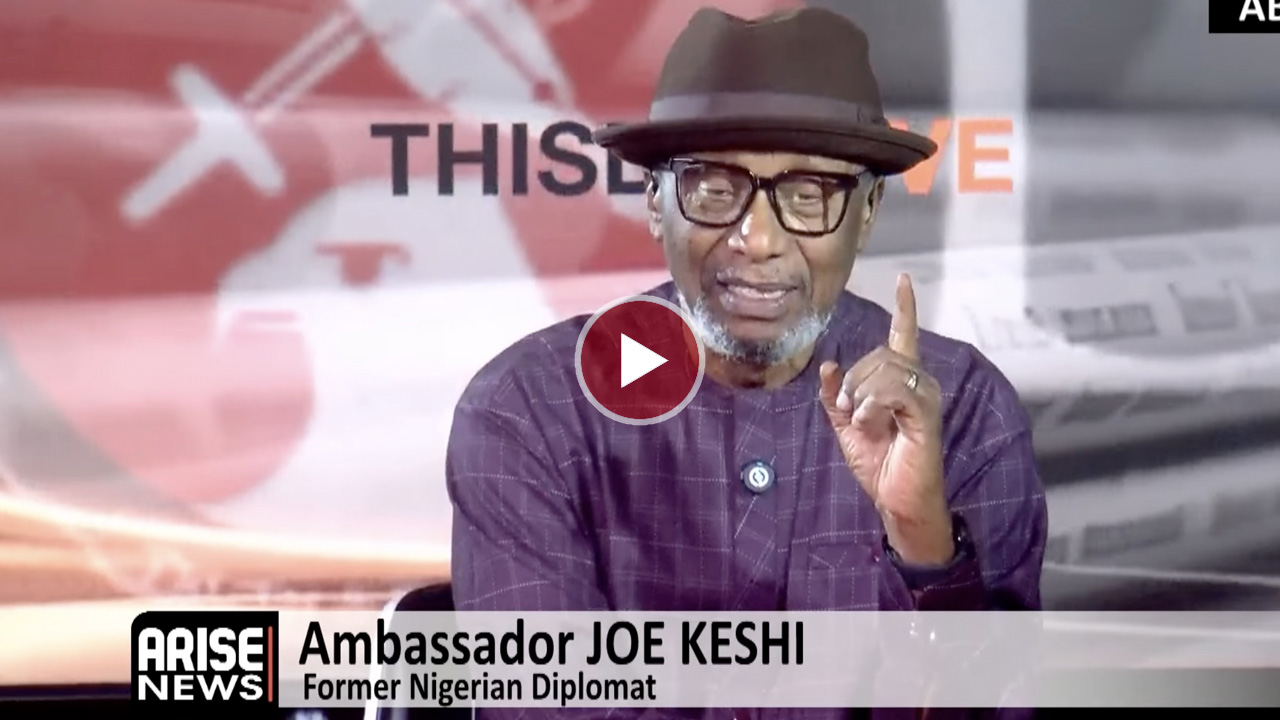
Joe Keshi, a former Nigerian diplomat, recently stated that the strikes conducted by the US and Israel against Iran are indicative of Israel's long- held aspirations, rather than a direct threat posed to the United States.
In an interview with ARISE News, Keshi elaborated that the escalating tensions in the Middle East are primarily driven by Israel's eagerness to confront Iran, rather than an immediate risk to US interests.
"Iran has never been a threat to the United States in any capacity. While it has supported certain factions in the region, it does not pose a threat to the US; Netanyahu has simply always aimed to target Iran," Keshi commented.
Tensions surged following significant strikes by the US and Israel, which reportedly resulted in the death of Iranian leader Ali Khamenei, heightening fears of broader regional conflict.
Keshi traced the roots of the current crisis to former President Donald Trump's withdrawal from the Iran nuclear deal established during Barack Obama's administration, asserting that the agreement had been effective prior to its cancellation.
"The Iranian deal negotiated by Obama was functioning well until it was struck down by Trump. The International Atomic Energy Agency has consistently confirmed that Iran was adhering to the terms of the agreement," he remarked.
Keshi suggested that Trump's decision to dismantle the deal was influenced by political factors, particularly pressure from Israel. "Trump acted on two fronts: first, the influence of Israeli interests. Netanyahu is a close ally. Secondly, there was his desire to abolish anything associated with Obama," Keshi stated.
He criticized the ongoing attempts by Washington to instigate regime change in Iran via military actions, asserting, "The strategy of targeting Iranian leaders with the goal of regime change is unlikely to succeed, as prior attempts in Afghanistan, Iraq, and Libya have shown."
Keshi maintained that achieving regime change cannot solely rely on airstrikes, pointing out that the swift replacement of Iranian leaders post- assault reflects the ineffectiveness of such strategies.
He also raised concerns about escalating global tensions due to major powers acting without respect for international protocols. "The irresponsibility of powerful nations leads to global instability. The situation we are witnessing is due to the actions of those who assume that their might grants them freedom to operate outside the established international system."
Keshi illustrated this point by referencing the ongoing conflict in Ukraine and the US-Israel strikes against Iran, suggesting that these actions compromise the authority of the United Nations and jeopardize world peace.
He expressed skepticism about the fairness of preventing Iran from developing its nuclear capabilities when other nations like India, Pakistan, and North Korea are not subjected to similar scrutiny, stating, "Israel's objective is to retain military supremacy in the region to mitigate any threats." He noted that while it is common knowledge that Israel possesses nuclear capabilities, it remains a topic of avoidance in international discussions.
Despite the increasing strife, Keshi conveyed optimism regarding diplomacy, emphasizing that it is still a crucial tool in international relations. "Diplomacy is not dead; it requires patience and the willingness to negotiate, sometimes in secrecy, to reach agreements."
He contrasted current diplomatic efforts with those by former US Secretary of State Henry Kissinger, who successfully negotiated peaceful resolutions through discreet discussions. "Kissinger would engage quietly until common ground was achieved before inviting others to the table, highlighting the need for sustained diplomatic efforts."
Keshi urged the global community to empower international institutions like the United Nations to counter unilateral actions by dominant nations. He warned that without such mediation, global peace remains precariously dependent on the decisions made by superpowers. "We find ourselves vulnerable to the whims of those who wield significantly greater power."
Comments (0)
You must be logged in to comment.
Be the first to comment on this article!