
Goodluck Jonathan has issued a clarification regarding his comments about a proposed 50-year age limit for African leaders, asserting that his statements were focused on promoting youth involvement in governance rather than advocating for a strict age cap.
The former president's office released a statement highlighting that recent interpretations of his comments made during the 50th anniversary memorial of Gen. Murtala Mohammed were misrepresented. The Media Adviser to Jonathan, Ikechukwu Eze, characterized the misunderstanding as stemming from social media interpretations implying that Jonathan supported a maximum age of 50 for political leaders.
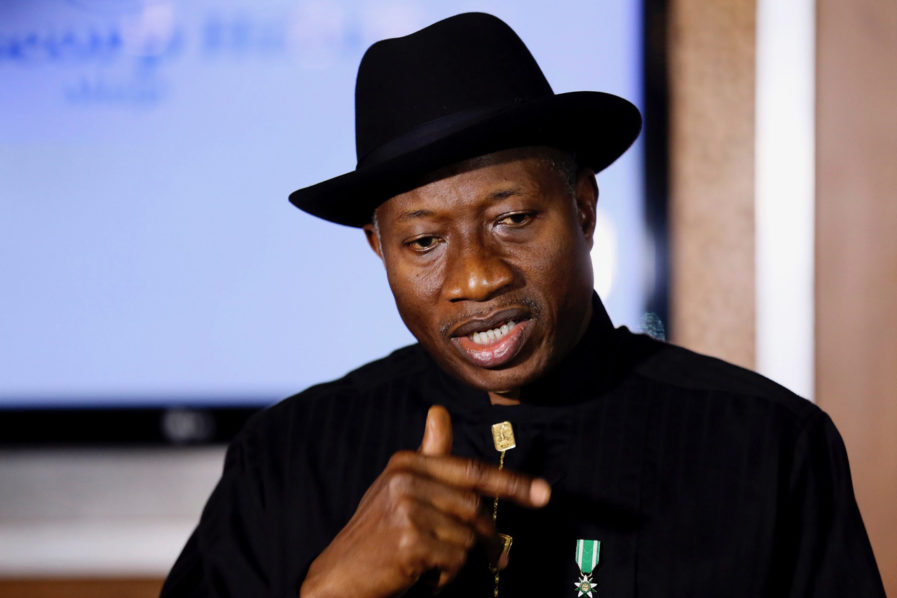
According to the statement, Jonathan's remarks were intended as a call for generational inclusion instead of imposing an absolute age limit for those in power. In his tribute to General Mohammed, who became president at the age of 36, Jonathan sought to emphasize the role of young individuals in governance, drawing upon historical examples of young leaders.
Eze pointed out that Jonathan referenced leaders such as Olusegun Obasanjo at 38, Yakubu Gowon at 32, and Alfred Diete-Spiff at just 24 to illustrate the significant contributions made by younger leaders in Nigeria's past. The former president's core message was meant to champion inclusion, not exclusion.
Jonathan underscored the vital need for skills, capacity, innovation, technological awareness, and the vigor necessary to handle the challenging duties of public service, rather than delineating governance by age alone.
Eze emphasized that Jonathan’s remarks were aimed at encouraging leadership renewal and generational inclusion, not at excluding older politicians from public roles. He asserted that leadership should focus on vision, character, and capability rather than simply the age of the individual.
The statement further rejected claims that Jonathan intended to shut out older politicians, clarifying that he himself took office in his fifties. The clarification concluded with a call to reconsider the context of Jonathan's remarks, asserting that they underscore the need for greater youth involvement in African governance rather than enforcing a rigid age limitation for leaders.
Comments (0)
You must be logged in to comment.
Be the first to comment on this article!