
Min Aung Hlaing, the chief of Myanmar’s military, has been nominated to serve as president as the country’s parliament convenes on Monday, after a general election that faced criticism for sidelining key opposition groups.
It is anticipated that Min Aung Hlaing will be officially confirmed in this role, having been nominated alongside two associates who are not expected to pose a serious threat to his aspirations.
The military figure, who has faced sanctions from various Western nations, orchestrated a coup five years ago that led to widespread civil unrest in Myanmar. Since that takeover, many lives have been lost, and millions have been forced to flee their homes, with substantial regions of the country still under the control of armed resistance factions.
The elections conducted between December and January were heralded by the junta as a step toward reconciliation. However, the legitimacy of the process was widely questioned as major political parties remained excluded and physical voting was impaired in many areas due to ongoing violence.
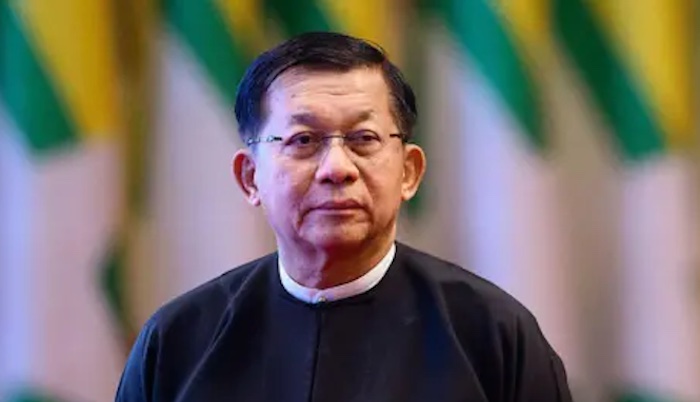
In response to these critiques, the military authority has maintained that the election was conducted fairly and transparently.
Despite these claims, about 90% of the representatives in the newly established parliament are aligned with Min Aung Hlaing, whether as military appointees who inherently occupy a quarter of the parliamentary seats or as members of the armed forces' political party.
During the upcoming week, parliament is expected to deliberate on the presidential appointment, but Min Aung Hlaing's ascendancy appears assured.
He has long been viewed as having presidential ambitions, particularly following his unsuccessful bid for power in the 2020 elections, which were won by the civilian leadership of Aung San Suu Kyi—a situation that partially motivated the military coup that ousted her government.
According to Myanmar’s constitution, Min Aung Hlaing would have to relinquish control of the armed forces upon becoming president, a move that could shift internal power structures within the military.
There are reports suggesting that some senior commanders may not be content with his leadership, highlighting potential risks connected to loosening his direct military control.
He has already put forward General Ye Win Oo, a close associate, as his likely successor for military leadership—a figure renowned for his stringent approach and alleged severe treatment of dissenters.
Moreover, Min Aung Hlaing has initiated a new consultative council that he will preside over, which may enable him to maintain influence over both military and civilian spheres even if he steps into the presidential role.
Observers believe that this anticipated transition will not lead to any considerable change in policy, as the new administration is likely to reflect the existing junta’s composition, albeit under a civilian guise.
Comments (0)
You must be logged in to comment.
Be the first to comment on this article!