
The announcement in early February 2026 regarding the United States' plan to deploy an additional 200 soldiers to Nigeria signifies a crucial moment in our country's prolonged battle against the multifaceted challenge of insurgency. In a setting where the threats of ISWAP and banditry persist like a dark cloud over the Sahel, the introduction of advanced ISR technology, immediate intelligence sharing, and specialized tactical training from one of the world's leading militaries is, from a practical perspective, a welcome development. It is essential to acknowledge that our brave troops are often overstretched, engaged in guerrilla warfare across extensive regions with equipment that frequently lags behind that of agile non-state actors such as the Turjis and Murjis prevalent in our nation.
Dismissing assistance extended under the banner of shared security would mean overlooking the desires of countless individuals in the northern regions who long for peaceful nights free from the sounds of gunfire.
Nonetheless, pragmatism must not equate to complacency. Although we recognize the strategic advantages that AFRICOM offers, we must also be aware that we are navigating a path strewn with the debris of “well-meaning” foreign interventions. The Nigerian leadership—encompassing political figures, esteemed traditional institutions, and moral authorities—must comprehend that military assistance is never a neutral entity, especially with Trump in command of the mighty U.S. military.
Such support carries conditions, some overt and others intricately intertwined with long-term geopolitical agendas. To avoid repeating the mistakes that rendered Libya into a chaotic arms market or the two-decade-long quagmire of Afghanistan, our leaders need to remain vigilant over our sovereignty. It has been noted that Nigeria is among less than ten countries that have effectively mapped its rare earth mineral deposits, which are set to become the most sought-after resources in the near future. Put simply, we are walking a very fine line.
The historical cautionary examples are not merely academic discussions; they serve as urgent alerts. The 2011 intervention in Libya, initially intended to safeguard civilians, culminated in the complete disintegration of state institutions, resulting in a power vacuum that inundated the entire West African region with advanced weaponry and displaced combatants. Nigeria continues to bear the burdens of that so-called “success.” Furthermore, the extended military involvement in Afghanistan showcased that no amount of foreign apparatus or “boots on the ground” can replace a firm, homegrown social contract between a government and its populace. When foreign forces assume the primary role in ensuring domestic peace, the local security agencies often suffer deterioration, becoming more answerable to the benefactor nation than to the citizens they are duty-bound to protect.
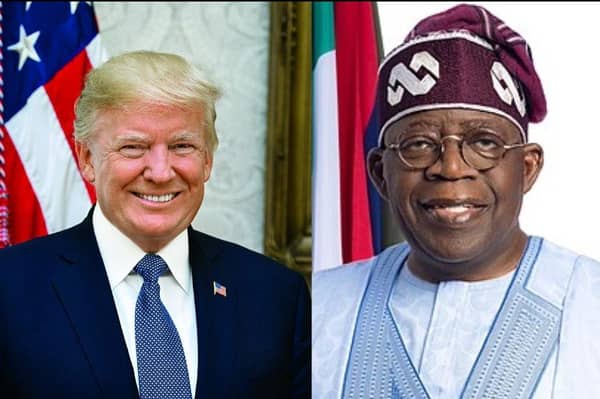
At this juncture, the Nigerian political entity must step forward. President Tinubu and the National Assembly need to guarantee that this cooperation is clearly defined with specific, time-sensitive objectives. We cannot entertain an open-ended arrangement that permits foreign military interests to dictate our national security framework. Transparency is vital. The Nigerian populace deserves clarity on the deployment's exact parameters: Are there areas off- limits for our own commanders? What is the situation regarding the alleged drone refueling stations? Our lawmakers must fulfill their oversight responsibilities with renewed urgency, ensuring that the flow of foreign aid does not evolve into a crutch that excuses further procrastination in essential reform of our police and military institutions. It has also come to light that the U.S. Congress is urging the Trump administration to impose sanctions on figures like Kwankwaso and label Miyetti Allah as a terrorist entity. We can set that matter aside for now, as it presents a separate set of concerns.
Concurrently, our traditional and clerical leaders—the Emirs, Obas, Obis, and religious heads—occupy a role that no foreign intelligence operative can replicate. They are the guardians of local trust. In numerous areas where the government is perceived as remote or oppressive, these figures serve as essential links to the community. They must remain alert to the “cultural friction” that often arises with foreign military presence, especially given the misleading narrative surrounding “Christian genocide.” However, as long as my Christian friends and brothers, who appear to advocate and embrace this deployment, feel secure, I personally find solace in it. This is the sole reason I condone this military endeavor involving Uncle Sam. Indeed, “that” Uncle Sam!
Historical evidence indicates that a U.S.-led initiative in predominantly Muslim territories, if mishandled or regarded as an “invasion,” can unintentionally serve as a recruitment tool for the very extremists we aim to combat. Our religious leaders must engage in the security dialogue, ensuring operations are carried out with utmost respect for local norms and that “collateral damage”—a stark euphemism for the loss of innocent Nigerian lives—is never regarded as an acceptable cost of progress.
Moreover, there exists a particular danger that an overreliance on foreign military capability might cultivate a “security-first” narrow-mindedness. Genuine stability in Nigeria will not emerge from the end of a foreign gun; it will arise from revitalizing the Lake Chad basin, educating out-of-school children in Zamfara, and creating employment opportunities for the disillusioned youth of the Niger Delta. Our clerical and traditional leaders must remind the political elite persistently that military aid is merely a temporary solution, not a fix. If we allow ourselves to become a permanent battleground in a “Global War on Terror” dictated from Washington, we risk subordinating local necessities for security and economic dignity to global geopolitical strategies.
Additionally, we must consider our standing within the continent. Nigeria has historically been viewed as Africa's big brother, the cornerstone of ECOWAS, and a leading advocate for African solutions to African challenges. As we engage with the U.S., we must ensure we do not alienate our neighbors or undermine our position within the African Union. The recent withdrawals by Niger, Mali, and Burkina Faso from ECOWAS signify a rift in regional unity. By accommodating an expanded U.S. presence, Nigeria must avoid being perceived as a “proxy” nation and instead be recognized as a strategic leader employing every tool available to stabilize the region for the collective benefit of all Africans.
Ultimately, the prevention of a recurrence of previous interventionist failures hinges on our internal resilience. The saying that “a house neglected from within invites outsiders to take charge” resonates powerfully. We welcome training, embrace intelligence, and utilize technology; however, we must never relinquish the command over our future. Our political, traditional, and religious stakeholders must unite in vigilance. They must demand that this collaboration reinforces our institutions rather than depleting them. It is imperative that the Nigerian soldier remains the face of our security and that the Nigerian citizen continues to be the ultimate beneficiary of every initiative.
U.S. support in 2026 is not only an essential reality in a perilous world but also a measure of our national maturity. If we remain alert, hold our partners responsible, and expedite the internal reforms addressing the foundational causes of our insecurity, we stand a chance to turn the tide.
Should we fail to do so, we risk finding that the assistance we desperately sought has resulted in a peace that is not truly ours and a sovereignty that exists only in theory. The tightrope is narrow, and the stakes are high, but the Republic must navigate it with eyes wide open.
Allah yabamu sa’a.
Comments (0)
You must be logged in to comment.
Be the first to comment on this article!