
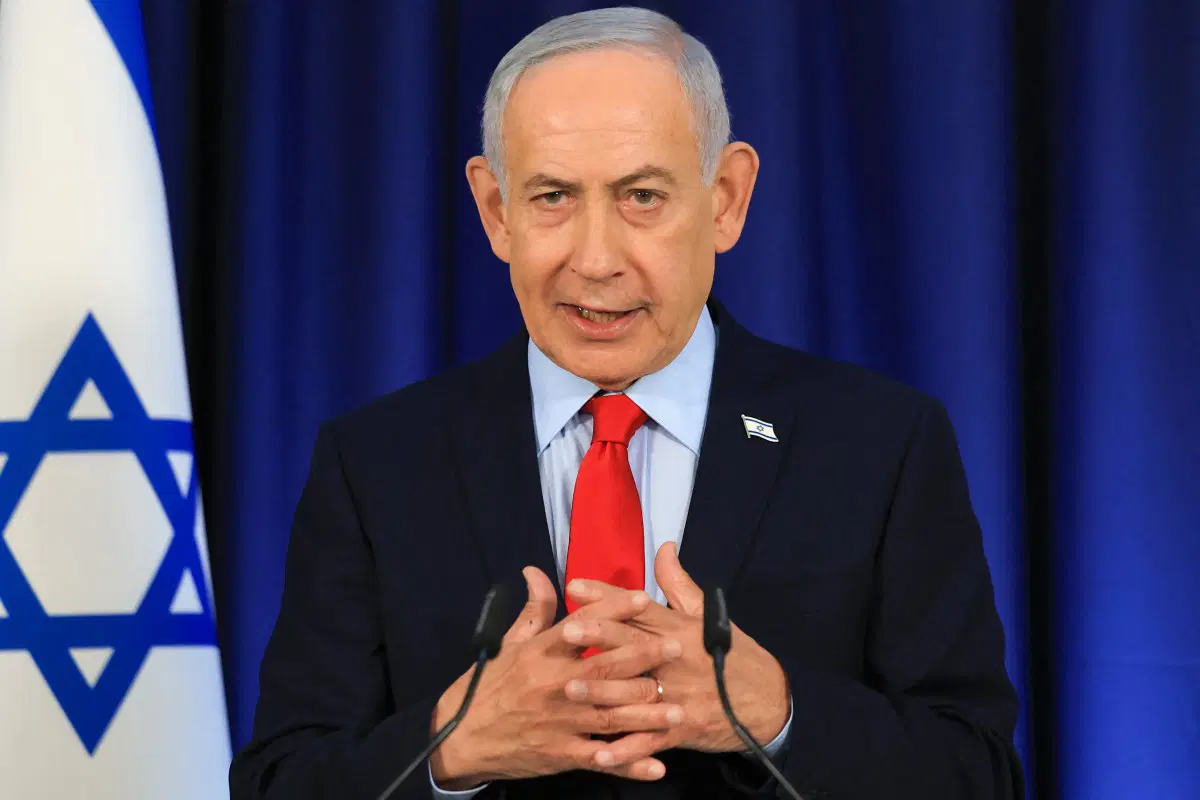
Israeli Prime Minister Benjamin Netanyahu affirmed on Thursday that Israel is committed to continuing its military operations against Hezbollah, stating that strikes will occur "wherever necessary." This stance was communicated following a significant escalation of Israeli airstrikes on Wednesday, which the Lebanese health ministry reported resulted in at least 254 fatalities and over 1,100 injuries.
Netanyahu underscored that Israel's primary objective is to re-establish security for citizens in the northern regions by diminishing the capabilities and resolve of the militant group.
The Israeli military recently conducted what it termed its most substantial attacks of the ongoing conflict. Within a 10-minute period, over 100 sites across Lebanon were targeted as part of an operation referred to as 'Operation Eternal Darkness.'
During these intensified operations, the Israel Defense Forces (IDF) announced the elimination of Ali Yusuf Harshi, identified as a personal assistant to Hezbollah leader Naim Qassem. Further strikes were directed at vital infrastructure, including crossing points along the Litani River, and approximately 10 locations identified as weapons storage sites, command posts, and rocket launch positions. In response to the high casualty figures, the Lebanese Prime Minister’s office declared Thursday a national day of mourning, mandating the closure of public institutions and the lowering of national flags in remembrance of the civilian victims.
These continuous Israeli strikes have significantly impacted the prospects of the Islamabad Accords, a two-week ceasefire brokered by Pakistan between the United States and Iran. While Pakistani Prime Minister Shehbaz Sharif indicated the ceasefire was intended to be universally applied, including in Lebanon, Israeli leadership and U.S. President Donald Trump have explicitly stated that Lebanon is not included in this agreement.
In reaction to the recent Israeli attacks, Hezbollah launched multiple rocket volleys into northern Israel on Thursday morning. The launches triggered air raid sirens in nearby communities, and Hezbollah described them as a necessary response to perceived ceasefire violations.
As the two-week negotiation period commences, the conflict in Lebanon remains a critical challenge to regional de-escalation efforts. Human rights organizations, including Amnesty International, have issued urgent appeals for the protection of civilians, noting that the death toll in Lebanon has now exceeded 1,500 since the intensification of ground and air operations began in early March.
Comments (0)
You must be logged in to comment.
Be the first to comment on this article!