
Energy expert Nick Agule has pointed out that Nigeria holds the unfortunate title of being the worst country in terms of energy poverty globally. He attributes this dire situation to chronic power supply issues and broader systemic failures.
In a recent interview with ARISE NEWS, Agule discussed Nigeria's power sector reforms, attributing the current electricity crisis to the flawed privatization of power assets during the tenure of former President Goodluck Jonathan in 2013. He explained that while the administration aimed to privatize generation and distribution companies, it neglected to adequately reform or finance the transmission sector, creating a significant obstruction in the electricity supply chain.
Agule stated, "President Jonathan, in 2013, privatized the electricity sector, but he executed it poorly, which has led to these ongoing problems. What happened was that he privatized the generation and distribution companies but did nothing to address the transmission company. Initially, control was handed to Manitoba of Canada, but it was later returned to government management.
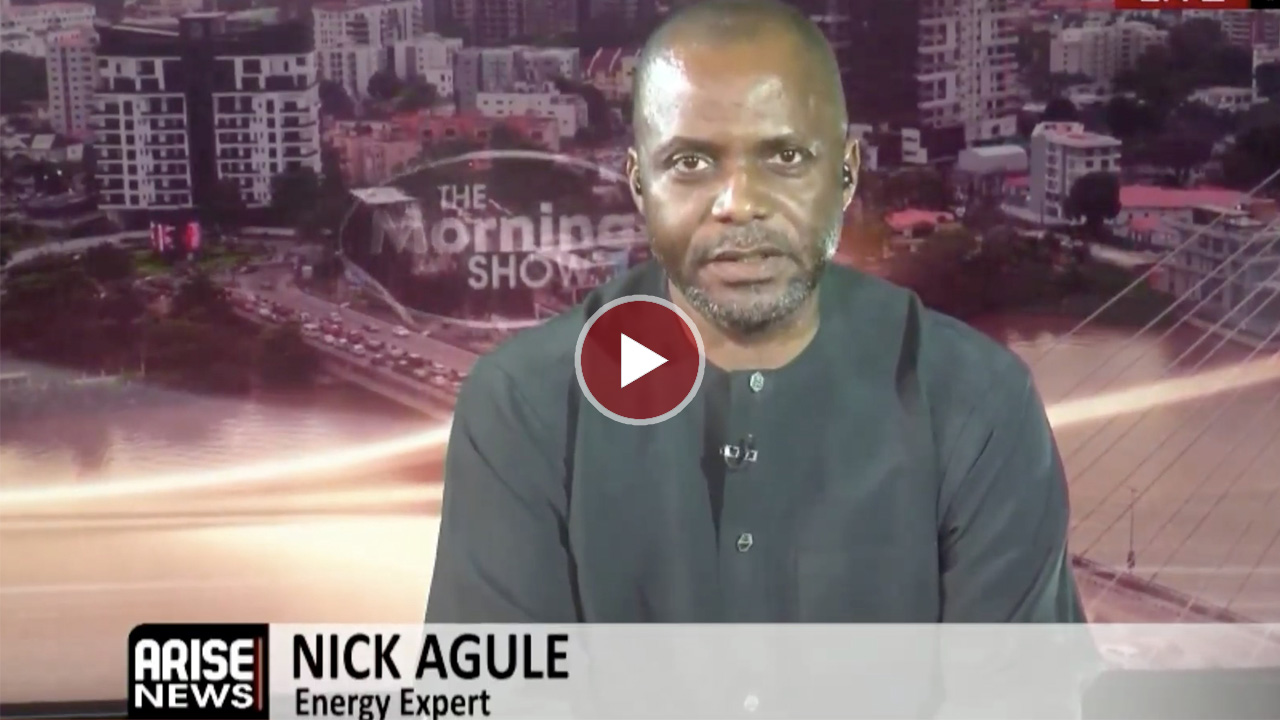
"The bottleneck in transmission arises because the government lacks the financial resources to upgrade and expand transmission capabilities. Then we look at the distribution company in Abuja. The licenses for these distribution companies were given to entities without any reputable history in the power sector. They lack experience, management skills, technical know-how, and financial strength. These companies pursued the licenses without the necessary funds to invest. How can they expect to gather funds from tariffs to invest? That's unfeasible. The operators in the sector provide inadequate investment, and Nigerian citizens are facing significant hardships as a result."
To illustrate the severity of the situation, Agule recounted his own experiences, revealing that he pays much more for electricity in Abuja than he does in London, where he enjoys a consistent power supply.
"I have homes in both the United Kingdom and Nigeria. My electricity bill in Nigeria is higher than in London, and yet in the UK, I benefit from continuous electricity around the clock every single day of the year," he remarked.
He emphasized the stark contrast between Nigeria and other nations. For instance, the United Arab Emirates, with a population nearing 12 million, generates approximately 45,000 megawatts of electricity daily, while Nigeria, with over 200 million citizens, struggles to produce around 5,000 megawatts.
"The situation is so dire that it hinders economic growth," he asserted, linking Nigeria's electricity shortfall to a national budget of about $40 billion, in sharp contrast to Brazil's budget of approximately $1.2 trillion, which has a similar population.
In closing, Agule pointed out that the high entry costs for electricity are much greater than in the telecommunications sector, as are the tariffs. "Investing more capital in electricity yields higher returns than in telecoms," he said.
"These high entry expenses are the root of the problem. Those holding electricity licenses in Nigeria lack the financial means to cover these costs. However, if competent and well-capitalized firms take charge, they could inject the necessary billions into the sector, developing the infrastructure needed to provide Nigerians with electricity, even at a reduced cost. Why are these unqualified entities allowed to hold licenses when they lack the means to meet investment requirements? That is the crucial question we need answered."
Comments (0)
You must be logged in to comment.
Be the first to comment on this article!