
The Nigerian federal government has announced that it will not introduce regulations on petrol prices, even as global oil markets experience volatility due to the ongoing conflict in the Middle East.
During a recent television interview, Finance Minister Wale Edun stated that rather than implementing price controls, the government would take alternative steps to alleviate the economic impact stemming from the hostilities involving the United States, Israel, and Iran.
Edun mentioned that President Bola Tinubu has proposed providing an additional 100,000 Compressed Natural Gas (CNG) conversion kits to enable drivers to transition from petrol to CNG, which is priced approximately 25 to 30 percent lower than petrol.
He emphasized that the government is inclined toward solutions driven by market dynamics rather than imposing direct price controls.
"Interventions by regulators typically occur in scenarios of market failure. However, when it comes to price stabilization, our focus will be on managing disruptions, the duration of which remains uncertain," Edun explained.
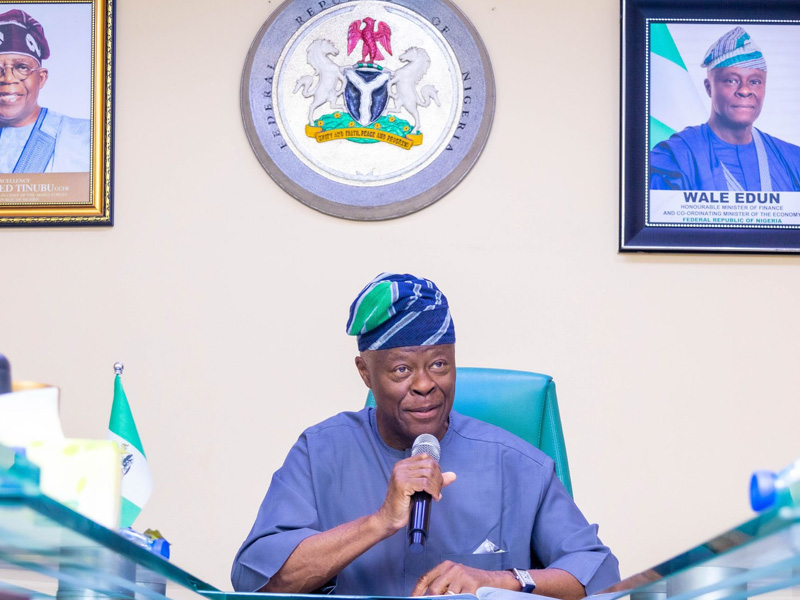
"Instead of regressing to previous methods, we will explore various strategies that could assist in alleviating the living costs for Nigerians," he continued.
The ongoing crisis in the Middle East has resulted in significant fluctuations in energy markets, with crude oil prices climbing to over $100 per barrel on March 9, the highest since July 2022, before settling at approximately $87 the following day.
Furthermore, the finance ministry had cautioned that this conflict could impact Nigeria's oil and gas pricing structures, flow of capital in financial markets, and overall logistics and supply costs globally.
The rising crude prices have led to increased industrial prices, which has prompted many petrol stations across Nigeria to raise their pump prices, consequently leading to heightened transport fares on key routes.
Minister Edun indicated that price changes made by private sector players are reflective of existing market conditions, alluding to the situation at the Dangote Refinery.
The refinery recently lowered its ex-gantry petrol price to about ₦1,075 per litre after previously implementing three price hikes, although retail prices remain high.
"Dangote reduced their petrol price from around ₦1,200 to slightly over ₦1,000 to ₦1,050, which illustrates market dynamics," Edun remarked.
He noted that Nigeria's refining capabilities bolster the country’s economic stability, highlighting investments made by Aliko Dangote, the president of Dangote Group.
"We should acknowledge the refining capacity we possess in Nigeria, which converts crude into petrochemicals and other petroleum products," Edun stated.
He added that nations lacking domestic refining installations are encountering more severe economic turmoil as energy prices continue to escalate.
Lastly, Edun stressed the importance of supporting local refineries to secure a reliable supply of petroleum products.
In response to the rising costs, the African Democratic Congress has called on the federal government to implement a temporary cap on petrol prices to prevent any further increases that might exacerbate the current cost-of-living crisis.
Comments (0)
You must be logged in to comment.
Be the first to comment on this article!