
The Nigeria Labour Congress (NLC) has voiced its demand for enhanced access to labour justice amid rising cases of unfair labour practices across the nation.
The organization stressed the necessity for the judiciary to exhibit fairness in its handling of labour disputes.
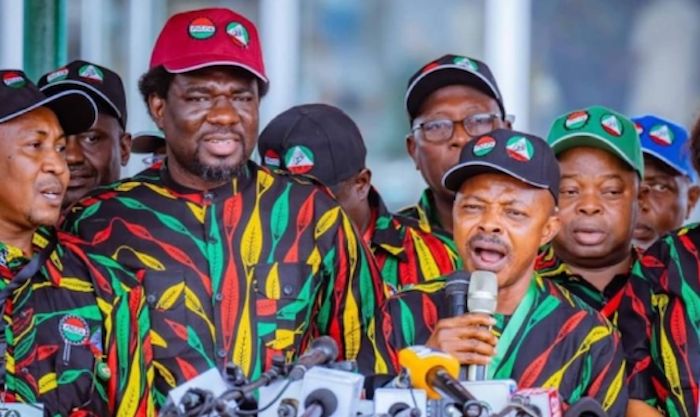
This stance was articulated by NLC President Joe Ajaero on Thursday during the 4th International Labour Adjudication & Arbitration Forum (I-LAAF), an event organized by the Nigeria Employers Consultative Association (NECA).
Advocating for improved accessibility to labour justice, Ajaero remarked, "The judiciary should be impartial, yet the reality poses questions on this. It must possess clarity in its vision for justice!"
"It needs to recognize the disparity in power dynamics between the individual worker and large corporations. It should honor the collective voice of workers as expressed through their unions. A judiciary that is 'blind' inappropriately risks becoming a tool for oppression, sanctioning unjust dismissals, criminalizing strikes, and enforcing contracts that resemble modern forms of wage slavery."
Ajaero further criticized the judiciary stating, "When courts function as venues characterized by delays and technicalities, punishing workers for organizing efforts, they diminish public trust."
He added that this behavior fosters skepticism among workers who begin to question, "Is this institution of justice merely a weapon for our oppressors?"
Ajaero underscored that when justice becomes a commodity accessible only to those with the financial resources for protracted litigation, the judiciary fails in its foundational duties.
He indicated that the judiciary's inadequacy in safeguarding the interests of labour unions often drives workers towards alternative methods, such as direct action, mass mobilization, and the assertion of the working class's collective power.
“When avenues for justice are restricted, workers will find their own paths, as history illustrates through significant milestones like the eight-hour workday and safety regulations, often achieved not through court victories but through strikes, protests, and unwavering solidarity,” he stated.
Ajaero's message to the judiciary and mediators was clear: to effectively serve as arbiters, they must comprehend the conflicts that exist between the affluent and the impoverished, as well as between workers and employers. Their roles necessitate the protection of the vulnerable against the powerful.
“Your legal interpretations should invigorate conventions such as ILO C87 and C98 concerning Freedom of Association and Collective Bargaining, rather than stifle them under legal jargon. Ensure that the right to strike is upheld as a fundamental, inalienable human right, rather than something to be bartered away,” he stated.
Ajaero concluded by asserting that genuine industrial harmony can only be established on the foundation of authentic justice, free from fear and subjugation.
Comments (0)
You must be logged in to comment.
Be the first to comment on this article!