
Professor Barth Nnaji, the former Minister of Power, has called for immediate actions to stabilize the struggling electricity sector in Nigeria amidst growing supply challenges.
During a recent graduation lecture at Abia State University in Uturu, Nnaji stated that urgent reforms are necessary to avert further decline in the power industry.
He highlighted several essential reforms, including the reinstatement of Power Purchase Agreements (PPAs) between electric utilities and the Federal Government, which had been previously suspended.
Additionally, Nnaji urged the government to address the massive debts in the sector, which include approximately ₦6.8 trillion owed to power generation companies and over ₦200 billion owed to distribution companies.
He advocated for the implementation of cost-reflective tariffs essential for maintaining the sector's financial health.
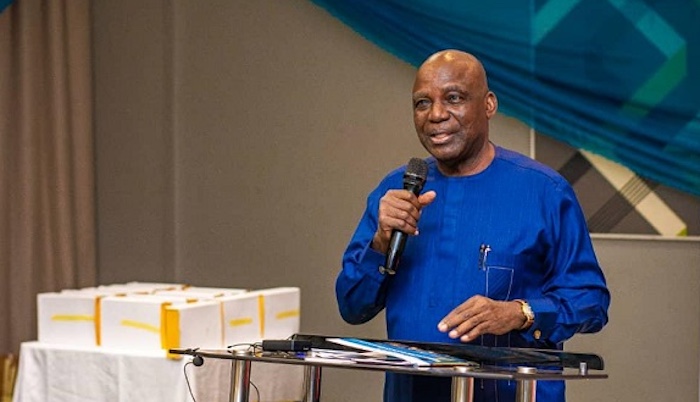
Nnaji also recommended the establishment of a 765KV national super grid and the decentralization of transmission services to avoid nationwide outages caused by failures in isolated areas.
The energy expert underscored the importance of utilizing Nigeria’s significant natural gas reserves, as around 75% of the country’s electricity is derived from thermal sources.
He encouraged authorities to promote embedded generation by distribution companies and reassess their service areas to enhance efficiency and service provision.
In his comparisons with countries like India, China, Brazil, and the United States, Nnaji expressed concern that Nigeria has lagged in expanding its power generation capacity over the past decade.
He noted that only a limited number of plants, such as the Azura-Edo Power Plant and the Geometric Power Plant in Aba, have been constructed in recent years.
Nnaji warned that without financial assurances like the World Bank-backed Partial Risk Guarantee to mitigate investment risks, attracting funds to the sector will remain a challenge.
Furthermore, he highlighted the steep costs associated with power generation, estimated at about $1.3 million per megawatt for gas-fired facilities, as a substantial obstacle for new investments.
The former minister raised doubts about the preparedness of state governments to independently spearhead large-scale energy investments following recent decentralizations stipulated in the Electricity Act.
He reiterated that even with prompt reforms, the construction of new power plants would require several years, emphasizing that Nigeria risks further setbacks in electricity production.
While praising the Federal Government’s initiative to recover nearly 1,600 megawatts of stranded capacity, Nnaji stated that the country needs about 100,000 megawatts to attain a middle-income economy by the year 2040.
He also endorsed ongoing government intervention through subsidies as a necessary measure to prevent the sector's collapse.
Comments (0)
You must be logged in to comment.
Be the first to comment on this article!