
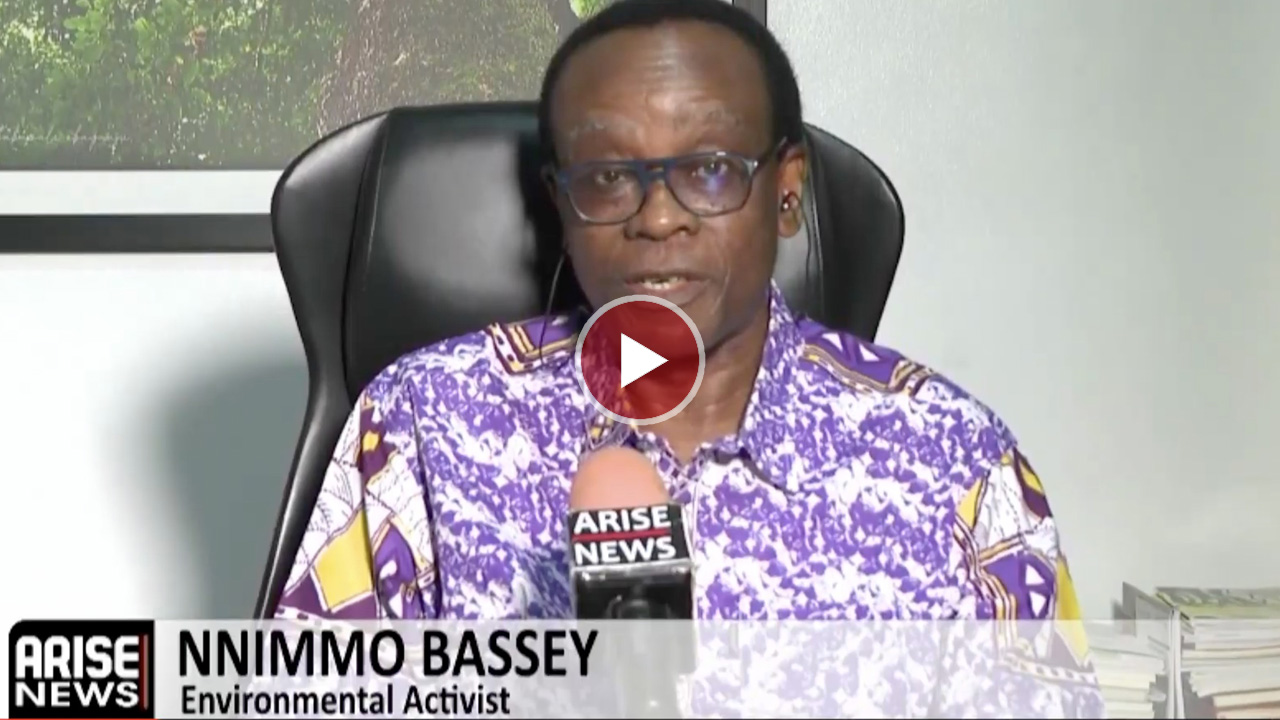
Nnimmo Bassey, an environmental activist, has condemned the Lagos State Government's recent demolitions in Makoko as deliberate acts of dispossession that jeopardize the livelihoods of impoverished communities.
In an interview with ARISE News on Friday, Bassey highlighted that the government's rationale of ensuring public safety and facilitating urban renewal serves only as a flimsy excuse for the forcible eviction of vulnerable populations.
“The events in Makoko and the ongoing struggles are visible to all; those traveling past the Menda Bridge can easily observe the situation,” Bassey pointed out.
He stressed, “The state’s explanations for these demolitions are nothing more than pretexts. While the concept of urban renewal is valid, what we consistently witness are forced evictions targeting economically disadvantaged neighborhoods.”
Bassey also raised concerns about the government's shifting requirements for residential setbacks near high-voltage power lines, which began at 30 metres before increasing to over 300 metres, resulting in the uprooting of entire communities.
“The aim seems to be to eradicate the entire architecture and communities situated along that part of the Lagos Lagoon,” he stated.
Criticizing the government's lack of proper engagement and redress for those affected, Bassey expressed, “The Lagos State Government has managed this crisis very inadequately.”
He elaborated, “This is a densely populated area with a vibrant community of struggling Nigerians. It is the government's responsibility to ensure every citizen can live with dignity, have access to clean water, sanitation, and electricity. The destruction of these communities cannot be an effective solution to urban challenges.”
Bassey warned that the demolitions constitute a pattern of "planned dispossession, forcing the impoverished to make way for wealthier individuals who seek luxurious estates and recreational areas.”
He noted that Makoko and similar areas often come under threat after serving as vital locations for political campaigns. “During elections, Makoko is an attractive area for gathering votes,” he remarked. “Yet, when it comes to governance, the needs of the poor are consistently overlooked. This highlights the ongoing crisis in our nation.”
On legal and urban planning aspects, Bassey urged the government to honor existing court decisions and adopt an urban planning process that is inclusive and led by professionals. “Officials need to visit these disaster sites, recognize the damage inflicted, and engage directly with the affected populace,” he asserted.
“Architects and urban planners should devise a strategy to redesign Makoko, recreating its floating structures while ensuring accessibility and affordability so residents can restore their livelihoods. Even vital means of income, such as boats and canoes, have been destroyed,” he continued.
In conclusion, Bassey called for an immediate end to the evictions and a pivot towards urban development that uplifts rather than penalizes the less privileged.
Comments (0)
You must be logged in to comment.
Be the first to comment on this article!