
Former President Olusegun Obasanjo has delivered a significant address concerning Africa's security challenges, cautioning that the continent is poised at a critical juncture. He warned that failure to take decisive action could exacerbate instability and increase vulnerability to external manipulation.
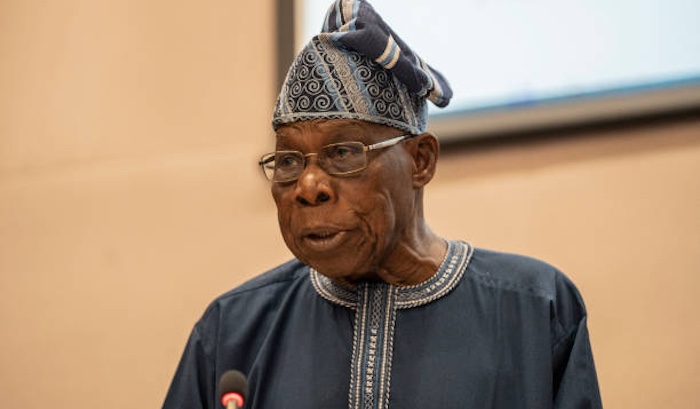
During his address at the third Mashariki Cooperation Conference III (MCC III), Obasanjo challenged intelligence chiefs and security leaders to reassess Africa's existing security framework. He asserted that current strategies have proven inadequate in navigating the rapidly evolving global landscape.
Leveraging his extensive background spanning over six decades in military service, governance, and conflict resolution, Obasanjo disputed the inevitability of Africa's conflicts. He attributed them instead to leadership shortcomings and systemic weaknesses that have enabled both internal vulnerabilities and external exploitation.
Obasanjo placed Africa's security predicament within the context of a fractured post-World War II global order. He highlighted the repercussions of Russia's invasion of Ukraine and contrasted it with the inconsistent international responses to crises in regions such as Gaza and the Sahel.
He argued that this disparity has undermined confidence in international norms and revealed the selective application of the so-called rules-based order, leaving Africa exposed in an increasingly competitive and fragmented world.
Against this backdrop, he cautioned against a resurgent geopolitical competition on the continent, describing it as a "new scramble for Africa." He pointed to the growing influence of global powers, including China's Belt and Road Initiative, and the expanding presence of Russian-linked security entities in vulnerable areas.
He also noted the withdrawal of Western military forces from parts of the Sahel, creating security voids that have been swiftly occupied by other international actors.
These developments, coupled with a rise in terrorism, violent extremism, and a series of military coups since 2020, have intensified Africa's security crisis and underscored the precarious state of governmental institutions.
Within this intricate scenario, Obasanjo put forth a set of five interconnected proposals that collectively form the foundation of what he termed a new African security strategy.
Central to his vision was a pronounced shift from prioritizing regime security to implementing human-centered security, where the safety, dignity, and welfare of ordinary citizens become the primary indicators of success.
He contended that without placing people at the forefront of policy-making, security agencies risk losing public trust and operational effectiveness.
Furthermore, he called for a strengthened commitment to continental solidarity, emphasizing that Africa must move beyond mere pronouncements to fully implement and adequately fund collective security mechanisms, such as the African Standby Force and early warning systems.
Obasanjo stated that isolated national strategies are no longer sufficient to combat transnational threats that easily transcend borders.
Comments (0)
You must be logged in to comment.
Be the first to comment on this article!