
The Federal Capital Territory (FCT) Police Command has formally requested the Nigeria Labour Congress (NLC), FCT Council, to reconsider and postpone its planned solidarity protest slated for Tuesday, February 3, 2026. The Command cited apprehension over potential security threats within the nation's capital as the basis for its appeal.
In a statement released in Abuja, the Command acknowledged awareness of the intended protest and reaffirmed its commitment to upholding citizens' constitutional rights to peaceful assembly and freedom of expression. It also conveyed its preparedness to ensure adequate security for all legitimate activities taking place in the FCT.
However, the police indicated that intelligence received suggested that the proscribed Islamic Movement of Nigeria (IMN) and other non-state elements might attempt to infiltrate and disrupt the demonstration. The Command expressed concern that such an infiltration could jeopardize public peace, safety, and security.
Consequently, the Command appealed to the NLC organizers to consider rescheduling the protest to a future date. The police emphasized that this advisory was issued with the primary objective of safeguarding public safety and preventing any potential breakdown of law and order.
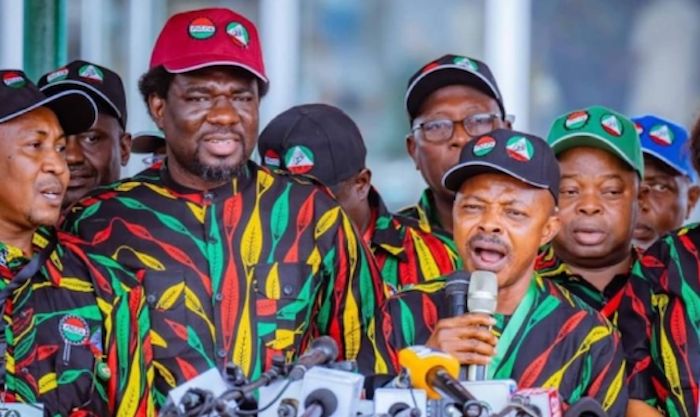
Furthermore, the police stated that the appeal also aimed to protect the rights of other residents to freedom of movement and to ensure the uninterrupted continuation of daily lawful activities within the capital.
In a separate development, the Rule of Law and Accountability Advocacy Centre (RULAAC), a civil society organisation, has voiced opposition to the police advisory. RULAAC urged the Command to avoid actions that could deter or delay constitutionally protected protests.
Okechukwu Nwanguma, the Executive Director of RULAAC, issued a statement calling on the police to engage constructively with the NLC. He suggested agreeing on appropriate security arrangements, deploying sufficient personnel, and ensuring that any policing of the protest, should it proceed, is conducted professionally, with restraint, and in adherence to human rights standards.
Nwanguma argued that while the police have a duty to protect lives and property, advising the postponement of a protest based on alleged or undisclosed intelligence constitutes an unwarranted prior restraint on constitutionally guaranteed rights.
He referenced Section 40 of Nigeria's 1999 Constitution (as amended) and Articles 10 and 11 of the African Charter on Human and Peoples’ Rights. Nwanguma stressed that the right to peaceful assembly does not require prior police permission and cannot be suspended based on speculative threats.
RULAAC also highlighted that Nigerian courts, including the Supreme Court, have consistently ruled that the police's role is to facilitate and secure peaceful protests, not to prohibit, postpone, or discourage them.
The organisation expressed concern over the repeated use of claims about potential infiltration by "non-state actors" as justification for advising against lawful protests. RULAAC contended that such risks place a duty on the police to provide intelligence-led protection, rather than restrict civic actions.
According to RULAAC, public safety and fundamental freedoms are not mutually exclusive. The organisation emphasized that in a democratic society, peaceful protests must be protected, even if they present inconveniences or offer criticism of government policies.
Comments (0)
You must be logged in to comment.
Be the first to comment on this article!