
Fifty years ago, the sound of automatic gunfire in Lagos not only silenced one individual but also dampened a continent's aspirations. General Murtala Ramat Muhammed's brief tenure, lasting just 200 days, was abruptly concluded, carrying away with it an urgent vision for Nigeria and Africa that we have struggled to recover for decades.
To reflect on Murtala Muhammed is to recall a leader who was eager for progress in Nigeria and Africa, believing they had lingered too long in history's shadows. His impatience for advancement, accountability, and a continent dedicated to self-determination was palpable. His brand of patriotism was not mere rhetoric; it was a profound commitment that demanded tangible results. In his inaugural address, he established an unwavering standard of integrity, declaring a government that owed its citizens “justice, honesty and freedom from oppression.” He was not merely a speaker; he was a doer, meticulously dismantling a corrupt civil service.
Yet, it was on the broader African stage that Murtala truly emerged as a giant. His foreign policy was an urgent call for a new beginning. In a time dominated by the bipolar conflicts brought about by the Cold War, he boldly pursued a path of real non-alignment. This stance was not passivity, but rather a proactive stance that advocated for Africa to determine its own destiny, forge relationships based on mutual respect, and challenge those who oppressed its peoples. This philosophy reached its peak during the Angolan crisis, where he aligned with the MPLA to fight against Portuguese colonialism and apartheid South Africa, pivotal actions that shaped the future of Southern Africa.
We can hardly forget his monumental speech in January 1976, mere weeks before his assassination. As the Organization of African Unity faced potential divisions, Muhammed addressed his fellow leaders, proclaiming: “Africa has come of age. It is no longer under the orbit of any extra-continental power. It should no longer take orders from any country, however powerful. The fortunes of Africa are in our hands to make or to mar.”
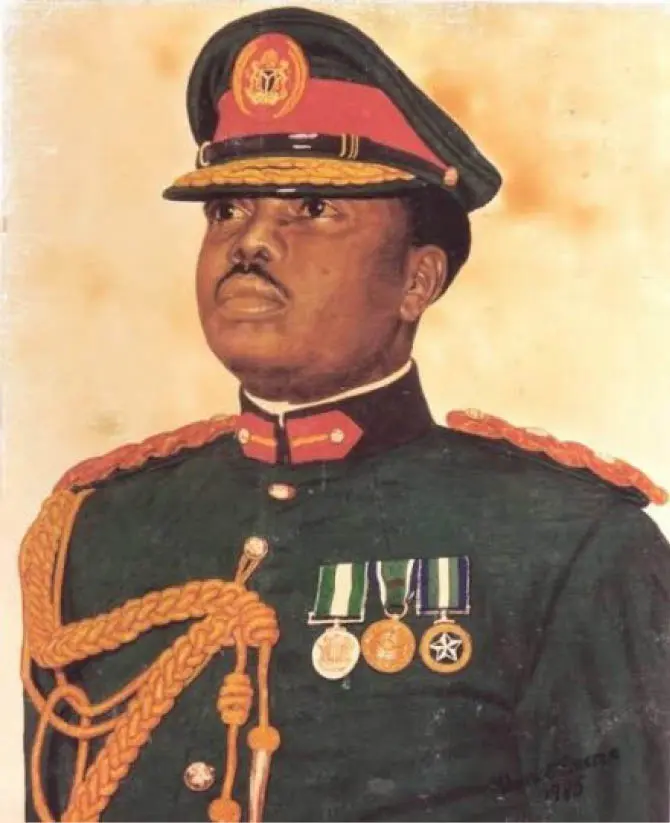
This statement was a declaration of psychological freedom, urging his counterparts to discard their fears and embrace their roles as architects of their future.
Now, fifty years later, we are confronted not only with the distressing “what ifs” surrounding his disrupted vision but also with the stark realization of how far we have deviated from the path he illuminated. The subsequent decades, particularly following our return to democratic governance in 1999, serve as a painful reminder of the gradual erosion of that promise.
The high hopes that came with the end of military rule were birthed from the Murtala Muhammed legacy—the anticipation of a government that owed its citizens accountability and integrity. However, we have observed a succession of leaders who, though ushered in with uplifting speeches, have largely failed to deliver measurable governance effectiveness. Where Muhammed swiftly targeted corruption, his successors have established a vast, complex bureaucracy that often protects the corrupt. Unlike his unified voice for the continent, we now find ourselves speaking with conflicting tones, our influence diluted by internal political disputes.
The same internal issues that Muhammed sought to address have only worsened. The dream of a cohesive, purposeful nation has splintered under ethnic and regional rivalries, transforming citizens from stakeholders into subjects of identity politics. Once viewed as a force for progress, the state is now frequently seen as a predatory entity more interested in exploitation than service. The “fortunes of Africa” that Muhammed insisted we were destined to shape have been significantly tarnished by incompetence, corruption, and an inability to establish essential infrastructure.
This internal decline has directly contributed to the diminishment of our leadership role on the continent. The Nigeria that once financed liberation causes and set the agenda in continental discussions now struggles to maintain internal order amidst banditry, insurgency, and economic crises, allowing external forces to fill the consequential gaps. Our engagement in pan-African discussions is often passive and reactive, lacking the moral authority that once characterized Muhammed’s Nigeria. We have shifted from being pivotal in fostering African unity to a nation often fighting for a substantial presence in influential discourse.
Murtala Muhammed’s vision stands as a direct challenge to the course we have charted since. The questions stemming from his legacy demand urgent attention: Does Africa truly have autonomy? Are we the architects of our own destiny, or are we still dependent on external influences dictating our economic and political choices? Do we demonstrate that same profound patriotism that holds our leaders accountable and encourages us to rise as responsible citizens?
Though General Murtala Muhammed's time was short, his vision was expansive. He represented what a devoted and pan-African leader should be: one who loves their country enough to instigate reform and cherishes their continent every bit as much, working to liberate it from all forms of bondage, including the self-imposed burdens of poor governance. His unfulfilled mission remains a daunting challenge for our generation.
We owe him more than symbolic remembrance; we must strive for a Nigeria that functions effectively and an Africa that is genuinely and unequivocally advanced. Until we revive that bold vision, our potential for true progress and global leadership will remain hindered.
Comments (0)
You must be logged in to comment.
Be the first to comment on this article!