
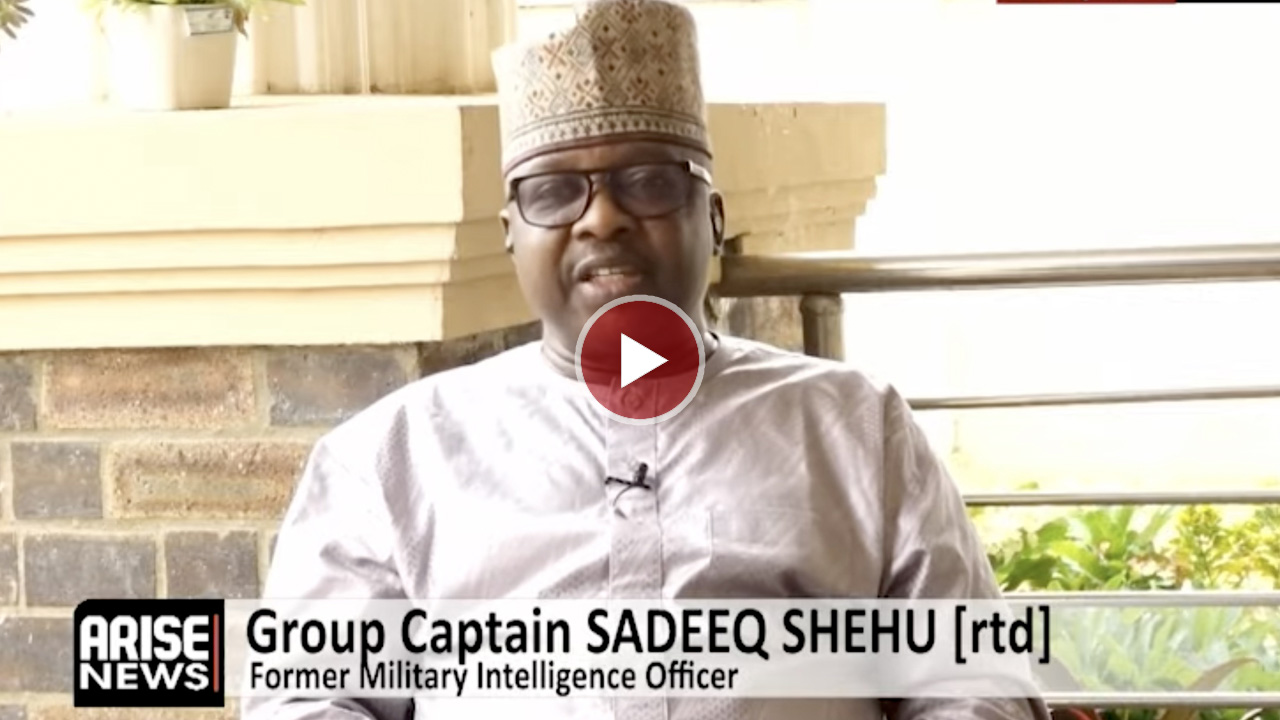
A retired military intelligence officer, Group Captain Sadeeq Shehu, has stated that the majority of Nigeria's security problems are internally generated, emphasizing the critical need for self-reliant solutions.
During an interview on ARISE News, Shehu indicated that between 80% and 90% of the issues plaguing regions like the Northeast, North Central, and Kwara State stem from local conflicts and are homegrown.
His remarks followed the recent deadly attack in Jos, Plateau State, which marked an escalation of violence into urban centres.
Shehu expressed grave concern over the Jos incident, particularly given its occurrence within a major city and in proximity to a military division.
He noted the location of the attack in Anguwa-Rukuba, an area near the 3rd Armored Division, as particularly alarming.
While acknowledging that responsibility for the attack remains unconfirmed, Shehu stated that no perpetrators have been definitively identified based on available information.
Shehu pushed back against characterizing the violence solely as terrorism, arguing that the crisis in Plateau is rooted in deeper community disputes.
He described the situation as intercommunal strife between groups unable to coexist peacefully.
He urged stakeholders within Plateau State to take ownership of conflict resolution, suggesting that relying on external explanations hinders effective solutions.
Shehu observed a pattern of seeking external actors when security challenges become overwhelming for domestic forces.
He stressed the importance of self-honesty and the pursuit of homegrown strategies in governance and intelligence gathering.
Beyond the Jos incident, Shehu also commented on broader regional security, specifically the operations of the Multinational Joint Task Force (MNJTF) against Boko Haram in the Lake Chad Basin.
He acknowledged the necessity of the MNJTF but highlighted its structural limitations, particularly the absence of genuine operational integration.
Shehu explained that the force operates more as separate national contingents rather than a truly unified task force, with troops primarily operating within their respective national boundaries.
He pointed out that national sovereignty restrictions prevent pursuing insurgents across international borders.
For instance, if Nigerian forces are pursuing Boko Haram militants, they must halt their pursuit upon crossing into Cameroonian territory.
Shehu also addressed financial strain, noting that Nigeria often shoulders a disproportionate share of the costs to maintain the task force's operations.
He suggested that the Nigerian government frequently subsidizes other nations to ensure their continued cooperation.
Furthermore, he criticized the frequent changes in leadership within the MNJTF, warning that short command tenures negatively impact operational effectiveness.
He observed that commanders rarely serve for more than two years.
Regarding the government's response to the Jos attack, Shehu criticized both federal and state authorities for inadequate communication and a perceived lack of empathy.
He argued that if official statements require frequent clarification, the initial communication was flawed.
He emphasized that crisis communication must be handled with care to avoid increasing public distress, especially among affected communities.
While acknowledging some improvements in official responses, Shehu maintained that greater synchronization between communication strategies, logistical support, and leadership actions during national crises is essential.
Comments (0)
You must be logged in to comment.
Be the first to comment on this article!