
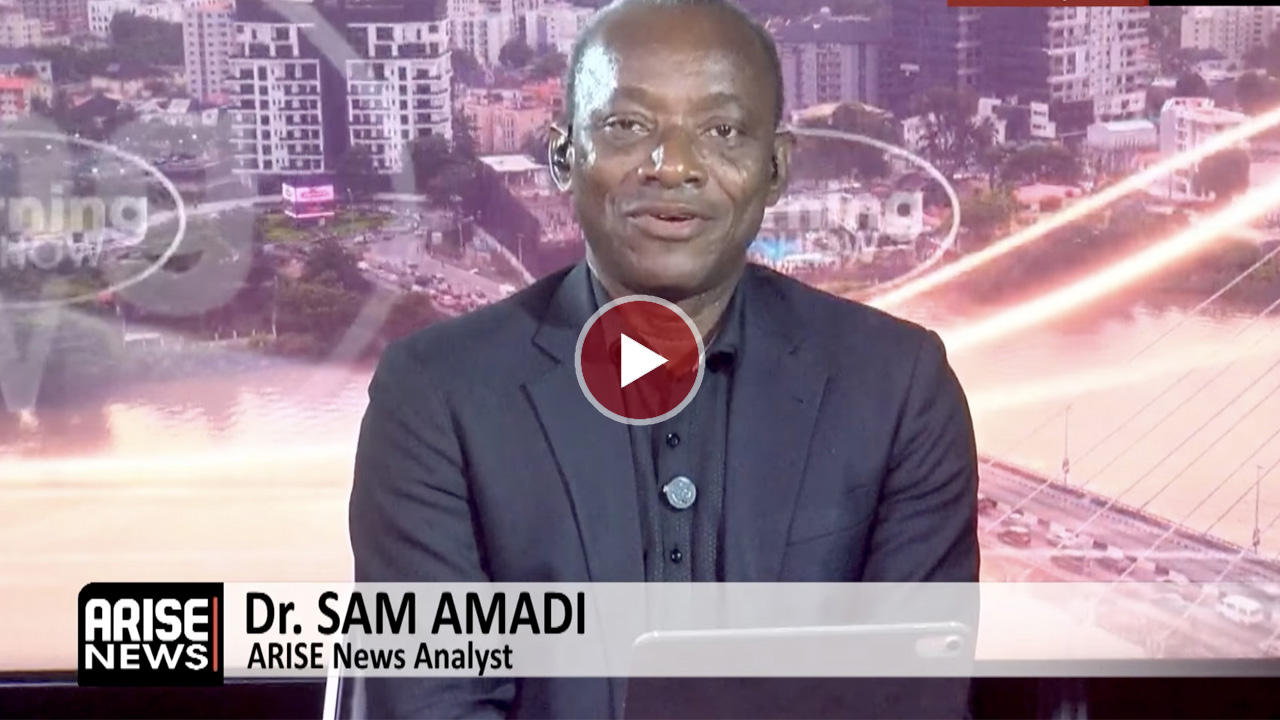
Sam Amadi, an analyst with ARISE News, has called for the federal government to adopt a scientific and administrative method to settle the re-emerged conflict concerning oil wells between Cross River State and Akwa Ibom State.
During a discussion on Tuesday, Amadi stated that the current controversy highlights "a fundamental clash between judicial finality and scientific advancement." He encouraged the federal government to consider recent technical findings that could potentially alter ownership claims and derivation entitlements.
Amadi clarified that while a Supreme Court of Nigeria judgment, influenced by an International Court of Justice decision and the Green Tree Agreement, guided the allocation of oil wells after the cession of Bakassi, it did not definitively establish maritime boundaries or account for subsequent discoveries.
"The Supreme Court did not ascertain the precise maritime coordinates or boundaries separating the states," he remarked, emphasizing that the ruling does not preclude the introduction of new scientific data.
Amadi underscored the importance of independently evaluating updated geospatial information and newly identified oil wells. He suggested that confirmed discoveries could warrant reallocating some assets to Cross River if they are found to lie within its territory.
He also stressed that Nigeria's derivation principle is capable of adapting to new findings rather than being rigidly fixed to historical assumptions.
Regarding the delayed submission of the technical committee's report to the presidency, Amadi advocated for prompt action. He noted that the executive branch possesses the authority to implement the committee's findings without contradicting existing judicial pronouncements.
"The Supreme Court did not issue a permanent prohibition on future discoveries," he stated, adding that administrative decisions can be informed by reliable scientific data.
While acknowledging Akwa Ibom State's preference for the finality of the court's decision, Amadi characterized this stance as "understandable but limited." He argued that the judgment should not be extended beyond its initial scope.
Furthermore, he cautioned that the prolonged dispute could result in revenue losses and exacerbate insecurity in the Gulf of Guinea, potentially leading to increased piracy and illegal oil activities.
Amadi urged the federal government to release the technical report, engage relevant stakeholders, and pursue a political resolution. He also encouraged both states to embrace dialogue and work towards a mutually agreeable outcome.
He concluded by suggesting that resolving the dispute will necessitate a careful balance of legal adherence, scientific verification, and political resolve, all guided by the nation's best interests.
Comments (0)
You must be logged in to comment.
Be the first to comment on this article!