
Sam Amadi, a prominent legal scholar and political commentator, has indicated that Nigeria's electoral framework and judicial institutions are significantly contributing to escalating instability within political parties. He contended that inconsistent rulings, ambiguity in regulatory guidelines, and contradictory decisions from authorities are aggravating internal conflicts and undermining unity among party members across the political landscape.
In an interview with ARISE NEWS, Amadi associated the rising turmoil within parties such as the Africa Democratic Congress (ADC) with a said systematic collapse of clarity and authoritative governance both from INEC in its political party oversight and the judiciary’s approach to resolving intra- party disputes. He emphasized that this institutional frailty has encouraged factions to heighten disagreements rather than find resolutions internally.
Amadi remarked, "INEC personnel often deliver conflicting verdicts, leading to confusion among parties. Some legal practitioners may assert that certain decisions are valid, which indicates a lack of authoritative clarity and procedural integrity in INEC's management of parties, driving disputants to escalate and externalize their conflicts further."
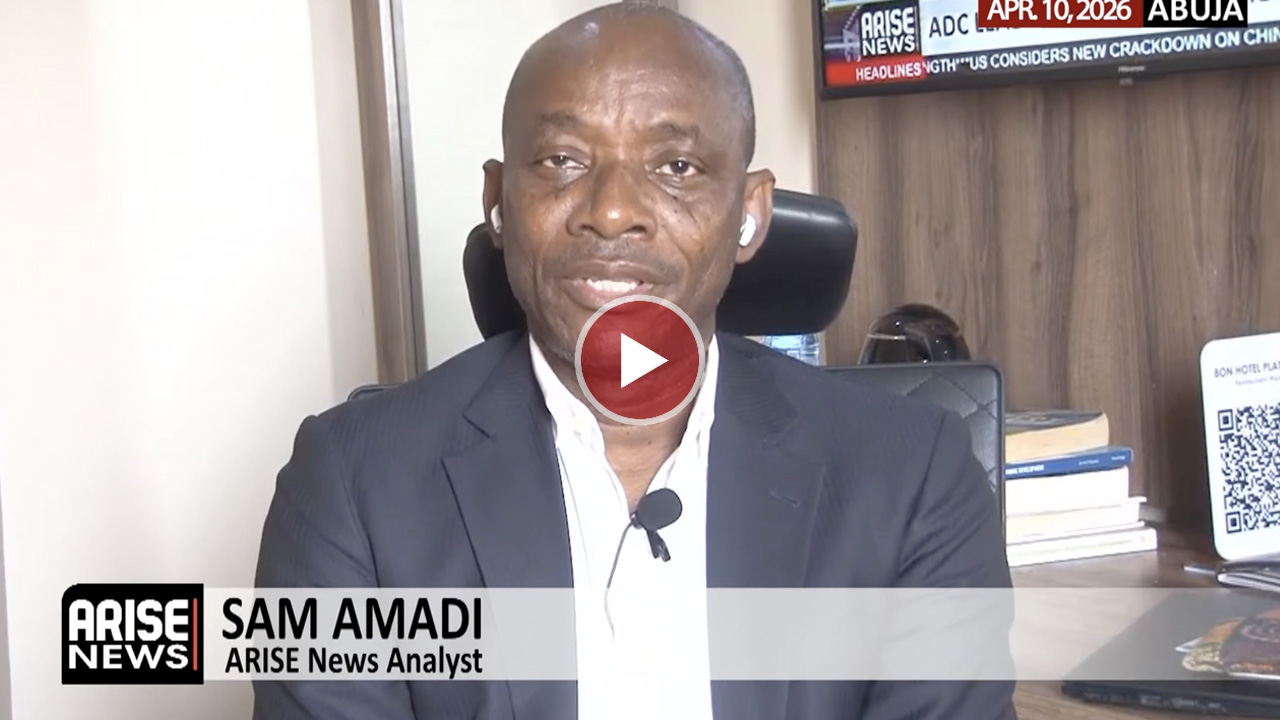
He underlined that situations which should typically be regarded as internal party issues have transformed into extended institutional conflicts. He noted that political figures are increasingly seeking resolutions from INEC, the judiciary, and various legal interpretations to secure favorable outcomes instead of turning to final resolutions.
Amadi further stated, "The courts, through their unclear judgments, have compounded these issues. Take the Supreme Court ruling, which was portrayed as an internal matter without clear authority. The vague approach from the judiciary allows for potential uncertainties, creating an environment where outcomes can be unpredictable."
He highlighted that the problems extend beyond just electoral administration itself. "There's a pattern of weak interpretations by the courts, contributing to internal errors—both forced and unforced. In this current environment, it's evident that political actors perceive a more advantageous position in manipulating the situation with INEC’s inconsistencies."
He added that political actors have gained leverage, allowing them to exploit weaknesses within political structures. "The current scenario demonstrates a stark contrast to previous party dynamics we observed with the PDP and APC; the present landscape showcases significant incoherence. The responsibility now lies with the courts, INEC, and the politicians themselves."
Amadi concluded by noting that litigants frequently take advantage of gaps in institutional clarity to extend disputes, saying, "INEC staff have continued to issue contradictory decisions, leading to a further absence of order. There is evidently a much different reality now compared to the past; the incoherence is pervasive."
Comments (0)
You must be logged in to comment.
Be the first to comment on this article!