
A call has been made by online personalities for casting directors and producers to explore social media content creators as potential actors for film roles. This sentiment, voiced by creators like New Zealand's Theo Shakes, resonates particularly in Nigeria, where a growing number of influencers are making inroads into Nollywood productions.
The integration of content creators into Nigerian films is driven by the pursuit of higher box office revenue. Filmmakers aim to leverage the established fan bases and visibility that these online personalities command. Their involvement often serves a dual purpose: bolstering promotional efforts and directly enhancing a film's audience reach.
This trend raises a fundamental question: are content creation and acting interchangeable skills?
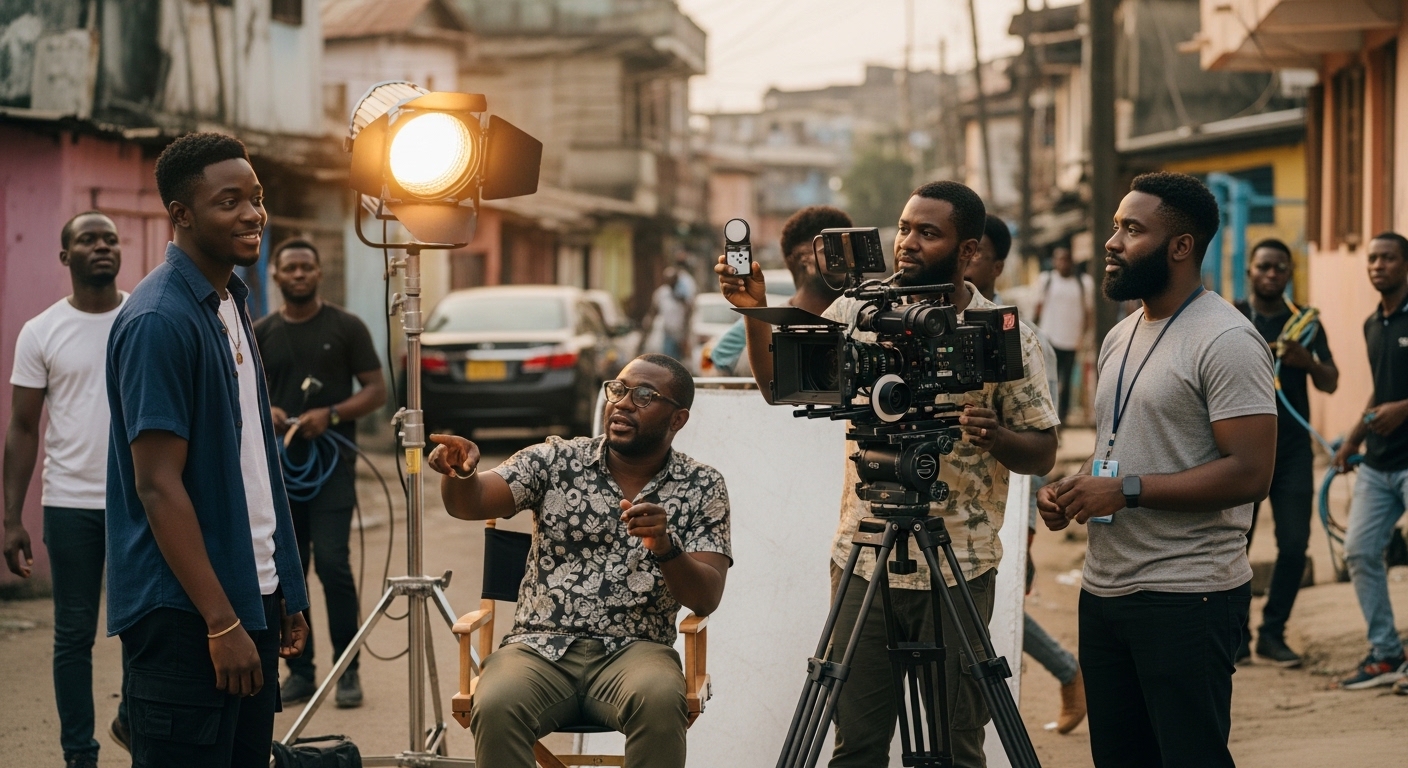
Many Nigerian content creators cultivate their audience by presenting a persona closely aligned with their real selves, offering a predictable viewing experience. While some, like Layi Wasabi and Taooma, demonstrate versatility by portraying multiple characters, their content typically consists of short- form videos. Traditional film acting, however, requires actors to fully inhabit diverse roles for extended durations, a demand distinct from the ninety-second skits often seen online.
However, the lines are blurring. Creators such as Baron Ryan are venturing into feature film production, creating their own cinematic projects rather than merely appearing in them. This suggests that skills honed through online content creation can indeed be adapted for filmmaking with the right structure and resources. Some creators demonstrate remarkable adaptability, with individuals like Akinyoola Ayoola (Kamo State) successfully transitioning to lead roles in major productions, including the blockbuster 'A Tribe Called Judah'. Conversely, others struggle to make the leap, delivering performances that feel disjointed from the film's narrative, leading to audience criticism that popularity might be overshadowing professional preparedness.
This phenomenon mirrors historical trends where musicians, some of whom also act in their music videos, have successfully transitioned into acting careers. While a musician's success doesn't imply every singer can act, it highlights that performance skills can be transferable. The same principle should apply to content creators; being a popular online personality does not automatically equate to being a proficient actor, as film acting demands a deeper immersion into a character for extended periods.
Furthermore, for many aspiring creatives in Nigeria, content creation has become an accessible entry point into the entertainment industry. A smartphone is more affordable than formal drama training, and social media offers a wider reach than traditional audition processes. For some, online platforms serve as their initial discovery of acting potential. Yet, this accessibility does not guarantee a level of skill sufficient for professional acting.
The core issue, therefore, is not whether content creators possess the inherent ability to act, but rather how the industry strategically integrates them. Are they cast based on role suitability and talent, or primarily for their follower counts and potential to draw audiences? Are they provided with opportunities for development, coaching, and challenging roles, or simply placed into parts without adequate preparation?
Content creators should indeed be considered for acting roles. However, this consideration must not lead to automatic casting. Auditions and proper training remain crucial. Nollywood has a history of evolving by incorporating new talent from diverse backgrounds, and social media presents a potentially rich new source. Ultimately, acting prowess, not just follower count, should determine who carries a story; while familiar with the camera, a creator must still demonstrate the craft required for compelling performance.
Comments (0)
You must be logged in to comment.
Be the first to comment on this article!