
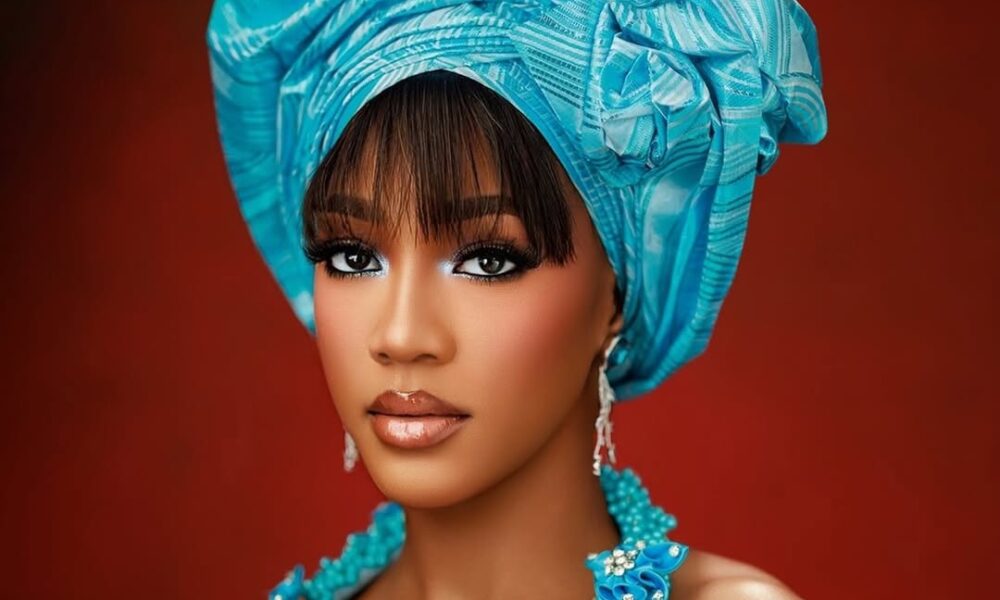
On a Saturday morning, you admire your reflection in the mirror while dressed in a stunning six yards of rich wine lace. Your gele is impeccably styled at a precise angle, and everything from your bag to your shoes and eyeshadow harmoniously matches. You look absolutely stunning after dedicating three weeks to perfecting your outfit, spending two hours in makeup, and investing in an undisclosed amount for the full ensemble. You are ready to enter the wedding venue as the most elegantly styled version of yourself to support someone dear to you.
This encapsulates the true essence of the Nigerian wedding experience, a spectacle unmatched around the globe.
However, along with the celebration, an important discussion has emerged. On platforms like X (formerly Twitter), group chats, and even viral moments, many Nigerians have pondered: what is the actual financial burden of attending a wedding? Is it time to reconsider and gently adapt certain traditions?
For those unfamiliar, let’s break down the estimated costs for women attending a Nigerian wedding. The aso-ebi fabric, provided by the couple's family to guests for identification purposes, can cost anywhere from ₦30,000 for simpler designs to over ₦100,000 for more extravagant events. When factoring in tailoring (ranging from ₦20,000 to ₦200,000 based on intricacy), gele (₦6,000–₦15,000), makeup (₦20,000–₦100,000), and the cost of shoes and bags (₦15,000–₦200,000), in addition to transport and the monetary gifts you plan to give when the couple takes to the dance floor, attending a single wedding can set you back between ₦150,000 and ₦600,000 in just one day.
These figures are real, reflecting the experiences of many Nigerians who have shared their thoughts, smiles, and even tears about wedding costs over the past two years, amid an economy where the naira stretches increasingly thin.
Some have even entertained the idea of simply sending the couple their gift money rather than attending in person. Still, what’s often overlooked in this financial debate is that Nigerian weddings serve as more than mere gatherings; they are communal events filled with significance. Your presence in aso-ebi while showering the couple with gifts on the dance floor expresses an unquantifiable sentiment that a bank transfer simply cannot convey; it’s a declaration of support and celebration.
Nigeria’s social fabric thrives on this communal participation. The relatives who attended your naming ceremony, the friends celebrating your graduation, and neighbors who supported you during significant life events are traditions upheld by physical presence. Weddings are particularly important among these occasions.
We also can't ignore the delightful chaos that unfolds during celebrations: from the contrasting geles to the aunties stealing the show with their dance moves and the infectious energy when the favorite song plays, making the entire crowd sway in unison. No monetary contribution can replicate these live experiences, which hold significance for both guests and the newlyweds alike.
Those who champion these customs are defending something dear, often seen as unreasonable by those on the outside.
In the midst of discussions, content creator and host Bukunmi Adeaga-Ilori, better known as KieKie, humorously proposed a solution at the end of 2025 regarding the customs that need to evolve with the times. She suggested, why not reuse aso-ebi fabric?
Imagine purchasing aso-ebi from a wedding two to three years ago and wearing it again. Why can’t we collectively embrace this idea for the next celebration? And for those who didn't buy it at the time, why not coordinate with someone who did to secure a matching headscarf or a complementary accessory? The end result would be a coordinated group appearance without the need to purchase additional outfits.
These are not baseless suggestions; they’re not only fiscally responsible but also environmentally sustainable. The global fashion industry contributes substantially to textile waste, and Nigeria is not isolated from this concern. The country faces a considerable volume of imported secondhand clothing—known as okirika—much of which remains unsold and discarded. Local tailors often create significant textile waste. Within this context, traditional aso-ebi practices exacerbate the situation by producing garments expressly designed for one-time use.
Consider this: hundreds of attendees at a single event wearing custom-made clothes intended solely for that occasion, in specific colors and styles, look gorgeous the day of but are likely stored away, possibly forever after. When this is multiplied across the tens of thousands of weddings hosted in Nigeria each year, that amounts to an astonishing quantity of fabric that lives only for a few hours before being retired.
Nigerian designers have joined the broader conversation about sustainable African fashion. Established designers like Lisa Folawiyo have long advocated for slow fashion—limited collections with thoughtful designs aimed to last. Events such as the Lagos Fashion Week reflect a commitment to heritage and responsibility alongside aesthetics.
Aso-ebi fabrics, particularly luxurious varieties like lace, george, and aso- oke, are beautiful and enduring. An exquisite outfit crafted from high-quality Nigerian lace, reimagined by a talented tailor, can look remarkably fresh three years on. A headscarf from a 2022 event can serve as a stylish accessory in 2025. The fabric itself is timeless, while only human perception dictates its relevance.
Imagine a scenario where the most fashionable move at a 2026 Nigerian wedding is to appear in a beautifully reworked aso-ebi outfit from three years ago, without any concern about it.
Ultimately, this conversation is ongoing and evolving, which is quite satisfactory. The best traditions are those that allow for dialogue without crumbling.
Despite their differing phrases, many on both sides of this debate fundamentally agree: the concept of aso-ebi represents a cherished part of Nigerian culture that lends a distinct aesthetic to our celebrations. The experience of an owambe is irreplaceable. Supporting loved ones by being present carries a weight of meaning beyond monetary value.
Valid concerns linger, such as whether it's reasonable to set such high prices for a community fabric that effectively alienates some community members. How can we be more intentional about the life cycle of these garments post- celebration? Could sharing scraps and reusing fabrics, as KieKie's suggestion entails, introduce a refreshing norm? Might style innovation, in restyling old aso-ebi fashions, be viewed as a testament to environmental consciousness rather than indifference?
The tradition of aso-ebi will endure, as it should. Yet, perhaps the trend towards adaptability, resilience, and showcasing our essence is precisely what contemporary fashion demands.
Comments (0)
You must be logged in to comment.
Be the first to comment on this article!