
President Bola Tinubu has urged for the re-establishment of a regional standby force to enhance collective security measures throughout West Africa and the Sahel. He further suggested that nations in the region utilize Nigeria's National Counter Terrorism Centre (NCTC) in Abuja as a primary centre for intelligence gathering and operational coordination.
This proposal was outlined in an official Nigerian statement delivered by the Minister of State for Foreign Affairs, Ambassador Bianca Odumegwu-Ojukwu, during the Conference on Security Situation, Operational Challenges and Future Risk Trajectories in West Africa and the Sahel, which convened in Accra, Ghana, from January 29 to 30, 2026. According to a statement released on Saturday in Abuja by Magnus Eze, Special Assistant on Communications and New Media to the minister, President Tinubu affirmed Nigeria's steadfast dedication to preserving peace, security, and stability in the region. He emphasized the critical need for intensified multilateral cooperation to address the escalating security challenges in the Sahel.
"Nigeria is strongly in favour of more collaborative and multilateral approaches to tackling the security crisis in the Sahel," President Tinubu stated. He noted that Nigeria actively monitors and disrupts terrorist activities through collaborative efforts with both regional and continental bodies, including the Regional Intelligence Fusion Unit, the Liaison Fusion Unit, the Eastern African Fusion Unit, and the Committee of Intelligence and Security Services of Africa.
Tinubu reminded attendees that the NCTC had previously entered into a Memorandum of Understanding with the African Union in 2025 to foster cooperation on counterterrorism and violent extremism across the continent. "The centre is therefore well positioned to support regional mechanisms and serve as an intelligence coordinating hub in our unified counter-terrorism efforts," the president elaborated.
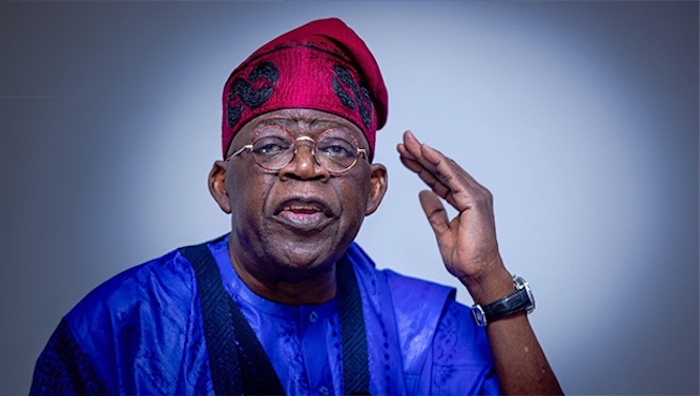
President Tinubu also raised concerns about the increasing use of cyberspace by terrorist organisations for spreading misinformation and disinformation, which he noted is detrimental to regional security and stability. Highlighting Nigeria's significant progress in cyber monitoring, surveillance, and intelligence acquisition via the National Cyber Security Centre in Abuja, Tinubu encouraged other West African nations to utilize Nigeria's infrastructure to establish regional frameworks for countering cyber-enabled threats.
"Security cooperation is fundamental to Nigeria’s national interest and regional stability. Through joint initiatives, intelligence sharing, and coordinated operations, Nigeria aims to bolster our collective capacity to combat terrorism, transnational organised crime, and other forms of insecurity that impede our individual and collective development," he declared.
The president observed that the security landscape in many parts of West Africa remains unstable, marked by a rise in violent incidents, affecting women and children disproportionately. He identified the absence of a dedicated counterterrorism focal point and the limited deployment of defence forces as key factors contributing to power vacuums that extremist groups have been able to exploit.
"These power vacuums have enabled Sahel-based terrorists to expand their operations from the central Sahel into littoral West Africa, with countries like Nigeria, Benin, Togo, and Ghana among those significantly affected," he stated.
Furthermore, he cautioned that drug cartels might be relocating their operations to more vulnerable jurisdictions within West Africa, driven by intensified anti-narcotics enforcement in South America. This shift, he warned, increases the risk of potential alliances between traffickers and insurgent groups.
"This development is concerning, as it could lead to financially robust drug cartels coming into closer contact with insurgent groups active in the region," Tinubu commented.
He further explained that such collaborations could involve the exchange of financial resources for logistical support and the securing of illicit smuggling routes.
President Tinubu also pointed out existing political divisions within the region, such as the burgeoning ECOWAS–AES divide, excessive reliance on external aid, and member states' hesitation to cede defence decisions to supranational bodies, as significant barriers to effective counterterrorism collaboration.
"To address long-standing and emerging misunderstandings among member states, it is necessary to decouple political inclinations from security collaboration initiatives, thereby creating a pathway for sustainable security partnerships," he asserted.
Beyond purely military responses, Tinubu implored regional nations to address the fundamental drivers of instability, including poverty, governance failures, marginalisation, and an overemphasis on militarised counterterrorism strategies.
He urged both ECOWAS and AES states to work towards de-escalating tensions and re-establishing an inclusive framework that acknowledges and uphms shared security and economic interests.
Comments (0)
You must be logged in to comment.
Be the first to comment on this article!