
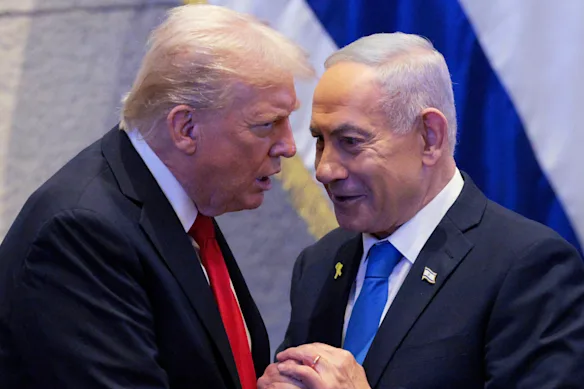
Donald Trump, the President of the United States, reportedly greenlit a military operation against Iran after discussions with Benjamin Netanyahu, who strongly urged for a synchronized attack on Iran’s Supreme Leader, Ali Khamenei, as revealed by sources to a recent Reuters report.
The decision followed intelligence reports indicating that Khamenei and other significant officials would be convening at a specific site in Tehran, creating a rare opportunity for what is termed a "decapitation strike" — an operation aimed at removing a country's top leadership.
Insiders disclosed that while Trump had previously consented to the notion of military action, the timing and ultimate approval were significantly shaped by changing intelligence reports and discussions with Israeli officials. Netanyahu reportedly asserted that the moment was particularly advantageous for eliminating Khamenei and destabilizing Iran's leadership.
The military operation, which was a culmination of weeks of military preparations in the region, received final approval in late February. Initial plans encountered various delays, including weather-related challenges, before the execution of the strike.
U.S. officials articulated that the primary aim of this operation was to considerably diminish Iran’s military capabilities, specifically targeting its missile systems and its ability to support proxy forces, while also obstructing the nation's progress towards nuclear armament.
Although there is no evidence that Netanyahu was the sole influence behind Trump's ultimate decision, sources acknowledged that his persuasive arguments, especially concerning the strategic and political ramifications of targeting Iran’s leadership, were significantly impactful in the discourse.
The situation has sparked retaliatory engagements, escalating casualties, and growing tensions across the region, as well as global economic repercussions, including rises in oil prices.
This unfolding scenario signifies a crucial shift in Middle Eastern geopolitics, with ongoing ramifications likely to resonate across international borders.
Comments (0)
You must be logged in to comment.
Be the first to comment on this article!