
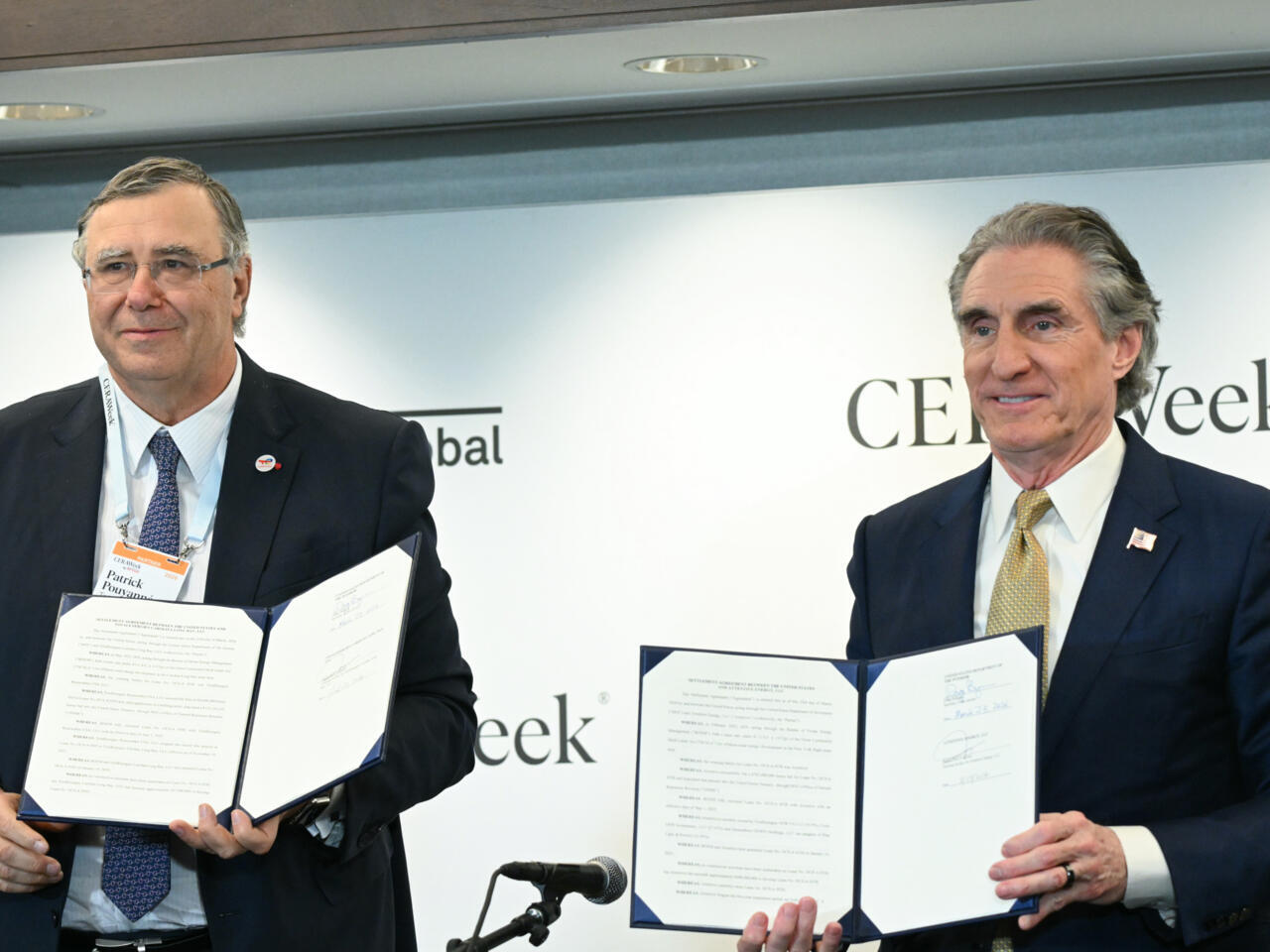
The administration led by Donald Trump will disburse $1 billion to a French energy company, TotalEnergies, to give up two offshore wind leases within the United States, representing a significant intensification of its initiative against renewable energy projects.
On Monday, the Department of the Interior announced that TotalEnergies had consented to what was referred to as a refund arrangement concerning wind projects proposed along the coastlines of North Carolina and New York. The funds are expected to be reinvested in fossil fuel ventures.
Numerous attempts have been made by the administration to obstruct offshore wind developments, yet federal judges have frequently overturned these orders. The officials labeled the agreement as an "innovative deal," asserting that "the American people will no longer finance ideological subsidies that benefited solely the unreliable and costly offshore wind sector."
Environmental advocacy groups have sharply criticized this arrangement, viewing it as a distinct tactic to hinder the growth of clean energy. Lena Moffitt, the executive director of Evergreen Action, remarked, "After facing defeat repeatedly in court over his unlawful stop work orders, Trump has discovered another means to stifle offshore wind: by compensating them to withdraw."
During his second term, President Trump has made fossil fuel development a key priority, arguing that boosting oil and gas production could reduce household energy expenses, enhance reliability, and solidify US leadership in artificial intelligence.
After Trump’s election victory, TotalEnergies had already suspended its US offshore wind initiatives. The company has now committed to not pursue any new offshore wind projects in the country. CEO Patrick Pouyanné remarked that the company has abandoned this development in exchange for lease fee compensation, explaining that undertaking offshore wind initiatives does not align with the nation's interests.
In response to the company’s realignment, Interior Secretary Doug Burgum expressed approval, stating, “We appreciate TotalEnergies’ commitment to projects that provide reliable and affordable power to help lower energy bills for Americans."
Democratic governors from the states affected have condemned the arrangement. New York Governor Kathy Hochul accused Trump of employing a "pay not to play scheme" to coerce the company, labeling it "an outrageous misuse of taxpayer money." She reaffirmed the state's dedication to a comprehensive strategy that encompasses renewable and nuclear energy.
North Carolina Governor Josh Stein also denounced the agreement, describing it as "a detrimental deal for the citizens of North Carolina and our nation." He asserted, "Our state possesses the potential for offshore wind to supply clean, American-made energy to millions of homes. It is absurd and wasteful for the Trump administration to allocate $1 billion in taxpayer funds to persuade a company to refrain from investing in clean energy that we direly need."
This policy change signifies a stark divergence from the strategies of the Biden administration, which has championed offshore wind as a principal solution to climate issues. Trump began to reverse these energy policies on his first day in office through executive orders that support the expansion of oil, gas, and coal.
On a global scale, the capacity for offshore wind continues to grow significantly, with China leading new installations. Despite federal resistance, developers and states have managed to contest construction suspensions in courts, enabling several projects on the East Coast to advance.
On Monday, Dominion Energy announced that its Coastal Virginia Offshore Wind project, one of the initiatives aimed at by the administration, has started supplying electricity to the grid.
Ted Kelly, the clean energy director at the Environmental Defense Fund, criticized the proposed settlement, labeling it "a blatant misuse of taxpayer dollars to block Americans from access to clean, affordable energy especially when it is most needed."
TotalEnergies had initially obtained the Carolina Long Bay lease in 2022 for around $133 million, intending to produce over 1 gigawatt of power—enough to service approximately 300,000 homes. Additionally, a second lease covering waters near New York and New Jersey was acquired for $795 million, projected to provide 3 gigawatts, sufficient to power nearly one million homes. The company continues to engage in significant offshore wind projects across Europe and Asia.
Comments (0)
You must be logged in to comment.
Be the first to comment on this article!