
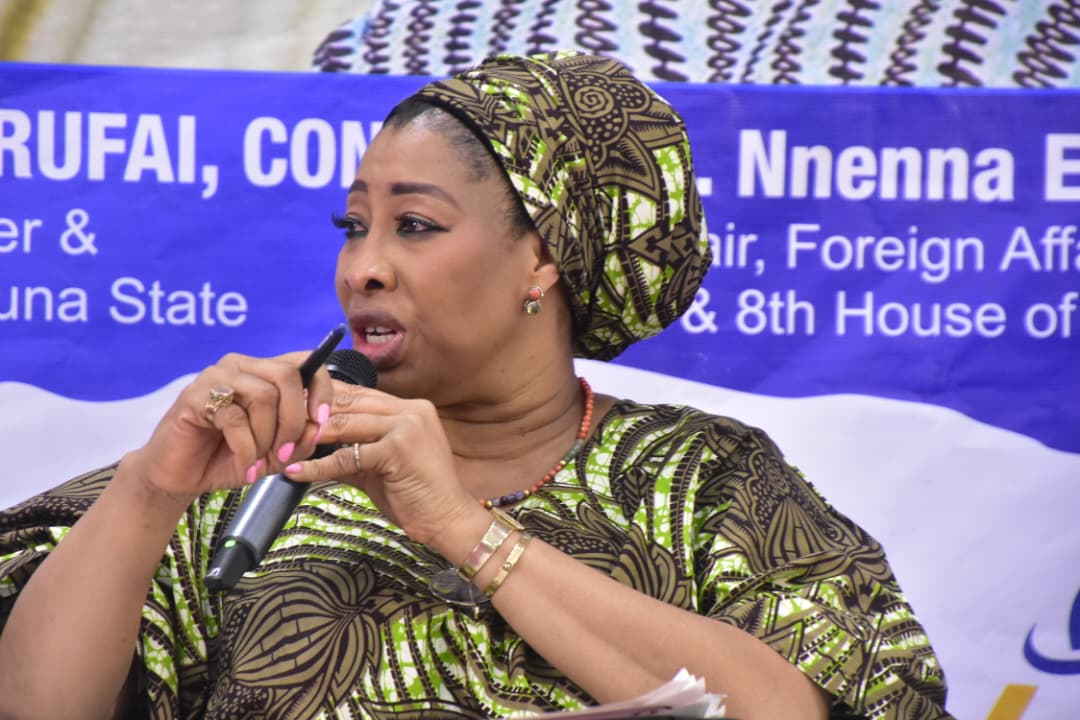
Former legislator Hon. Nnenna Elendu Ekeje, who participated in the 23rd Daily Trust Dialogue, asserted that women yield results when granted genuine authority.
At the yearly event held at the Nigerian Air Force Conference Centre in Kado, Abuja, Ekeje pointed out that Nigeria's democratic framework has yet to foster an environment conducive for meaningful female participation in decision- making processes.
She cautioned that ongoing gender inequality coupled with a frequently changing legislature are significant factors that impede the progress of democracy in Nigeria.
"Nigeria has alarmingly low female representation in political roles—generally under 6%. Fifteen out of 36 states have legislatures entirely devoid of women representatives," she remarked.
Ekeje, who represented the Bende Federal Constituency from Abia State in the House of Representatives, stressed that the exclusion of women transcends gender issues; it constitutes a governance shortcoming.
Citing research, she noted that communities with higher proportions of women in leadership roles tend to achieve greater social outcomes, enhance community trust, and promote sustainable development.
Ekeje referenced the remarkable work of former Finance Minister Ngozi Okonjo- Iweala, who successfully negotiated an $18 billion debt relief agreement with the Paris Club in 2005, allowing for the reallocation of funds for social infrastructure.
"This was not a token gesture. It represented a substantial national benefit. When women are entrusted with real authority, they enact changes that positively affect every household," she emphasized.
She criticized the systemic flaws within the National Assembly, highlighting issues like high turnover rates among legislators and the resulting loss of institutional memory.
According to her, these shortcomings have restricted the legislature's ability to monitor executive excesses adequately.
"The legislature is crucial to our democracy. Its role is to prevent the concentration of power in a single individual. When functioning effectively, it promotes accountability and encourages citizen involvement," she stated.
Ekeje advocated for the enactment of the Special Seats Bill, which aims to secure enhanced female representation in governance, characterizing it as an exceptional opportunity for the National Assembly to make a lasting impact.
Moreover, she addressed concerns within the judiciary, highlighting a 79% public distrust stemming from perceived political meddling and inefficiency.
She called for judges to maintain impartiality and resist external political pressures, insisting that judicial independence is vital for a thriving democratic system.
In discussing broader governance issues, Ekeje cautioned against the dangers of rising populism and the trend of sycophantic loyalty towards individuals instead of institutional frameworks.
She urged Nigerians to redirect their focus from elections to the overall governance process.
"All parties involved—the elected officials, citizens, media, civil society, and political entities—must recommit to personal, institutional, and systemic reforms," she urged.
She concluded by asserting that embracing Nigeria's diversity and reinforcing security, governance, inclusivity, and accountability are essential for the nation’s future prosperity.
Comments (0)
You must be logged in to comment.
Be the first to comment on this article!