
Udeme Okon, the leader of the Bakassi community, has emphasized that the local communities meet all necessary constitutional and legal criteria to be recognized as host communities under Nigeria’s coastal jurisdiction amid the ongoing dispute concerning ownership of oil wells.
In a recent interview with ARISE NEWS, Okon presented a thorough legal and geographical explanation aimed at countering assertions that certain areas in Cross River State are landlocked and thus ineligible for benefits associated with littoral classification or offshore oil production.
He stated, “I represent one of the littoral host communities in the Bakassi Local Government area located in the unceded regions of Dayspring 1, 2, and Kwa Adam, where the Independent National Electoral Commission (INEC) has conducted voter registrations and general elections since 2011. These communities are positioned 500 meters inland, adjacent to the Gulf of Guinea, in accordance with the offshore production facilities.”
Okon pointed out that divergent interpretations have fueled the discourse. “The contention involving the people of Aqaba is based on two broad assumptions concerning the 2002 International Court of Justice ruling, which stated that certain areas, including southern Bukkake, were ceded to Cameroon. While some argue that it implies landlocked status, others contend that the ruling does not negate their claim to being a littoral zone, nor does it concede the rights to oil wells.”
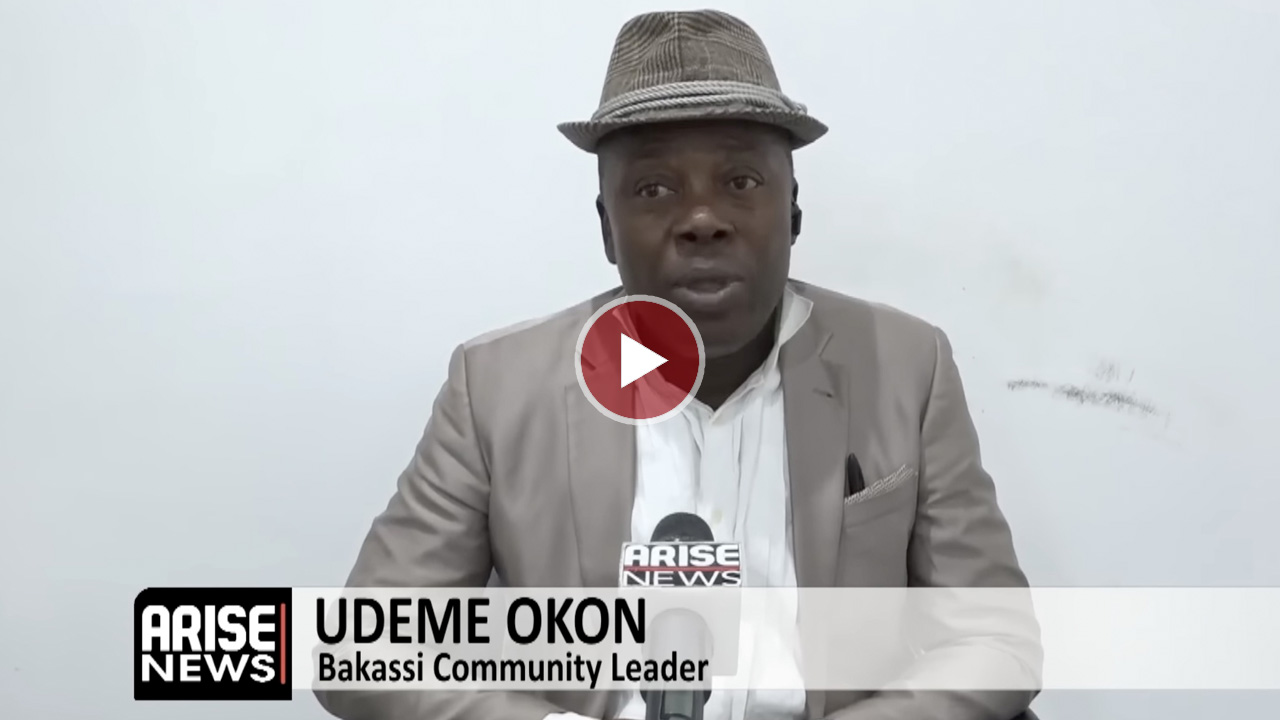
He further elaborated that the critical legal question centers on the existence of these communities, asserting, “The current issue revolves around whether these communities exist as littoral host communities within the boundaries of Cross River State. The answer is affirmative, as Bakassi Local Government still operates in that area.”
Highlighting administrative ties, Okon remarked, “Cross River State continues to maintain a local government, specifically the Bakassi Local Government, emanating from the peninsula. Furthermore, the communities of Dayspring 1, Dayspring 2, and Kwa Adam have been socially established within the Nigerian context. They meet all necessary constitutional parameters to be recognized as littoral host communities.”
He referenced the definition of a host community as stated in the BIA Act, Section 318, which defines host communities as those within or relevant to operational areas of resource extractors. “In this case, the settlers include those managing oil mining licenses such as OML 114, OML 115, and OML 123, and we are the directly impacted residents in the North Coastal Region.”
Okon underscored that the presence of oil mining leases strengthens their claims. “We have continually urged the National Boundary Commission to fulfill its constitutional duties. Multiple communications have been dispatched to both the state governor and the National Boundary Commission, and those letters have also been forwarded by the governor to the relevant authorities.”
Expressing frustration over what he views as administrative negligence, Okon noted, “Regarding the Supreme Court adjudications, it is essential to clarify that those rulings occurred while we, the neutral Bakassi host communities, were endeavoring to establish our rights in the western part of Bakassi. We were not party to that litigation, and the neutral communities were excluded from the process.”
He insisted that significant changes have transpired since those decisions. “For instance, the BIA Act 2021 has altered the legal obligations concerning security across all neutral host and host communities, indicating that all operations need to align with these updated statutes.”
Okon emphasized geographical evidence, stating, “Following the legal decisions, our communities remained uninvolved in the cases which cast doubts on our status. The coordinates of the neutral host communities of Bakassi fall within a latitude greater than those delineated within Nigerian territory, emphasizing their status.”
He concluded the discussion by stating that this conflict extends beyond legal interpretation and demands concrete administrative and political action. “We have reiterated our appeal to the National Boundary Commission to undertake its constitutional responsibilities. We have submitted numerous letters to both the state governor and the National Boundary, with the governor ensuring those correspondences reach the appropriate bodies.
“National Boundary, please come and fulfill your constitutional obligations.”
Comments (0)
You must be logged in to comment.
Be the first to comment on this article!