
The United Nations alongside the Nigerian government has issued an urgent call for reforms to tackle ongoing justice gaps that adversely impact women and girls in Nigeria.
This appeal was made during a high-level discussion held in Abuja on Wednesday, in celebration of International Women’s Day, organized by the Federal Ministry of Justice in partnership with the UN Gender Theme Group.
The event, which was themed “Equal Justice for Women and Girls in Nigeria: Strengthening Inclusive Gender-Responsive Justice Systems,” brought together various stakeholders, including leaders from the justice sector, civil society organizations, and development partners, to discuss obstacles that hinder women's access to justice.
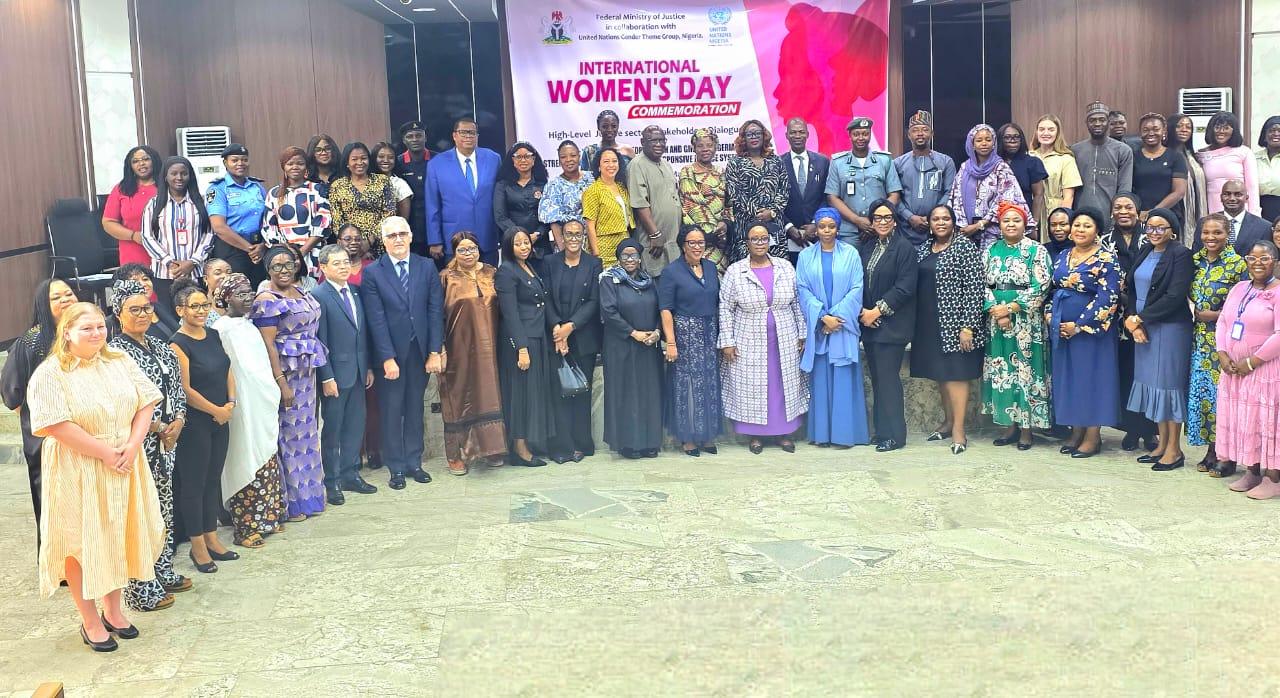
Representing the UN Resident Coordinator, Mohamed Fall underscored the importance of ensuring justice access for women and girls, emphasizing that it is vital for establishing inclusive and equitable societies. He called for enhanced cooperation among judiciary institutions, law enforcement, government entities, and local communities.
Beatrice Eyong, the UN Women's Representative to Nigeria and ECOWAS, highlighted the persistent issue of gender-based violence, presenting statistics from the 2024 Nigeria Demographic and Health Survey, which indicated that 21 percent of women between the ages of 15 and 49 have faced physical or sexual violence. She noted with concern that 58 percent of these survivors do not report their experiences, largely due to a lack of faith in the justice system.
Muriel Mafico, Resident Representative of UNFPA, brought attention to the wider implications of gender-based violence, linking it to child marriages and detrimental traditional practices. She reported that approximately 38 percent of Nigerian women aged 25 to 49 were married before reaching 18.
Mafico also pointed out that although Nigeria possesses legal frameworks designed to protect women, significant challenges remain in making these systems accessible and responsive to survivors' needs. She detailed ongoing initiatives by UNFPA, which include capacity development for justice system participants, enhancements to forensic processes, and improved survivor support through One-Stop Centres.
From the government’s perspective, Yewande Gbola-Awopetu, head of the Sexual and Gender-Based Violence Unit at the Federal Ministry of Justice, reaffirmed the government's dedication to enhancing judicial access and reinforcing the prosecution of offenders. She acknowledged that despite existing laws such as the Violence Against Persons Prohibition Act, issues like stigma, financial limitations, and institutional inadequacies continue to obstruct justice access.
In her keynote address, Justice Angela Otaluka emphasized that delivering equal justice for women and girls is both a constitutional and a moral imperative. She identified cultural practices, financial dependence, and procedural delays in the legal system as major obstacles.
Participants in the dialogue emphasized the necessity for institutional reforms, including the establishment of specialized courts to handle cases of gender-based violence, increased technological integration to minimize delays, enhanced legal aid systems, and better representation of women within the judicial framework.
The session concluded with a renewed commitment to bolstering the implementation of current laws, enhancing support services for survivors, and fostering collaboration among various stakeholders to create a more inclusive and effective justice system.
Comments (0)
You must be logged in to comment.
Be the first to comment on this article!