
The Secretary-General of the United Nations, António Guterres, has called for the complete decolonisation of Western Sahara in addition to 16 other territories that continue to be under colonial governance.
During his address to the Special Committee on Decolonisation (C-24) in 2026, Guterres emphasized that the international community must renew its dedication to concluding the decolonisation process, even after more than sixty years since the UN initiated this agenda.
"This organisation was established as a platform for nations to engage as equals — not as oppressors and the oppressed," he highlighted, underscoring that decolonisation has been integral to the UN’s objectives from the beginning.
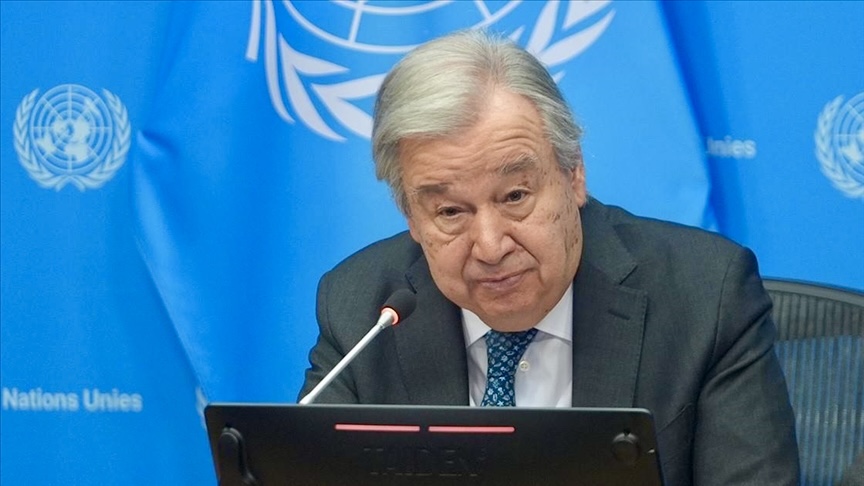
He cautioned that the ramifications of colonial practices still reverberate in contemporary society, engendering significant economic exploitation, entrenched disparities, racism, and the exclusion of affected groups from key decisions.
The C-24, established by the UN General Assembly in 1961, is responsible for monitoring the progress towards independence for territories that have not yet achieved complete self-governance, as outlined in Chapter XI of the UN Charter. Its mission is rooted in the significant 1960 Declaration on the Granting of Independence to Colonial Countries and Peoples.
Guterres clarified that fostering effective dialogue is vital for accelerating the remaining decolonisation initiatives, which should encompass non-self- governing territories, the respective administering states, UN member countries, and various other stakeholders. Each territory’s unique circumstances should be addressed on an individual basis, following the UN Charter, the 1960 Declaration, and appropriate General Assembly resolutions.
Since 1945, over 80 former colonies, representing around 750 million individuals, have gained independence. Nonetheless, Western Sahara and 16 other Non-Self-Governing Territories, predominantly small islands in the Caribbean and Pacific, are still included on the UN list, collectively home to nearly two million residents.
Western Sahara is frequently referred to as Africa’s last remaining colony awaiting independence. Previously known as Spanish Sahara, the territory was administered by Spain until its withdrawal in 1976, which sparked an extended dispute involving Algeria, Morocco, and Mauritania.
After Spain’s exit, jurisdiction over the region has been split. The Sahrawi Arab Democratic Republic (SADR), which operates a government-in-exile from Tindouf, Algeria, claims authority over approximately 30 percent of the land, while Morocco governs nearly 70 percent of the territory. Reports indicate that Morocco has expressed intentions to settle the protracted conflict following negotiations facilitated by former U.S. President Donald Trump.
Comments (0)
You must be logged in to comment.
Be the first to comment on this article!